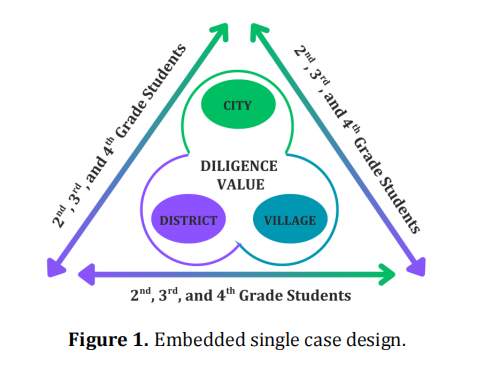
Diligence is a value that encompasses consistent and meticulous effort toward achieving a set goal, effective time management, openness to lifelong learning, acting with a sense of responsibility, maintaining self-confidence and self-regulation, and the integration of these traits into daily life; it is influenced by achievement, biological potential, and the desire for recognition. This study aims to describe the views of primary school students regarding the value of diligence. The study employed an embedded single case study design, a qualitative research method, in which the value of diligence was examined through the analytical units of city, district, and village. Data were collected from 249 primary school students in 2nd, 3rd, and 4th grades through a semi-structured interview form, which included both written expressions and drawings. The data were analyzed using content analysis methods, including frequency analysis, categorical analysis, and contingency (relational) analysis. According to the research findings, the students’ descriptions of the value of diligence were evaluated under the categories of school life, achievement, determination, socialization, time management, personal development, biological potential, external influence, internal influence, health, studying, and peer bullying. It may be recommended that these categories be taken into consideration in the education of the value of diligence.

 632 (Views)
  444 (Downloads)