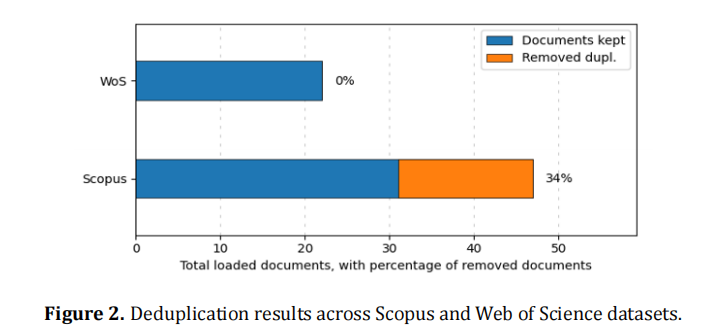
This research investigates the dynamic relationship of Artificial Intelligence (AI) and Sociolinguistics through bibliometric mapping in association with keyword content analysis. Utilizing 69 extracted publications (2013–2024) after systematic deduplication, the study combines quantitative trend analysis with keyword-based thematic interpretation. From an initial collection of 98 records obtained from Scopus (n = 64) and Web of Science (n = 34), a subset of 48 publications was sampled further pursuant to their conceptual relevance. Bibliometric analysis with the software ScientoPy and VOSviewer was employed to reveal publication trajectories, top contributors, influential journals, geographic patterns, and knowledge hot spots. This mapping was supplemented with a qualitative examination of the space mapped using five major terms: Computational Sociolinguistics, Natural Language Processing (NLP), ChatGPT, language and machine learning enabling us to track prevalent themes and concepts structuring the field. These results indicate that scholarly interest in the sociolinguistic aspects of AI-mediated communication has grown substantially, especially pertaining to language ideology, identity construction, and algorithmic influence on discourse. Instead of portraying computational methods as passive and neutral tools, the findings imply that technology such as NLP and large language models can be seen as both reproducing and destabilizing linguistic hierarchies, bringing to light critical questions regarding representation, diversity, and equity in digital space. In this work, we map the intersection of AI and Sociolinguistics through a combination of bibliometric mapping and keyword-based interpretation, thus giving an overview of how the field has evolved over time. This finding implies that debates about ethical and culturally inclusive AI design are coalescing into prominence in the literature.