
Article
Supramolecular Salicylic Acid and Photon Rejuvenation Repair Skin Immune Barrier Function in Acne Patients
 Download

This work is licensed under a Creative Commons Attribution 4.0 International License.
Copyright
The authors shall retain the copyright of their work but allow the Publisher to publish, copy, distribute, and convey the work.
License
Trends in Immunotherapy (TI) publishes accepted manuscripts under Creative Commons Attribution 4.0 International (CC BY 4.0). Authors who submit their papers for publication by TI agree to have the CC BY 4.0 license applied to their work, and that anyone is allowed to reuse the article or part of it free of charge for any purpose, including commercial use. As long as the author and original source are properly cited, anyone may copy, redistribute, reuse, and transform the content.
Authors

Received: 2 May 2026; Revised: 15 May 2026; Accepted: 4 June 2026; Published: 12 June 2026
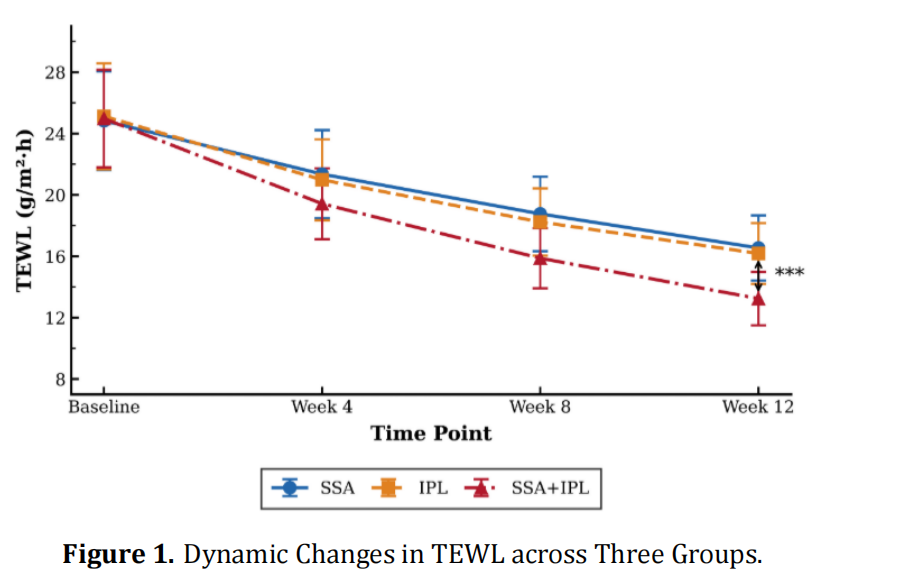
Acne vulgaris is a chronic inflammatory skin disease in which a defect in the immune barrier function is a major extent of the pathological etiology. The aim of this randomized controlled trial was to assess the restorative benefits of supramolecular salicylic acid (SSA) with intense pulsed light (IPL) photon rejuvenation and its effects on the immune barrier function of the skin in acne patients. Moderate-to-severe acne was assigned to each patient, with three groups being treated for 12 weeks with either: The primary outcome was transepidermal water loss (TEWL) (continuous variable); secondary outcomes were stratum corneum hydration, sebum secretion, skin pH, pro- and anti-inflammatory cytokines (IL-1β, IL-6, TNF-α, IL-10, TGF-β), Treg/Th17 cell ratio, microbiome Shannon diversity index, Global Acne Grading System (GAGS) score, lesion counts, and the Dermatology Life Quality Index (DLQI). The SSA+IPL group showed significant improvements compared to both monotherapy groups in all outcomes (all corrected p < 0.001). TEWL decreased by 47.0% (Cohen's d = 2.14; 95% CI: 1.67–2.61), stratum corneum hydration increased by 67.0%, and sebum secretion declined by 45.7%. Fifty-six to 58% reduction in pro-inflammatory cytokines was achieved, whereas IL-10 and TGF-β levels increased by 167.8% and 130.8% respectively. The ratio Treg/Th17 was raised by 331.3% and Shannon diversity index was raised by 52.1%. This multiple regression revealed that the Treg/Th17 ratio reestablishment, reduction of sebum and upregulation of IL-10 are independent factors of clinical efficacy (adjusted R2 = 0.763). The combination of SSA and IPL therapy can have a systemic effect on the regeneration of skin immune barrier function by overlapping mechanisms and deserves further testing in larger trials.
Keywords:
Supramolecular Salicylic Acid Photon Rejuvenation Acne Vulgaris Skin Immune Barrier Treg/Th17 Microbiome Cytokines Randomized Controlled TrialReferences
- Albash, A.L.; Alali, A.O.; Alkhars, Z.O.; et al. Perception and Use of Complementary and Alternative Medicine among Acne Vulgaris Patients. Skin Append. Disord. 2026, 12, 197–211. DOI: https://doi.org/10.1159/000549533
- Bayazıtlı, B.C.E.; Saraç, A.G.; Uzdoğan, A.; et al. Association between Altered Gut Microbiota and Acne Vulgaris: A Comparative Study of Trimethylamine N-Oxide Levels in Patients and Healthy Controls. Dermatol. Pract. Concept. 2025, 15, 5486. DOI: https://doi.org/10.5826/DPC.1504A5486
- Hu, J.J.; Zhang, R.F.; Wang, Y.H.; et al. Research Progress on the Application of Supramolecular Salicylic Acid in Acne Treatment. Chin. Med. Cosmetol. 2025, 15, 144–148. DOI: https://doi.org/10.19593/j.issn.2095-0721.2025.09.031 (in Chinese)
- Song, T.J.; Lin, N.N.; Yang, Y.Y.; et al. Effect of photodynamic therapy combined with supramolecular salicylic acid on patients with moderate to severe acne. Tianjin Med. J. 2026, 54, 254–258. (in Chinese)
- Salem, A.H.; Amin, M.O.; Hamdan, M.A.; et al. The Effectiveness of Electrospun Manuka Honey Nanofiber in Lowering Inflammatory Markers and Improving Psychosocial Impact Related to Acne Vulgaris Patients: A Randomized Controlled Interventional Trial. J. Drug Deliv. Sci. Technol. 2026, 115, 107775. DOI: https://doi.org/10.1016/J.JDDST.2025.107775
- World Medical Association. World Medical Association Declaration of Helsinki: Ethical Principles for Medical Research Involving Human Subjects (2013 Revision). J. Am. Med. Assoc. 2013, 310, 2191–2194. DOI: https://doi.org/10.1001/jama.2013.281053
- National Health Commission of the People's Republic of China. Measures for Ethical Review of Life Science and Medical Research Involving Human Subjects; National Health Commission: Beijing, China, 2023. (in Chinese)
- International Council for Harmonisation of Technical Requirements for Pharmaceuticals for Human Use (ICH). Integrated Addendum to ICH E6(R1): Guideline for Good Clinical Practice E6(R2); ICH: Geneva, Switzerland, 2016.
- Tosun, N.; Tosun, M.; Dığış, M.; et al. Internalized Stigma in Acne Vulgaris Patients and Relationship with Quality of Life, Disease Severity. Healthcare 2025, 13, 1359. DOI: https://doi.org/10.3390/HEALTHCARE13121359
- Celik, S.M.; Celik, C. The Effect of Systemic Doxycycline Treatment on Hematological Inflammatory Parameters in Patients with Acne Vulgaris. Cutan. Ocul. Toxicol. 2025, 44, 311–314. DOI: https://doi.org/10.1080/15569527.2025.2511725
- Zhu, W.; Cheng, R.; Kan, W. Efficacy of Supramolecular Salicylic Acid in Treating Moderate-to-Severe Acne and Its Effects on Skin Microbiome Diversity. Chin. J. Aesthetic Med. 2025, 34, 129–132, 193. DOI: https://doi.org/10.15909/j.cnki.cn61-1347/r.007009 (in Chinese)
- Manuskiatti, W.; Wongdama, S.; Li, B.J.; et al. One-Year Follow-Up of Acne Vulgaris Patients Treated with Nonablative Monopolar Radiofrequency: Efficacy and Safety Assessment. Lasers Surg. Med. 2025, 57, 397–404. DOI: https://doi.org/10.1002/LSM.70026
- Metwalli, M.; Mohamed, A.A.; Essam, R. The Potential Role of Tranexamic Acid and Botulinum Toxin in Treating Patients with Acne Vulgaris: A Split Face Comparative Study. Arch. Dermatol. Res. 2025, 317, 657. DOI: https://doi.org/10.1007/S00403-025-04127-9
- Aryanian, Z.; Mouodi, S.; Asadi, M.M.; et al. Depression among Patients with Acne Vulgaris: Does Disease Severity Matter? Arch. Dermatol. Res. 2025, 317, 595. DOI: https://doi.org/10.1007/S00403-025-04129-7
- Wang, C.J.; Chen, H.H.; Hu, R.; et al. Observation of the Efficacy of Supramolecular Salicylic Acid Combined with Acupuncture Extraction in the Treatment of Moderate Acne. Pract. J. Integr. Tradit. Chin. West. Med. 2024, 24, 35–37, 106. DOI: https://doi.org/10.13638/j.issn.1671-4040.2024.23.011 (in Chinese)
- Cartron, M.A.; Cohrs, A.; Zaenglein, L.A. Isotretinoin Laboratory Monitoring Varies by Sex for Patients with Acne Vulgaris. J. Am. Acad. Dermatol. 2025, 93, 237–238. DOI: https://doi.org/10.1016/J.JAAD.2025.02.064
- Bagherani, N.; Mirmomeni, G.; Smoller, R.B. Carboxytherapy in Management of Acne Flare in Patients with Moderate to Severe Acne Vulgaris under Treatment with Oral Isotretinoin: A Case Series. Arch. Dermatol. Res. 2025, 317, 462. DOI: https://doi.org/10.1007/S00403-025-03988-4
- Farrag, M.; Elnaga, A.A.A.; Alsaied, A.M.; et al. Efficacy and Safety of Spironolactone in Treating Patients with Acne Vulgaris: A Systematic Review and Meta-Analysis of 1,086 Patients. Arch. Dermatol. Res. 2025, 317, 328. DOI: https://doi.org/10.1007/S00403-025-03815-W
- Verma, K.K.; Koch, S.R.; Friedmann, P.D.; et al. Psychiatric Comorbidities, Inflammatory Bowel Disease, and Urticaria in Acne Vulgaris Patients Undergoing Isotretinoin Treatment: A Multicenter Cohort Study from the TriNetX Database. Arch. Dermatol. Res. 2025, 317, 183. DOI: https://doi.org/10.1007/S00403-024-03743-1
- Tunca, M.; Balik, B.Z.; Uncu, B.H.; et al. Stigmatization and Psychosocial Burden in Acne Patients. J. Cosmet. Dermatol. 2024, 24, e16678. DOI: https://doi.org/10.1111/JOCD.16678
- Xiong, J.J. Efficacy of Novel Supramolecular Salicylic Acid Combined with Facial Care Intervention in Acne Vulgaris. China Med. Herald 2025, 23, 164–166. DOI: https://doi.org/10.15912/j.issn.1671-8194.2025.06.048 (in Chinese)
- Murshidi, R.; Hamad, B.S.; Refaei, A.A.; et al. A Novel Predictive Method for Risk Stratification in Acne Patients Receiving Isotretinoin: An Analysis of Laboratory Abnormalities and Changes in Inflammatory Parameters. J. Dermatol. Treat. 2024, 35, 2301435. DOI: https://doi.org/10.1080/09546634.2023.2301435
- Almuzaini, H.I.; Alamri, A.S.; Almuzaini, R.I. Isotretinoin-Induced Epistaxis among Acne Vulgaris Patients: A Cross-Sectional Study from Saudi Arabia. Saudi Med. J. 2024, 45, 1347–1354. DOI: https://doi.org/10.15537/SMJ.2024.45.12.20240791
- Bakr, R.M.; Mahran, A.M.; Mokhtar, A.A.; et al. Serum Vitamin D Levels in Acne Vulgaris Patients and the Impact of Patient's Clinical Characteristics: A Case-Control Study. Arch. Dermatol. Res. 2024, 316, 629. DOI: https://doi.org/10.1007/S00403-024-03368-4
- Bjerring, P.; Ancklar, O.; Andriessen, A.; et al. NECASA I: A Practical Algorithm Integrating Skincare in the Management of Acne Patients in the Nordic European Countries. J. Drugs Dermatol. 2024, 23, 782–788. DOI: https://doi.org/10.36849/JDD.8472
- Bazargan, A.S.; Jafarzadeh, A.; Danandeh, F.; et al. Investigating Metabolic Syndrome Markers and Body Mass Index Changes in Patients with Acne Vulgaris Treated with Isotretinoin: A Prospective Study. J. Cosmetic Dermatol. 2024, 23, 4343–4348. DOI: https://doi.org/10.1111/JOCD.16533
- Garate, D.; Thang, C.; Golovko, G.; et al. LB925 Evaluation of the Association between Spironolactone or Tetracycline-Class Antibiotic Use in Female Acne Patients and Breast Cancer Development Risk. J. Invest. Dermatol. 2024, 144, S162. DOI: https://doi.org/10.1016/J.JID.2024.06.1097
- Kazeminejad, A.; Hajheydari, Z.; Taghian, S.S.; et al. Serum Zinc, Selenium, and Vitamin D Levels in Patients with Acne Vulgaris: A Case-Control Study. J. Cosmetic Dermatol. 2024, 23, 4249–4254. DOI: https://doi.org/10.1111/JOCD.16494
- Verma, K.K.; Chiu, J.; Connor, J.; et al. Evaluating the Relationship between Depression, Suicidal Thoughts, and Ulcerative Colitis in Acne Patients on Isotretinoin: A Case-Control Study. Clin. Exp. Dermatol. 2024, 49, 1721–1722. DOI: https://doi.org/10.1093/CED/LLAE287
- Binsaleh, A.Y.; Ali, L.S.; Bahaa, M.M.; et al. Correlation between Depression Scores and Serum NF-κB/NLRP3 Axis, Biotinidase, and HMGB1 after Treatment with Isotretinoin in Patients with Acne Vulgaris. J. Cosmetic Dermatol. 2024, 23, 3409–3417. DOI: https://doi.org/10.1111/JOCD.16433
- Bhatia, N.; Eichenfield, L.F.; Mazzetti, A.; et al. Hypothalamic-Pituitary-Adrenal Axis Response in Patients with Acne Vulgaris Treated with Clascoterone. J. Drugs Dermatol. 2024, 23, 433–437. DOI: https://doi.org/10.36849/JDD.7997
- Paschalidou, E.; Katsaras, G.; Papoulakis, T.; et al. The Effect of Isotretinoin on Insulin Resistance and Serum Adiponectin Levels in Acne Vulgaris Patients: A Systematic Review and Meta-Analysis. Clinics Practice 2024, 14, 1021–1037. DOI: https://doi.org/10.3390/CLINPRACT14030081
- Ionescu, M.A.; Tatu, A.L.; Busila, C.; et al. Microbiome Modulation in Acne Patients and Clinical Correlations. Life 2024, 14, 688. DOI: https://doi.org/10.3390/LIFE14060688
- Garate, D.; Thang, C.J.; Golovko, G.; et al. A Matched Cohort Study Evaluating Whether Spironolactone or Tetracycline-Class Antibiotic Use among Female Acne Patients Is Associated with Breast Cancer Development Risk. Arch. Dermatol. Res. 2024, 316, 196. DOI: https://doi.org/10.1007/S00403-024-02936-Y
- Ryguła, I.; Pikiewicz, W.; Kaminiów, K. Impact of Diet and Nutrition in Patients with Acne Vulgaris. Nutrients 2024, 16, 1476. DOI: https://doi.org/10.3390/NU16101476
- Sajid, M.; Asim, S.A.; Iqbal, T.; et al. Isotretinoin's Effect on Fasting Lipid Profile in Acne Patients. J. Coll. Physicians Surg. Pak. 2024, 34, 518–521. DOI: https://doi.org/10.29271/JCPSP.2024.05.518
- Guertler, A.; Fiedler, T.; Lill, D.; et al. Deficit of Omega-3 Fatty Acids in Acne Patients: A Cross-Sectional Pilot Study in a German Cohort. Life 2024, 14, 519. DOI: https://doi.org/10.3390/LIFE14040519
- Thang, C.J.; Garate, D.; O'Leary, S.; et al. Evaluation of the Association between Tetracycline-Class Antibiotic Use in Patients with Acne and Idiopathic Intracranial Hypertension Risk: A Population-Level Cohort Study. Br. J. Dermatol. 2024, 190, 921–923. DOI: https://doi.org/10.1093/BJD/LJAE099
- Ibrahim, H.M.; Hassan, M.H.; El Taieb, M.A.; et al. Circulating TWEAK Levels in Patients with Acne Vulgaris: Effect of Oral Isotretinoin Therapy. JEADV Clin. Pract. 2024, 3, 575–579. DOI: https://doi.org/10.1002/JVC2.361
- Koga, M.; Imafuku, S. Frequency of Acne and Acne Scars in Patients with Neurofibromatosis 1. Acta Derm.-Venereol. 2024, 104, adv18621. DOI: https://doi.org/10.2340/ACTADV.V104.18621
- Szepietowska, M.; Stefaniak, A.A.; Krajewski, P.K.; et al. Anhedonia in Acne Vulgaris: A Cross-Sectional Study of 104 Consecutive Acne Patients. Clin. Cosmetic Investig. Dermatol. 2024, 17, 349–357. DOI: https://doi.org/10.2147/CCID.S451927
- Kazan, D.; Inci, B.B.; Ilchan, S.; et al. Evaluation of Depression, Self-Esteem, Anxiety, and Dermatological Quality of Life Index in Adolescent Acne Patients: A Case-Control Study. Sisli Etfal Hosp. Med. Bull. 2024, 58, 210–215. DOI: https://doi.org/10.14744/SEMB.2024.38268
- Rebeca, M.; Omkar, M.; Kyla, P.; et al. Topical Tretinoin Alters Skin Microbiota in Patients with Mild Acne. JAAD Int. 2024, 14, 1–3. DOI: https://doi.org/10.1016/J.JDIN.2023.09.004
- Szybiak, W.; Jarzemska, M.; Kowalczyk, M.; et al. Selected Hormone Levels and Lipid Abnormalities in Patients with Acne Vulgaris. Postepy Dermatol. Alergol. 2023, 40, 798–807. DOI: https://doi.org/10.5114/ADA.2023.133457
- Nathan, A.L.; O’Broin, C.; Lally, A. Increasing Awareness of the Risk of Drug-Induced Intracranial Hypertension in Patients with Acne Requiring Treatment for Bacterial STI. Sex. Transm. Infect. 2023, 100. DOI: https://doi.org/10.1136/SEXTRANS-2023-055936
- McDowell, A.; Brüggemann, H.; Layton, A.M. Treatment of Acne Patients with Isotretinoin Increases β-Diversity of a Putative Health-Associated Strain of Cutibacterium acnes within the Follicular Microbiome of Responders. Exp. Dermatol. 2023, 33, e14967. DOI: https://doi.org/10.1111/EXD.14967