
Review Article
The Usage and Limitations of Gene Therapy Versus Stem Cell Therapy for Myotonic Dystrophy Type 1 (DM1): Special Focus on Immune Response
 Download

This work is licensed under a Creative Commons Attribution 4.0 International License.
Copyright
The authors shall retain the copyright of their work but allow the Publisher to publish, copy, distribute, and convey the work.
License
Trends in Immunotherapy (TI) publishes accepted manuscripts under Creative Commons Attribution 4.0 International (CC BY 4.0). Authors who submit their papers for publication by TI agree to have the CC BY 4.0 license applied to their work, and that anyone is allowed to reuse the article or part of it free of charge for any purpose, including commercial use. As long as the author and original source are properly cited, anyone may copy, redistribute, reuse, and transform the content.
Authors
-
Zhainagul Abdirasulovna Abdirasulova
 Department of Clinical Disciplines 2, International Medical Faculty, Osh State University, Osh 723500, Kyrgyzstan
-
Basim Hanoon Jabbar
Department of Medical Laboratory Analysis, Al Mansour University College, Baghdad 10067, Iraq
-
Sajida Hussein Ismael
Department of Medical Laboratory Analysis, Al-Turath University, Baghdad 10013, Iraq
-
Ahmed M. Hussein
Department of Medical Laboratory Analysis, Al-Rafidain University College, Baghdad 10064, Iraq
-
Saad Saleh
Department of Medical Laboratory Analysis, Madenat Alelem University College, Baghdad 10006, Iraq
-
Nazarzoda Khusin Nazir
Department of Environmental Health, Tajik State University, Dushanbe 734000, Tajikistan
Received: 18 March 2025; Revised: 19 May 2025; Accepted: 26 May 2025; Published: 2 March 2026
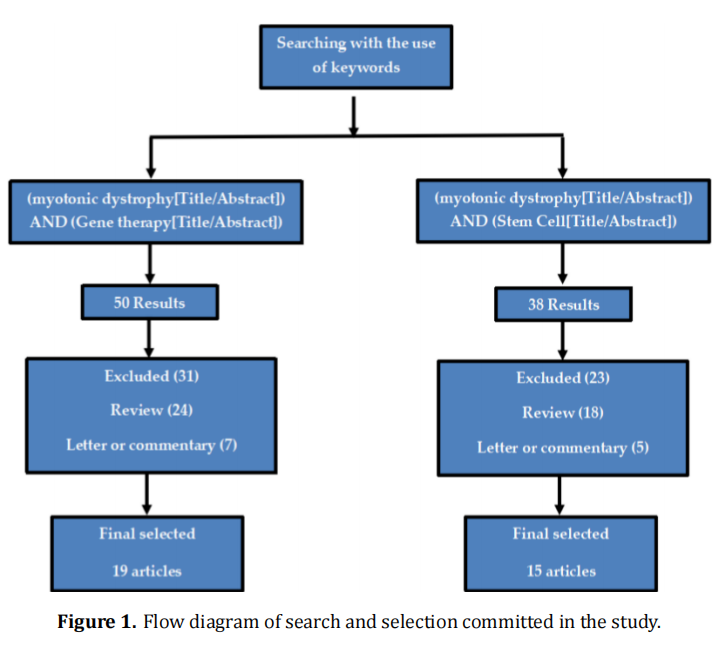
Muscular dystrophies include myotonic dystrophy (MD). Although there is no cure for this disorder, many treatments can manage symptoms and reduce disease development. Standard pharmacological treatments and rehabilitation methods have largely failed, prompting researchers to investigate stem cell and gene therapy options. This review will discuss gene therapy and stem cell therapy as adjuvant therapies for MD, including their benefits, drawbacks, and timeline for implementation. We searched PubMed, Scopus, Web of Science (WOS), Cochrane Library, and Embase from 1980 to 2024 for preclinical and clinical gene therapy papers for MD using keywords such as "myotonic dystrophy" and "gene therapy." A search for "myotonic dystrophy" and "Stem Cell" yielded studies on stem cell treatment for MD. The initial search found 50 gene therapy and 38 stem cell research articles. Following our exclusion and filtering criteria, we deleted 31 articles on gene therapy and 23 articles on stem cells. We found 19 gene therapy publications and 15 stem cell-based publications. Antisense oligonucleotides (ASO), CRISPR technology, and AAV vectors have become the most popular methods. Induced pluripotent stem cells (iPSCs) and muscle-derived progenitor cells (MuSCs) were important cellular sources for investigation or application. Most research focuses on myotonic dystrophy type I (DM1). It is widely established that AAV vector-induced immune responses can affect the safety and efficacy of genetic therapy. Specific stem cells may also modulate MD patients' immunological responses, improving prognosis. Using cytokines and monoclonal antibodies as adjuvants to treat this complex illness is becoming more common.
Keywords:
Myotonic Dystrophy (MD) Gene Therapy Stem Cell Therapy Immune ResponseReferences
- Johnson, N.E. Myotonic Muscular Dystrophies. Continuum 2019, 25, 1682–1695.
- Verhaert, D.; Richards, K.; Rafael-Fortney, J.A.; et al. Cardiac Involvement in Patients With Muscular Dystrophies: Magnetic Resonance Imaging Phenotype and Genotypic Considerations. Circ. Cardiovasc. Imaging 2011, 4, 67–76.
- Moshirfar, M.; Webster, C.R.; Seitz, T.S.; et al. Ocular Features and Clinical Approach to Cataract and Corneal Refractive Surgery in Patients With Myotonic Dystrophy. Clin. Ophthalmol. 2022, 16, 2837–2842.
- Kim, W.B.; Jeong, J.Y.; Doo, S.W.; et al. Myotonic Dystrophy Type 1 Presenting as Male Infertility. Korean J. Urol. 2012, 53, 134–136.
- Cooper, S.; Dawber, R.; Hilton-Jones, D. Three Cases of Androgen-Dependent Disease Associated With Myotonic Dystrophy. J. Eur. Acad. Dermatol. Venereol. 2003, 17, 56–58.
- Cho, D.H.; Tapscott, S.J. Myotonic Dystrophy: Emerging Mechanisms for DM1 and DM2. Biochim. Biophys. Acta, Mol. Basis Dis. 2007, 1772, 195–204.
- Suominen, T.; Bachinski, L.L.; Auvinen, S.; et al. Population Frequency of Myotonic Dystrophy: Higher Than Expected Frequency of Myotonic Dystrophy Type 2 (DM2) Mutation in Finland. Eur. J. Hum. Genet. 2011, 19, 776–782.
- Orengo, J.P.; Chambon, P.; Metzger, D.; et al. Expanded CTG Repeats Within the DMPK 3′ UTR Causes Severe Skeletal Muscle Wasting in an Inducible Mouse Model for Myotonic Dystrophy. Proc. Natl. Acad. Sci. 2008, 105, 2646–2651.
- Liquori, C.L.; Ricker, K.; Moseley, M.L.; et al. Myotonic Dystrophy Type 2 Caused by a CCTG Expansion in Intron 1 of ZNF9. Science 2001, 293, 864–867.
- Pavićević, D.S.; Miladinović, J.; Brkušanin, M.; et al. Molecular Genetics and Genetic Testing in Myotonic Dystrophy Type 1. Biomed. Res. Int. 2013, 2013, 391821.
- Nowak, K.J.; Davies, K.E. Duchenne Muscular Dystrophy and Dystrophin: Pathogenesis and Opportunities for Treatment. EMBO Rep. 2004, 5, 872–876.
- Manini, A.; Abati, E.; Nuredini, A.; et al. Adeno-Associated Virus (AAV)-Mediated Gene Therapy for Duchenne Muscular Dystrophy: The Issue of Transgene Persistence. Front. Neurol. 2021, 12, 814174.
- Yang, G.; Fan, X.; Liu, Y.; et al. Immunomodulatory Mechanisms and Therapeutic Potential of Mesenchymal Stem Cells. Stem Cell Rev. Rep. 2023, 19, 1214–1231.
- Ceccarelli, S.; Pontecorvi, P.; Anastasiadou, E.; et al. Immunomodulatory Effect of Adipose-Derived Stem Cells: The Cutting Edge of Clinical Application. Front. Cell Dev. Biol. 2020, 8, 236.
- Patel, A.A.; Mohamed, A.A.H.; Rizaev, J.; et al. Application of Mesenchymal Stem Cells Derived From the Umbilical Cord or Wharton’s Jelly and Their Extracellular Vesicles in the Treatment of Various Diseases. Tissue Cell 2024, 89, 102415.
- Chong, M.S.K.; Bao, C.; Ng, K.P.; et al. Human Bone Xenografts: From Preclinical Testing for Regenerative Medicine to Modeling of Diseases. Curr. Mol. Biol. Rep. 2016, 2, 158–170.
- Song, N.; Scholtemeijer, M.; Shah, K. Mesenchymal Stem Cell Immunomodulation: Mechanisms and Therapeutic Potential. Trends Pharmacol. Sci. 2020, 41, 653–664.
- Ghaneialvar, H.; Soltani, L.; Rahmani, H.R.; et al. Characterization and Classification of Mesenchymal Stem Cells in Several Species Using Surface Markers for Cell Therapy Purposes. Indian J. Clin. Biochem. 2018, 33, 46–52.
- Le Blanc, K.; Davies, L.C. Mesenchymal Stromal Cells and the Innate Immune Response. Immunol. Lett. 2015, 168, 140–146.
- Wu, X.; Jiang, J.; Gu, Z.; et al. Mesenchymal Stromal Cell Therapies: Immunomodulatory Properties and Clinical Progress. Stem Cell Res. Ther. 2020, 11, 345.
- Ahmed, H.; Mahmud, A.R.; Siddiquee, M.F.; et al. Role of T Cells in Cancer Immunotherapy: Opportunities and Challenges. Cancer Pathog. Ther. 2023, 1, 116–126.
- Waldman, A.D.; Fritz, J.M.; Lenardo, M.J. A Guide to Cancer Immunotherapy: From T Cell Basic Science to Clinical Practice. Nat. Rev. Immunol. 2020, 20, 651–668.
- Chehelgerdi, M.; Chehelgerdi, M. The Use of RNA-Based Treatments in the Field of Cancer Immunotherapy. Mol. Cancer 2023, 22, 106.
- Kairuz, D.; Samudh, N.; Ely, A.; et al. Advancing mRNA Technologies for Therapies and Vaccines: An African Context. Front. Immunol. 2022, 13, 1018961.
- LoRusso, S.; Weiner, B.; Arnold, W.D. Myotonic Dystrophies: Targeting Therapies for Multisystem Disease. Neurotherapeutics 2018, 15, 872–884.
- Bennett, C.F.; Krainer, A.R.; Cleveland, D.W. Antisense Oligonucleotide Therapies for Neurodegenerative Diseases. Annu. Rev. Neurosci. 2019, 42, 385–406.
- Świątkowska-Flis, B.; Zdolińska-Malinowska, I.; Sługocka, D.; et al. The Use of Umbilical Cord-Derived Mesenchymal Stem Cells in Patients With Muscular Dystrophies: Results From Compassionate Use in Real-Life Settings. Stem Cells Transl. Med. 2021, 10, 1372–1383.
- Beghini, D.G.; Horita, S.I.; da Fonseca Cardoso, L.M.; et al. A Promising Future for Stem-Cell-Based Therapies in Muscular Dystrophies—In Vitro and In Vivo Treatments to Boost Cellular Engraftment. Int. J. Mol. Sci. 2019, 20, 5610.
- Aly, R.M. Current State of Stem Cell-Based Therapies: An Overview. Stem Cell Investig. 2020, 7, 8.
- Kumar, M.; Misra, A. Applications of Gene Therapy. In Challenges in Delivery of Therapeutic Genomics and Proteomics, 1st ed.; Misra, A., Ed.; Elsevier: London, UK, 2011; pp. 271–323.
- Braga, L.A.M.; Filho, C.G.C.; Mota, F.B. Future of Genetic Therapies for Rare Genetic Diseases: What to Expect for the Next 15 Years? Ther. Adv. Rare Dis. 2022, 3, 26330040221100840.
- Tabrizi, S.J.; Estevez-Fraga, C.; van Roon-Mom, W.M.C.; et al. Potential Disease-Modifying Therapies for Huntington's Disease: Lessons Learned and Future Opportunities. Lancet Neurol. 2022, 21, 645–658.
- Yue, N.N.; Xu, H.M.; Xu, J.; et al. Therapeutic Potential of Gene Therapy for Gastrointestinal Diseases: Advancements and Future Perspectives. Mol. Ther. Oncolytics 2023, 30, 193–215.
- Poukalov, K.K.; Valero, M.C.; Muscato, D.R.; et al. Myospreader Improves Gene Editing in Skeletal Muscle by Myonuclear Propagation. Proc. Natl. Acad. Sci. 2024, 121, e2321438121.
- Almeida, C.F.; Robriquet, F.; Vetter, T.A.; et al. Promising AAV.U7snRNAs Vectors Targeting DMPK Improve DM1 Hallmarks in Patient-Derived Cell Lines. Front. Cell Dev. Biol. 2023, 11, 1181040.
- Porquet, F.; Weidong, L.; Jehasse, K.; et al. Specific DMPK-Promoter Targeting by CRISPRi Reverses Myotonic Dystrophy Type 1-Associated Defects in Patient Muscle Cells. Mol. Ther. Nucleic Acids 2023, 32, 857–871.
- Rogalska, Z.; Sobczak, K. Sustainable Recovery of MBNL Activity in Autoregulatory Feedback Loop in Myotonic Dystrophy. Mol. Ther. Nucleic Acids 2022, 30, 438–448.
- Kelley, C.P.; Haerle, M.C.; Wang, E.T. Negative Autoregulation Mitigates Collateral RNase Activity of Repeat-Targeting CRISPR-Cas13d in Mammalian Cells. Cell Rep. 2022, 40, 111226.
- Benichou, S.A.; Jauvin, D.; De Serres-Bérard, T.; et al. Enhanced Delivery of Ligand-Conjugated Antisense Oligonucleotides (C16-HA-ASO) Targeting Dystrophia Myotonica Protein Kinase Transcripts for the Treatment of Myotonic Dystrophy Type 1. Hum. Gene Ther. 2022, 33, 810–820.
- Cardinali, B.; Provenzano, C.; Izzo, M.; et al. Time-Controlled and Muscle-Specific CRISPR/Cas9-Mediated Deletion of CTG-Repeat Expansion in the DMPK Gene. Mol. Ther. Nucleic Acids 2022, 27, 184–199.
- André, L.M.; van Cruchten, R.T.P.; Willemse, M.; et al. Recovery in the Myogenic Program of Congenital Myotonic Dystrophy Myoblasts After Excision of the Expanded (CTG)n Repeat. Int. J. Mol. Sci. 2019, 20, 5834.
- Lo Scrudato, M.; Poulard, K.; Sourd, C.; et al. Genome Editing of Expanded CTG Repeats Within the Human DMPK Gene Reduces Nuclear RNA Foci in the Muscle of DM1 Mice. Mol. Ther. 2019, 27, 1372–1388.
- Dong, W.; Chen, X.; Wang, M.; et al. Mir-206 Partially Rescues Myogenesis Deficiency by Inhibiting CUGBP1 Accumulation in the Cell Models of Myotonic Dystrophy. Neurol. Res. 2019, 41, 9–18.
- Wang, Y.; Hao, L.; Wang, H.; et al. Therapeutic Genome Editing for Myotonic Dystrophy Type 1 Using CRISPR/Cas9. Mol. Ther. 2018, 26, 2617–2630.
- Mosbach, V.; Poggi, L.; Viterbo, D.; et al. TALEN-Induced Double-Strand Break Repair of CTG Trinucleotide Repeats. Cell Rep. 2018, 22, 2146–2159.
- Provenzano, C.; Cappella, M.; Valaperta, R.; et al. CRISPR/Cas9-Mediated Deletion of CTG Expansions Recovers Normal Phenotype in Myogenic Cells Derived From Myotonic Dystrophy 1 Patients. Mol. Ther. Nucleic Acids 2017, 9, 337–348.
- Batra, R.; Nelles, D.A.; Pirie, E.; et al. Elimination of Toxic Microsatellite Repeat Expansion RNA by RNA-Targeting Cas9. Cell 2017, 170, 899–912.e10.
- Jauvin, D.; Chrétien, J.; Pandey, S.K.; et al. Targeting DMPK With Antisense Oligonucleotide Improves Muscle Strength in Myotonic Dystrophy Type 1 Mice. Mol. Ther. Nucleic Acids 2017, 7, 465–474.
- Bisset, D.R.; Stepniak-Konieczna, E.A.; Zavaljevski, M.; et al. Therapeutic Impact of Systemic AAV-Mediated RNA Interference in a Mouse Model of Myotonic Dystrophy. Hum. Mol. Genet. 2015, 24, 4971–4983.
- Zhang, W.; Wang, Y.; Dong, S.; et al. Treatment of Type 1 Myotonic Dystrophy by Engineering Site-Specific RNA Endonucleases That Target (CUG)n Repeats. Mol. Ther. 2014, 22, 312–320.
- Langlois, M.A.; Lee, N.S.; Rossi, J.J.; et al. Hammerhead Ribozyme-Mediated Destruction of Nuclear Foci in Myotonic Dystrophy Myoblasts. Mol. Ther. 2003, 7, 670–680.
- Furling, D.; Doucet, G.; Langlois, M.A.; et al. Viral Vector Producing Antisense RNA Restores Myotonic Dystrophy Myoblast Functions. Gene Ther. 2003, 10, 795–802.
- Raaijmakers, R.H.L.; Ausems, C.R.M.; Willemse, M.; et al. Ameliorated Cellular Hallmarks of Myotonic Dystrophy in Hybrid Myotubes From Patient and Unaffected Donor Cells. Stem Cell Res. Ther. 2024, 15, 302.
- De Serres-Bérard, T.; Jauvin, D.; Pouliot, V.; et al. Generation of a Lymphoblastoid-Derived Induced Pluripotent Stem Cell Line (CBRCULi015-A) From a Patient With Congenital Myotonic Dystrophy. Stem Cell Res. 2024, 77, 103430.
- Pierre, M.; Jauvin, D.; Puymirat, J.; et al. Generation of Three Myotonic Dystrophy Type 1 Patient iPSC Lines (CBRCULi018-A, CBRCULi019-A, CBRCULi020-A) Derived From Lymphoblastoid Cell Lines for Disease Modelling and Therapeutic Research. Stem Cell Res. 2024, 76, 103375.
- De Serres-Bérard, T.; Jauvin, D.; Puymirat, J.; et al. Generation of Induced Pluripotent Stem Cell Lines From Pediatric Patients With Congenital Myotonic Dystrophy (CBRCULi012-A and CBRCULi013-A) and Age-Matched Controls (CBRCULi010-A and CBRCULi011-A). Stem Cell Res. 2023, 72, 103234.
- Conte, T.C.; Duran-Bishop, G.; Orfi, Z.; et al. Clearance of Defective Muscle Stem Cells by Senolytics Restores Myogenesis in Myotonic Dystrophy Type 1. Nat. Commun. 2023, 14, 4033.
- Kawada, R.; Jonouchi, T.; Kagita, A.; et al. Establishment of Quantitative and Consistent In Vitro Skeletal Muscle Pathological Models of Myotonic Dystrophy Type 1 Using Patient-Derived iPSCs. Sci. Rep. 2023, 13, 94.
- Li, T.; Sun, H.; Wang, Z.; et al. Generation of Induced Pluripotent Stem Cell Line (ZZUi015-A) From a DM1 Patient With Cataract. Stem Cell Res. 2022, 58, 102623.
- Yanovsky-Dagan, S.; Cohen, E.; Megalli, P.; et al. DMPK Hypermethylation in Sperm Cells of Myotonic Dystrophy Type 1 Patients. Eur. J. Hum. Genet. 2022, 30, 980–983.
- Ausems, C.R.M.; Raaijmakers, R.H.L.; van den Broek, W.; et al. Intrinsic Myogenic Potential of Skeletal Muscle-Derived Pericytes From Patients With Myotonic Dystrophy Type 1. Mol. Ther. Methods Clin. Dev. 2019, 15, 120–132.
- Mondragon-Gonzalez, R.; Azzag, K.; Selvaraj, S.; et al. Transplantation Studies Reveal Internuclear Transfer of Toxic RNA in Engrafted Muscles of Myotonic Dystrophy 1 Mice. EBioMedicine 2019, 47, 553–562.
- Maury, Y.; Poydenot, P.; Brinon, B.; et al. Pluripotent Stem Cell-Based Drug Screening Reveals Cardiac Glycosides as Modulators of Myotonic Dystrophy Type 1. iScience 2019, 11, 258–271.
- Wang, Y.; Wang, Z.; Sun, H.; et al. Generation of Induced Pluripotent Stem Cell Line (ZZUi006-A) From a Patient With Myotonic Dystrophy Type 1. Stem Cell Res. 2018, 32, 61–64.
- Dinarelli, S.; Girasole, M.; Spitalieri, P.; et al. AFM Nano-Mechanical Study of the Beating Profile of hiPSC-Derived Cardiomyocytes Beating Bodies WT and DM1. J. Mol. Recognit. 2018, 31, e2725.
- Spitalieri, P.; Talarico, R.V.; Caioli, S.; et al. Modelling the Pathogenesis of Myotonic Dystrophy Type 1 Cardiac Phenotype Through Human iPSC-Derived Cardiomyocytes. J. Mol. Cell. Cardiol. 2018, 118, 95–109.
- Ueki, J.; Nakamori, M.; Nakamura, M.; et al. Myotonic Dystrophy Type 1 Patient-Derived iPSCs for the Investigation of CTG Repeat Instability. Sci. Rep. 2017, 7, 42522.
- Collins, F.S.; Fink, L. The Human Genome Project. Alcohol Health Res. World 1995, 19, 190–195.
- Gonçalves, G.A.R.; Paiva, R.M.A. Gene Therapy: Advances, Challenges and Perspectives. Einstein 2017, 15, 369–375.
- Howarth, J.L.; Lee, Y.B.; Uney, J.B. Using Viral Vectors as Gene Transfer Tools. Cell Biol. Toxicol. 2010, 26, 1–20.
- Salzman, R.; Cook, F.; Hunt, T.; et al. Addressing the Value of Gene Therapy and Enhancing Patient Access to Transformative Treatments. Mol. Ther. 2018, 26, 2717–2726.
- Kohn, D.B.; Chen, Y.Y.; Spencer, M.J. Successes and Challenges in Clinical Gene Therapy. Gene Ther. 2023, 30, 738–746.
- Soofiyani, S.R.; Baradaran, B.; Lotfipour, F.; et al. Gene Therapy, Early Promises, Subsequent Problems, and Recent Breakthroughs. Adv. Pharm. Bull. 2013, 3, 249–255.
- Das, S.K.; Menezes, M.E.; Bhatia, S.; et al. Gene Therapies for Cancer: Strategies, Challenges and Successes. J. Cell. Physiol. 2015, 230, 259–271.
- Biressi, S.; Filareto, A.; Rando, T.A. Stem Cell Therapy for Muscular Dystrophies. J. Clin. Investig. 2020, 130, 5652–5664.
- Meola, G.; Cardani, R. Myotonic Dystrophies: An Update on Clinical Aspects, Genetic, Pathology, and Molecular Pathomechanisms. Biochim. Biophys. Acta Mol. Basis Dis. 2015, 1852, 594–606.
- Zakrzewski, W.; Dobrzyński, M.; Szymonowicz, M.; et al. Stem Cells: Past, Present, and Future. Stem Cell Res. Ther. 2019, 10, 68.
- Usas, A.; Huard, J. Muscle-Derived Stem Cells for Tissue Engineering and Regenerative Therapy. Biomaterials 2007, 28, 5401–5406.
- Ostrovidov, S.; Hosseini, V.; Ahadian, S.; et al. Skeletal Muscle Tissue Engineering: Methods to Form Skeletal Myotubes and Their Applications. Tissue Eng. Part B Rev. 2014, 20, 403–436.
- Ausems, C.R.M.; van Engelen, B.G.M.; van Bokhoven, H.; et al. Systemic Cell Therapy for Muscular Dystrophies: The Ultimate Transplantable Muscle Progenitor Cell and Current Challenges for Clinical Efficacy. Stem Cell Rev. Rep. 2021, 17, 878–899.
- Motohashi, N.; Shimizu-Motohashi, Y.; Roberts, T.C.; et al. Potential Therapies Using Myogenic Stem Cells Combined with Bio-Engineering Approaches for Treatment of Muscular Dystrophies. Cells 2019, 8, 9.
- Naso, M.F.; Tomkowicz, B.; Perry, W.L.; et al. Adeno-Associated Virus (AAV) as a Vector for Gene Therapy. BioDrugs 2017, 31, 317–334.
- Sakurai, H.; Suzuki, M.; Asakura, A. Editorial: Induced Pluripotent Stem Cells (iPSCs) for Skeletal Muscle Diseases. Front. Cell Dev. Biol. 2025, 13, 1556403.
- Sato, Y.; Bando, H.; Di Piazza, M.; et al. Tumorigenicity Assessment of Cell Therapy Products: The Need for Global Consensus and Points to Consider. Cytotherapy 2019, 21, 1095–1111.
- Gawlik, K.I. At the Crossroads of Clinical and Preclinical Research for Muscular Dystrophy—Are We Closer to Effective Treatment for Patients? Int. J. Mol. Sci. 2018, 19, 1312.
- Wang, J.H.; Gessler, D.J.; Zhan, W.; et al. Adeno-Associated Virus as a Delivery Vector for Gene Therapy of Human Diseases. Signal Transduct. Target. Ther. 2024, 9, 78.
- Cossu, G.; Sampaolesi, M. New Therapies for Muscular Dystrophy: Cautious Optimism. Trends Mol. Med. 2004, 10, 516–520.
- Mingozzi, F.; High, K.A. Immune Responses to AAV Vectors: Overcoming Barriers to Successful Gene Therapy. Blood 2013, 122, 23–36.
- Muhuri, M.; Maeda, Y.; Ma, H.; et al. Overcoming Innate Immune Barriers That Impede AAV Gene Therapy Vectors. J. Clin. Investig. 2021, 131, e142403.
- Zhao, Q.; Ren, H.; Han, Z. Mesenchymal Stem Cells: Immunomodulatory Capability and Clinical Potential in Immune Diseases. J. Cell. Immunother. 2016, 2, 3–20.
- Lin, L.; Du, L. The Role of Secreted Factors in Stem Cells-Mediated Immune Regulation. Cell. Immunol. 2018, 326, 24–32.
- Mázló, A.; Kovács, R.; Miltner, N.; et al. MSC-Like Cells Increase Ability of Monocyte-Derived Dendritic Cells to Polarize IL-17-/IL-10-Producing T Cells via CTLA-4. iScience 2021, 24, 102312.
- Spaggiari, G.M.; Capobianco, A.; Becchetti, S.; et al. Mesenchymal Stem Cell–Natural Killer Cell Interactions: Evidence That Activated NK Cells Are Capable of Killing MSCs, Whereas MSCs Can Inhibit IL-2-Induced NK-Cell Proliferation. Blood 2006, 107, 1484–1490.
- Raffaghello, L.; Bianchi, G.; Bertolotto, M.; et al. Human Mesenchymal Stem Cells Inhibit Neutrophil Apoptosis: A Model for Neutrophil Preservation in the Bone Marrow Niche. Stem Cells 2008, 26, 151–162.
- Sun, L.; Su, Y.; Jiao, A.; et al. T Cells in Health and Disease. Signal Transduct. Target. Ther. 2023, 8, 235.
- Bartholomew, A.; Sturgeon, C.; Siatskas, M.; et al. Mesenchymal Stem Cells Suppress Lymphocyte Proliferation In Vitro and Prolong Skin Graft Survival In Vivo. Exp. Hematol. 2002, 30, 42–48.
- Zappia, E.; Casazza, S.; Pedemonte, E.; et al. Mesenchymal Stem Cells Ameliorate Experimental Autoimmune Encephalomyelitis Inducing T-Cell Anergy. Blood 2005, 106, 1755–1761.
- Lu, Z.; Hu, X.; Zhu, C.; et al. Overexpression of CNTF in Mesenchymal Stem Cells Reduces Demyelination and Induces Clinical Recovery in Experimental Autoimmune Encephalomyelitis Mice. J. Neuroimmunol. 2009, 206, 58–69.
- Goodwin, M.; Sueblinvong, V.; Eisenhauer, P.; et al. Bone Marrow-Derived Mesenchymal Stromal Cells Inhibit Th2-Mediated Allergic Airways Inflammation in Mice. Stem Cells 2011, 29, 1137–1148.
- Sun, Y.Q.; Deng, M.X.; He, J.; et al. Human Pluripotent Stem Cell-Derived Mesenchymal Stem Cells Prevent Allergic Airway Inflammation in Mice. Stem Cells 2012, 30, 2692–2699.