Journal of Qualitative Research in Education - Eğitimde nitel araştırmalar dergisi

Issue 47 (2026): In Progress

Article Article ID: 2326

How Storytelling Supports EFL Speaking Development among Chinese Primary Pupils: Evidence from Proficiency, Motivation, and Anxiety

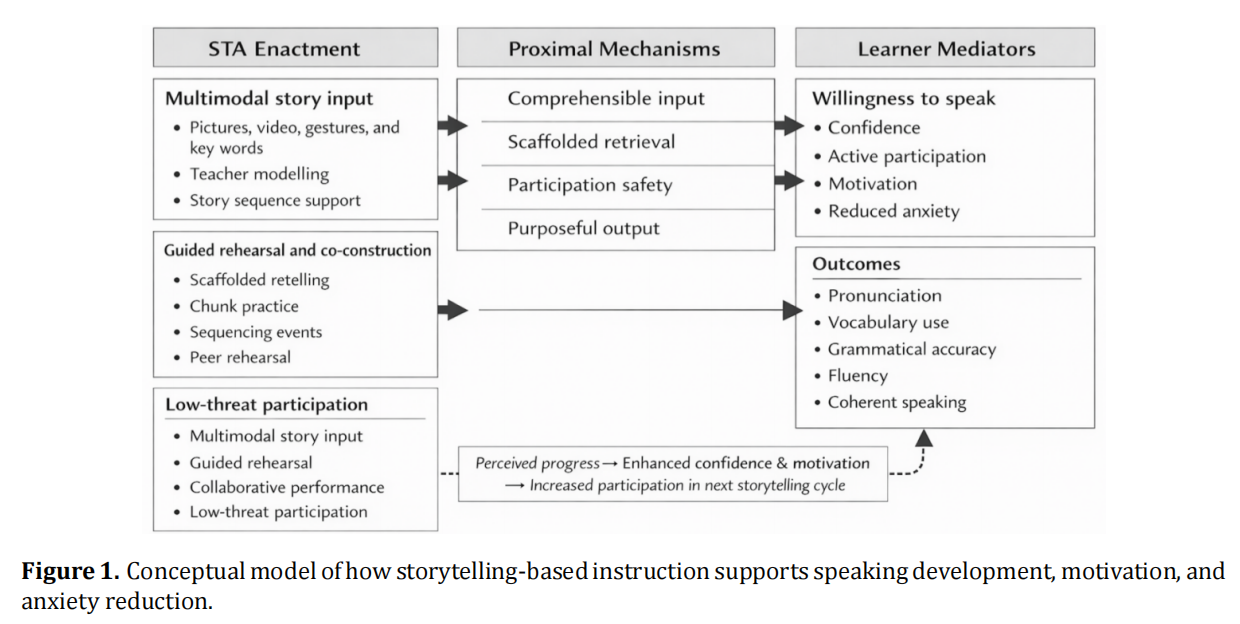
This study explored how storytelling-based instruction supported the speaking development of Chinese primary school pupils in an English as a Foreign Language (EFL) context. A qualitatively dominant mixed-methods design was used so that the study could move beyond outcome comparison and examine how pupils experienced storytelling lessons in classroom practice. The research was conducted in a public primary school in China and involved four intact Grade 5 classes (N = 160), including two experimental classes that received storytelling-based instruction and two control classes that followed regular textbook-based teaching. Qualitative data came from classroom observations and semi-structured interviews with nine purposively selected pupils, while quantitative data were drawn from pretest and posttest speaking assessments and questionnaires on motivation and anxiety. The qualitative analysis showed that storytelling-based instruction appeared to support speaking through several connected classroom processes. These included multimodal support that helped pupils understand and organise language, embodied and creative activities that encouraged expressive use, peer rehearsal that reduced the pressure of speaking, stronger engagement with lesson content, and a greater sense of ease during oral participation. Pupils also described noticeable changes in their own speaking, especially in fluency, vocabulary use, pronunciation, and confidence. The quantitative results were broadly in line with these patterns: compared with the control group, the experimental group performed better on the posttest speaking measures, reported stronger motivation, and showed lower anxiety. The findings suggest that storytelling can support young EFL learners’ speaking not simply by making lessons more enjoyable, but by changing how classroom participation is organised. In this study, storytelling created conditions in which speaking became easier to understand, more purposeful, and less intimidating for primary school pupils.

Article Article ID: 2337

Teachers’ Perspectives on AI Use for Teaching Efficiency in Vocational Education in Shandong, China: Mechanisms and Enabling Conditions

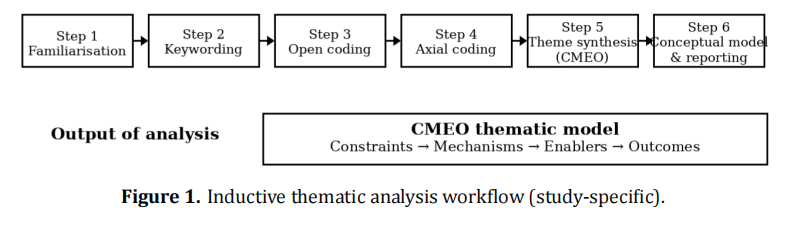
Discussion of artificial intelligence in education often moves too quickly from access to tools to claims of improved efficiency. The interview evidence in this study does not support such a direct conclusion. This article explores how teachers and administrators in Shandong, China, described their use of AI in technical and vocational education and training (TVET). It focuses on the situations in which AI appeared to reduce routine work, and the situations in which it generated additional checking, explanation, or risk. Eight semi-structured interviews were conducted across secondary, higher, and adult vocational institutions. The interviews were recorded and transcribed in Chinese. English working versions were then prepared with AI assistance for analysis and reporting. During coding and manuscript preparation, the first author returned to the Chinese transcripts to verify key terms and selected quotations. The data were analysed in NVivo through iterative coding, memo writing, and comparison across teacher and administrator accounts. Findings are organised through a Constraints–Mechanisms–Enablers–Outcomes (CMEO) model. Participants did report some efficiency gains, but only in a limited sense. These gains were mainly associated with less time spent on first-draft writing, formatting, and routine screening. They also described new work. Teachers still had to verify technical accuracy, explain AI-supported feedback to students, and adapt outputs to local equipment, syllabi, and safety rules. In higher-risk settings, AI use was accepted only when teachers retained decision authority and could justify the result. For that reason, this paper treats AI-enabled teaching efficiency as a situated professional judgement rather than as a direct measure of productivity.