
Article
Teachers’ Perspectives on AI Use for Teaching Efficiency in Vocational Education in Shandong, China: Mechanisms and Enabling Conditions
 Download

This work is licensed under a Creative Commons Attribution 4.0 International License.
Copyright
The authors shall retain the copyright of their work but allow the Publisher to publish, copy, distribute, and convey the work.
License
Journal of Qualitative Research in Education (ENAD) publishes accepted manuscripts under Creative Commons Attribution 4.0 International (CC BY 4.0). Authors who submit their papers for publication by ENAD agree to have the CC BY 4.0 license applied to their work, and that anyone is allowed to reuse the article or part of it free of charge for any purpose, including commercial use. As long as the author and original source are properly cited, anyone may copy, redistribute, reuse, and transform the content.
Authors
-
Wenpang Liu
 School of Social Sciences, Humanities & Law, Teesside University, Middlesbrough TS1 3BX, UK
Liaocheng Infant Normal School, Liaocheng 252600, China -
Ying Soon Goh
Faculty of Education, Nilai University, Nilai 71800, Malaysia
-
Sujing Lin
School of Social Sciences, Humanities & Law, Teesside University, Middlesbrough TS1 3BX, UK
School of Food and Pharmaceutical Engineering, Shenzhen Polytechnic University, Shenzhen 518055, China
Received: 6 February 2026; Revised: 20 March 2026; Accepted: 24 April 2026; Published: 20 May 2026
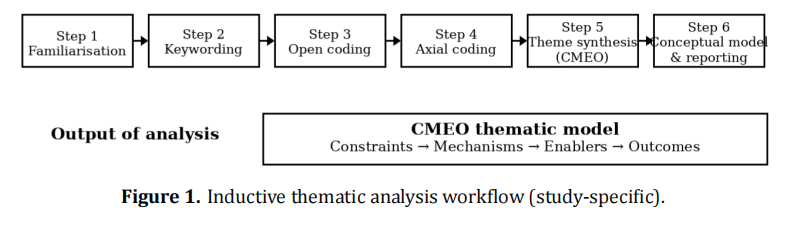
Discussion of artificial intelligence in education often moves too quickly from access to tools to claims of improved efficiency. The interview evidence in this study does not support such a direct conclusion. This article explores how teachers and administrators in Shandong, China, described their use of AI in technical and vocational education and training (TVET). It focuses on the situations in which AI appeared to reduce routine work, and the situations in which it generated additional checking, explanation, or risk. Eight semi-structured interviews were conducted across secondary, higher, and adult vocational institutions. The interviews were recorded and transcribed in Chinese. English working versions were then prepared with AI assistance for analysis and reporting. During coding and manuscript preparation, the first author returned to the Chinese transcripts to verify key terms and selected quotations. The data were analysed in NVivo through iterative coding, memo writing, and comparison across teacher and administrator accounts. Findings are organised through a Constraints–Mechanisms–Enablers–Outcomes (CMEO) model. Participants did report some efficiency gains, but only in a limited sense. These gains were mainly associated with less time spent on first-draft writing, formatting, and routine screening. They also described new work. Teachers still had to verify technical accuracy, explain AI-supported feedback to students, and adapt outputs to local equipment, syllabi, and safety rules. In higher-risk settings, AI use was accepted only when teachers retained decision authority and could justify the result. For that reason, this paper treats AI-enabled teaching efficiency as a situated professional judgement rather than as a direct measure of productivity.
Keywords:
Artificial Intelligence Technical and Vocational Education and Training (TVET) Teachers’ Perspectives Perceived Efficiency Thematic Analysis Human-AI Co-Assessment Data GovernanceReferences
- Selwyn, N. Distrusting Educational Technology: Critical Questions for Changing Times; Routledge: Abingdon, UK, 2014.
- UNESCO. Guidance for Generative AI in Education and Research; UNESCO: Paris, France, 2023. Available online: https://www.unesco.org/en/articles/guidance-generative-ai-education-and-research
- Holmes, W.; Bialik, M.; Fadel, C. Artificial Intelligence in Education: Promises and Implications for Teaching and Learning; Center for Curriculum Redesign: Boston, MA, USA, 2019.
- Luckin, R.; Holmes, W.; Griffiths, M.; et al. Intelligence Unleashed: An Argument for AI in Education; Pearson: London, UK, 2016.
- Øgård, M. Boundary objects as a starting point for reflective learning in vocational education and training classrooms. Nord. J. Vocat. Educ. Train. 2024, 14, 424–442. DOI: https://doi.org/10.3384/njvet.2242-458X.2414424
- Mårtensson, Å. Creating continuity between school and workplace: VET teachers’ in-school work to overcome boundaries. J. Vocat. Educ. Train. 2022, 74, 682–700. DOI: https://doi.org/10.1080/13636820.2020.1829009
- Yusop, S.R.M.; Rasul, M.S.; Mohammad Yasin, R.; et al. Identifying and Validating Vocational Skills Domains and Indicators in Classroom Assessment Practices in TVET. Sustainability 2023, 15, 5195. DOI: https://doi.org/10.3390/su15065195
- Kasneci, E.; Sessler, K.; Küchemann, S.; et al. ChatGPT for good? On opportunities and challenges of large language models for education. Learn. Individ. Differ. 2023, 103, 102274. DOI: https://doi.org/10.1016/j.lindif.2023.102274
- Ogunleye, B.; Zakariyyah, K.I.; Ajao, O.; et al. A Systematic Review of Generative AI for Teaching and Learning Practice. Educ. Sci. 2024, 14, 636. DOI: https://doi.org/10.3390/educsci14060636
- Wang, X.; Zainuddin, Z.; Hain, H.L. Generative artificial intelligence in pedagogical practices: A systematic review of empirical studies (2022–2024). Cogent Educ. 2025, 12, 2485499. DOI: https://doi.org/10.1080/2331186X.2025.2485499
- European Commission: Directorate-General for Education, Youth, Sport and Culture. Ethical Guidelines on the Use of Artificial Intelligence (AI) and Data in Teaching and Learning for Educators; Publications Office of the European Union: Luxembourg, Luxembourg, 2022. DOI: https://doi.org/10.2766/153756
- Shute, V.J. Focus on formative feedback. Rev. Educ. Res. 2008, 78, 153–189. DOI: https://doi.org/10.3102/0034654307313795
- Radianti, J.; Majchrzak, T.A.; Fromm, J.; et al. A systematic review of immersive virtual reality applications for higher education: Design elements, lessons learned, and research agenda. Comput. Educ. 2020, 147, 103778. DOI: https://doi.org/10.1016/j.compedu.2019.103778
- Long, P.; Siemens, G. Penetrating the fog: Analytics in learning and education. EDUCAUSE Rev. 2011, 46, 31–40. Available online: https://er.educause.edu/articles/2011/9/penetrating-the-fog-analytics-in-learning-and-education
- Creswell, J.W.; Poth, C.N. Qualitative Inquiry and Research Design: Choosing among Five Approaches, 4th ed.; Sage: Thousand Oaks, CA, USA, 2018.
- Tong, A.; Sainsbury, P.; Craig, J. Consolidated criteria for reporting qualitative research (COREQ): A 32-item checklist for interviews and focus groups. Int. J. Nurs. Stud. 2007, 19, 349–357.
- O’Brien, B.C.; Harris, I.B.; Beckman, T.J.; et al. Standards for reporting qualitative research: A synthesis of recommendations. Acad. Med. 2014, 89, 1245–1251. DOI: https://doi.org/10.1097/ACM.0000000000000388
- Guest, G.; Bunce, A.; Johnson, L. How many interviews are enough? An experiment with data saturation and variability. Field Methods 2006, 18, 59–82. DOI: https://doi.org/10.1177/1525822X05279903
- Malterud, K.; Siersma, V.D.; Guassora, A.D. Sample size in qualitative interview studies: Guided by information power. Qual. Health Res. 2016, 26, 1753–1760. DOI: https://doi.org/10.1177/1049732315617444
- Strauss, A.; Corbin, J. Basics of Qualitative Research: Techniques and Procedures for Developing Grounded Theory, 2nd ed.; Sage: Thousand Oaks, CA, USA, 1998.
- Braun, V.; Clarke, V. Using thematic analysis in psychology. Qual. Res. Psychol. 2006, 3, 77–101. DOI: https://doi.org/10.1191/1478088706qp063oa
- Hsieh, H.-F.; Shannon, S.E. Three approaches to qualitative content analysis. Qual. Health Res. 2005, 15, 1277–1288. DOI: https://doi.org/10.1177/1049732305276687
- Miao, F.; Cukurova, M. AI Competency Framework for Teachers; UNESCO: Paris, France, 2024. Available online: https://www.unesco.org/en/articles/ai-competency-framework-teachers
- Schmitt, C.; Brutzer, A. Generative artificial intelligence in vocational education and training: A framework for sustainable teacher competence development. Vocat. Technol. Educ. 2025. DOI: https://doi.org/10.54844/vte.2025.0940
- Garzón, J.; Patiño, E.; Marulanda, C. Systematic Review of Artificial Intelligence in Education: Trends, Benefits, and Challenges. Multimodal Technol. Interact. 2025, 9, 84. DOI: https://doi.org/10.3390/mti9080084
- Papagiannidis, E.; Mikalef, P.; Conboy, K. Responsible artificial intelligence governance: A review and research framework. J. Strateg. Inf. Syst. 2025, 34, 101885. DOI: https://doi.org/10.1016/j.jsis.2024.101885
- Alfiras, M.I.I.; Emran, A.Q.; Mohamed, A.M. Ethics and governance of generative AI in education: A systematic review on responsible adoption. Discover Educ. 2025, 5, 37. DOI: https://doi.org/10.1007/s44217-025-01051-y
- ISO/IEC. Information Technology—Artificial Intelligence—Management System (ISO/IEC 42001:2023); International Organization for Standardization: Geneva, Switzerland, 2023. Available online: https://www.iso.org/standard/81230.html
- ISO/IEC. Information Technology—Artificial Intelligence—Guidance on Risk Management (ISO/IEC 23894:2023); International Organization for Standardization: Geneva, Switzerland, 2023. Available online: https://www.iso.org/standard/77304.html
- NIST. Artificial Intelligence Risk Management Framework: Generative Artificial Intelligence Profile (NIST AI 600-1); National Institute of Standards and Technology: Gaithersburg, MD, USA, 2024. DOI: https://doi.org/10.6028/NIST.AI.600-1
- European Union. Regulation (EU) 2024/1689 of the European Parliament and of the Council of 13 June 2024 laying down harmonised rules on artificial intelligence and amending Regulations (EC) No 300/2008, (EU) No 167/2013, (EU) No 168/2013, (EU) 2018/858, (EU) 2018/1139 and (EU) 2019/2144 and Directives 2014/90/EU, (EU) 2016/797 and (EU) 2020/1828 (Artificial Intelligence Act). Available online: https://eur-lex.europa.eu/eli/reg/2024/1689/oj/eng (accessed on 27 February 2026).