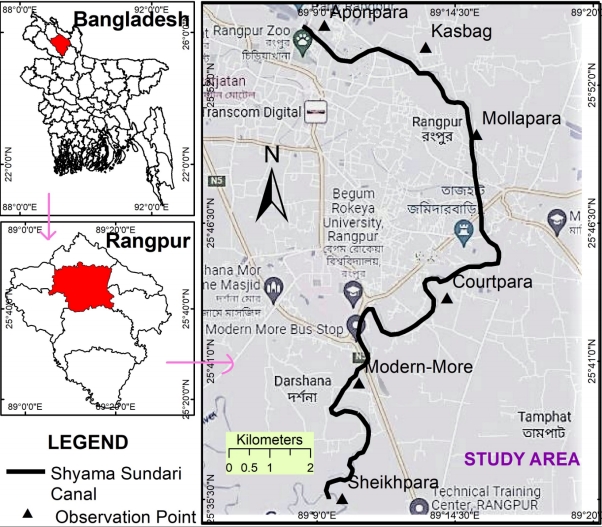
Urban canals in rapidly expanding cities are under increasing pressure from combined soil and water pollution, leading to ecological degradation. This study evaluates soil quality, water quality, and associated ecological risk in the Shyama Sundari Canal, Rangpur, using Water Quality Index (WQI), Soil Quality Index (SQI), and Structural Equation Modeling (SEM). Physicochemical water quality was assessed at six locations, while soil properties were analyzed from 100 adjacent sampling points. The calculated WQI values ranged from 121.89 to 173.52, classifying canal water as poor to very poor throughout the study area. High biochemical oxygen demand (266.40–423.54 mg/L) and chemical oxygen demand (205.00–465.00 mg/L) were the dominant contributors, indicating substantial organic and chemical pollution. Mean SQI values ranged from 0.45 to 0.78, with higher soil quality in some locations and lower quality in others due to acidic pH and fine-textured soils. SEM results showed that soil contamination and water pollution are positively related, with water pollution and soil contamination having the strongest impact on ecological risk. This study highlights the novel integration of soil–water quality assessment with SEM to elucidate coupled degradation pathways. The results provide actionable insights for urban planners and environmental managers, emphasizing the need for integrated management strategies targeting both wastewater and canal sediments to mitigate ecological stress.

 138 (Views)
  130 (Downloads)