ENT Updates

Volume 16 Issue 2 (2026): In Progress

Review Article ID: 2354

Biologics: Its Role in Treating Chronic Rhinosinusitis and Nasal Polyps

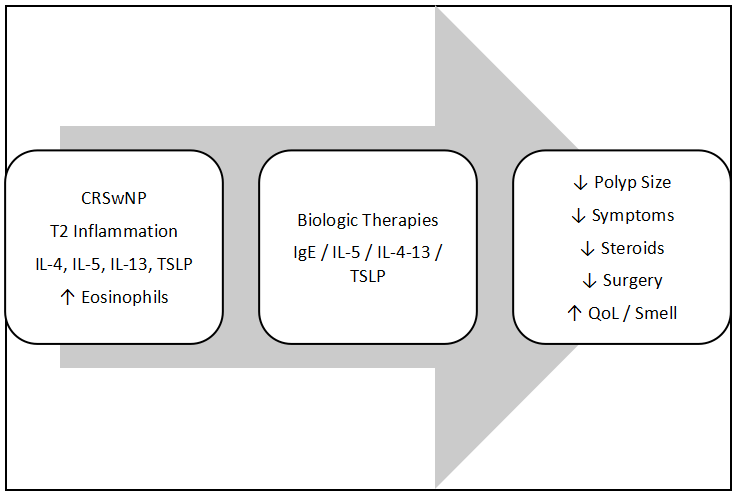
Chronic rhinosinusitis with nasal polyps (CRSwNP) is a clinically heterogeneous inflammatory disorder characterized by persistent sinonasal inflammation and a notable tendency for recurrence, even in patients receiving appropriate medical and surgical treatment. This heterogeneity largely reflects differences in underlying inflammatory endotypes, which in turn influence clinical presentation, risk of postoperative relapse, and response to therapy. In the majority of patients, type 2 (T2) inflammation represents the dominant immunologic profile, driven by cytokines such as interleukin (IL)-4, IL-5, IL-13, and thymic stromal lymphopoietin (TSLP). Targeting these pathways has become a central focus in recent therapeutic strategies. In this context, the introduction of biologic agents has substantially altered the management of patients with severe and difficult-to-control disease. Data from phase 3 randomized trials have consistently shown meaningful reductions in polyp burden and symptom severity, along with decreased reliance on systemic corticosteroids and a lower need for revision surgery. These findings are supported by real-world studies, which suggest that the benefits of biologic therapies extend to more heterogeneous patient populations, including those with comorbid asthma or aspirin-exacerbated respiratory disease. Despite these advances, several important questions remain unresolved. In particular, there is a need for more precise patient selection based on reliable biomarkers, as well as clearer guidance on long-term treatment strategies. Issues related to cost-effectiveness and the optimal timing of treatment discontinuation or switching also continue to represent areas of ongoing debate in clinical practice.

Review Article ID: 2360

Single-Cell Sequencing and Spatial Transcriptomics Reveal Functional Plasticity of Lymphatic Endothelial Cells in Disease

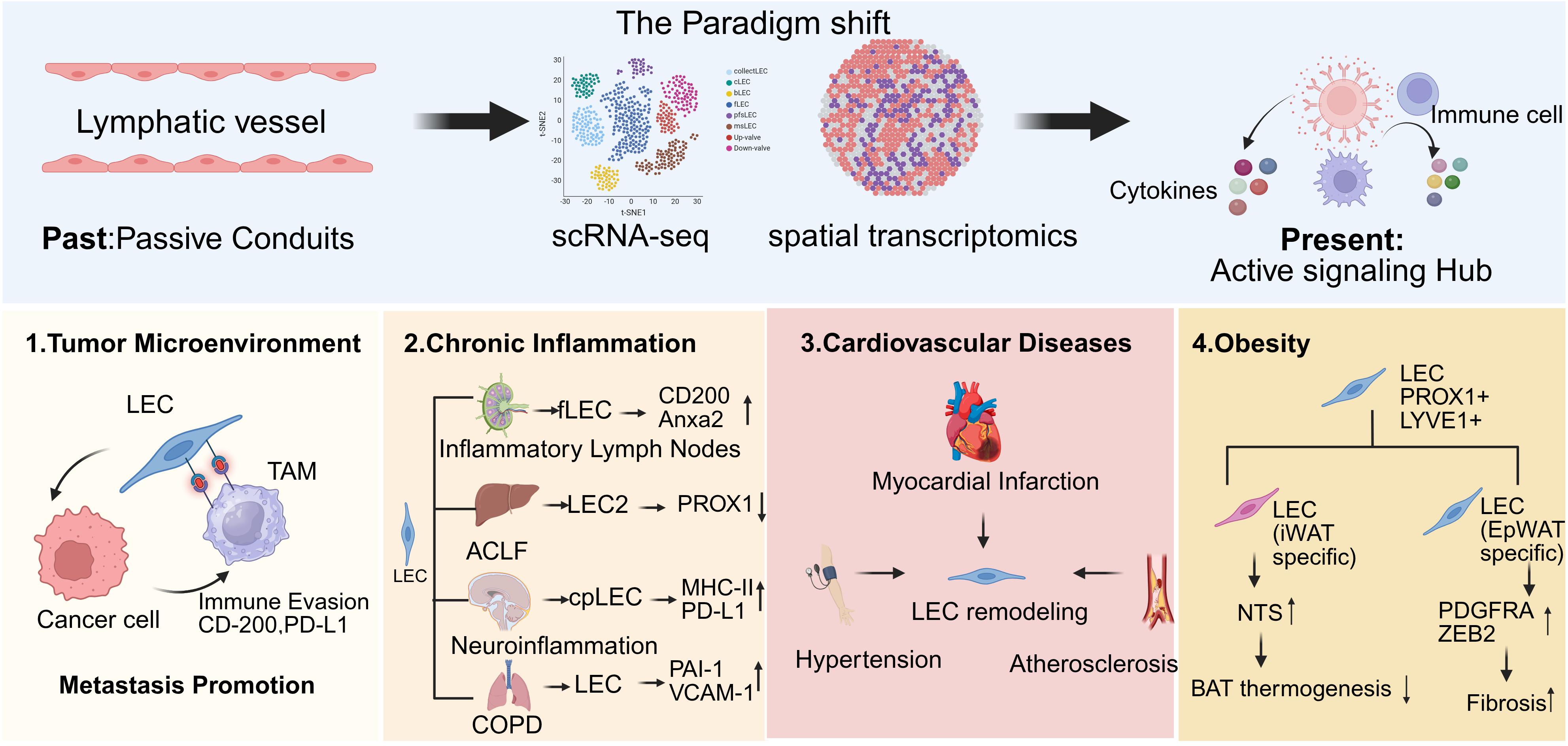
Lymphatic endothelial cells (LECs) have long been viewed as passive conduits that merely maintain tissue fluid homeostasis. But that picture has changed dramatically. Recent advances in single-cell transcriptome sequencing (scRNA-seq) and spatial transcriptomics (ST) have revealed that LECs are highly heterogeneous and remarkably plastic in their functions. This review summarizes the new research results of LECs based on the above two technologies. LECs in normal tissues have multiple types of subpopulations. In the lymph node, there are further sub-regions, such as the subcapsular sinus ceiling/floor LECs, medullary sinus LECs, valve LECs and other special subsets. Each subpopulation performs distinct functions depending on its anatomical location, ranging from lymph drainage and barrier formation to immune regulation, etc. Under pathological conditions such as cancer, chronic inflammation, cardiovascular disease, obesity, and tissue repair, LECs undergo profound transcriptional reprogramming and phenotypic remodeling. They express immune checkpoint molecules, secrete chemokines, and build ligand-receptor interaction networks. In other words, LECs transform from passive structural pipes into active signaling integration centers and immune regulatory hubs. They participate directly in immune response modulation, metastasis promotion or suppression, tissue repair, and fibrosis. These findings have fundamentally redefined the biological role of LECs in the microenvironment. Targeting LECs heterogeneity and their bidirectional cell-cell interaction networks may offer novel stromal-targeted strategies for intervening in tumor lymphatic metastasis, reversing chronic inflammation, and treating cardiovascular diseases.

Review Article ID: 2370

Shear Wave Elastography: A New Frontier in Head and Neck Imaging

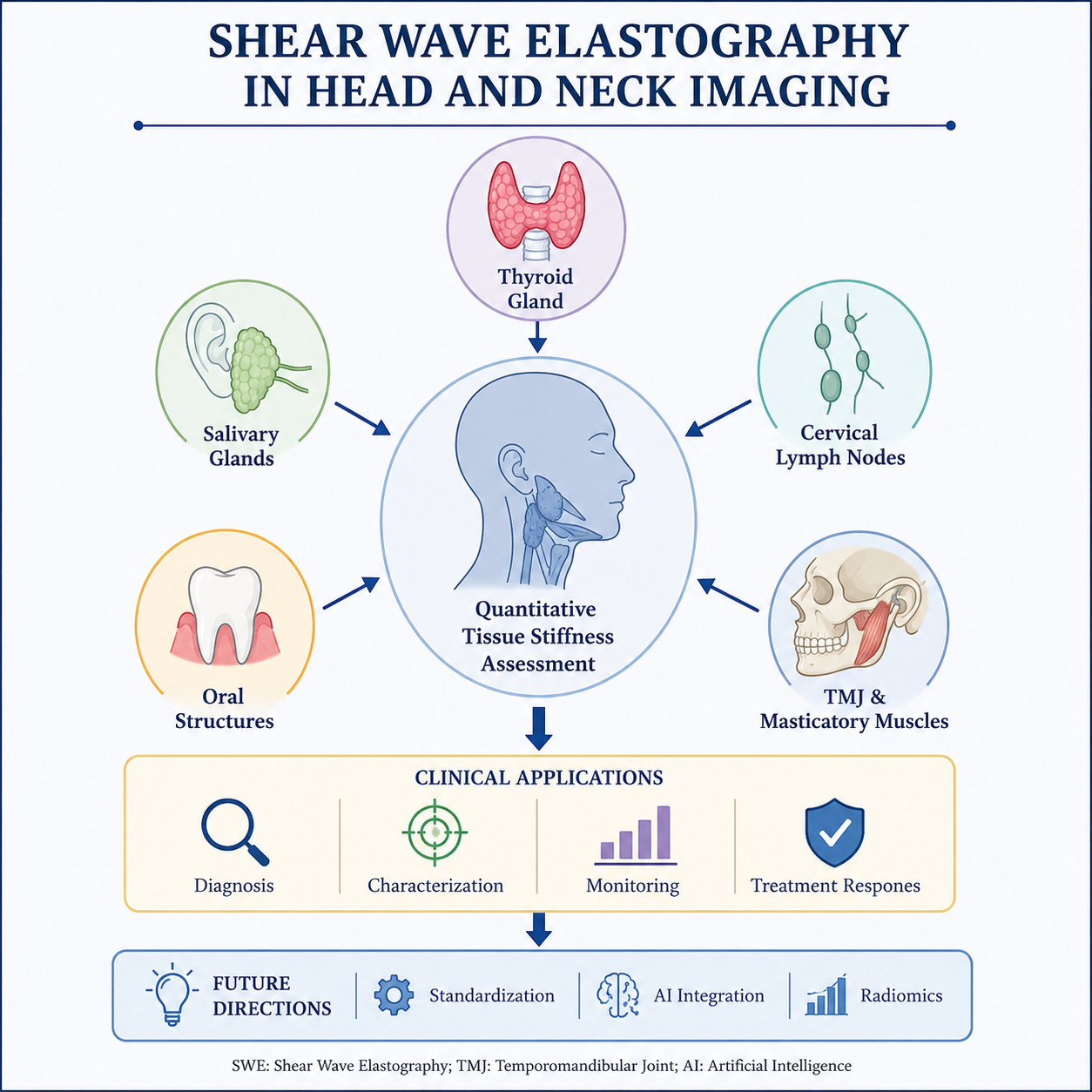
Shear Wave Elastography (SWE) has emerged as a transformative ultrasound-based imaging modality for the quantitative assessment of tissue stiffness, providing valuable insights into the biomechanical properties of normal and diseased tissues. Unlike conventional ultrasonography, which primarily relies on morphological evaluation, SWE enables real-time, reproducible, and relatively operator-independent measurements of tissue elasticity. In recent years, its application has expanded considerably within head and neck imaging, where tissue stiffness serves as a potential biomarker for disease characterization, diagnosis, and treatment monitoring. This narrative review provides a comprehensive overview of the physical principles, quantitative parameters, technical considerations, and clinical applications of SWE in the head and neck region. Current evidence supporting its use in thyroid nodules, salivary gland disorders, cervical lymph node evaluation, oral soft tissue lesions, periodontal assessment, and temporomandibular joint and masticatory muscle disorders is discussed. The integration of SWE with conventional B-mode and Doppler ultrasonography has demonstrated improved diagnostic confidence, enhanced lesion characterization, and reduced reliance on invasive diagnostic procedures in selected clinical scenarios. Despite its promising clinical utility, several challenges remain, including variability in acquisition protocols, machine-dependent elasticity measurements, lack of universally accepted cutoff values, and limited standardization across institutions. Nevertheless, ongoing technological advancements and the growing interest in artificial intelligence, radiomics, and multiparametric ultrasound approaches are expected to further enhance the diagnostic and prognostic capabilities of SWE. Overall, SWE represents a valuable non-invasive adjunct to routine head and neck imaging and holds significant potential as a quantitative biomarker in precision medicine.