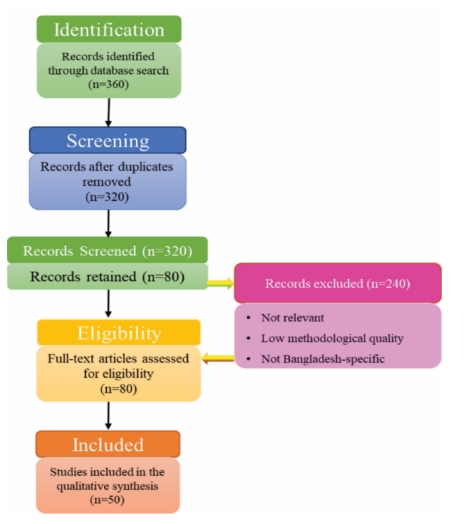
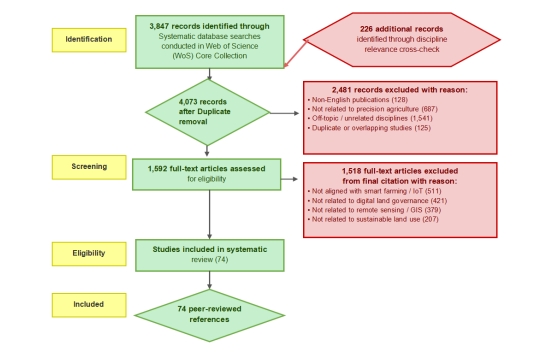
Agricultural land management is undergoing a major transformation due to the development of precision agriculture, remote sensing, geographic information systems (GIS), and data-based decision-support technologies, which are transforming the way land resources are surveyed, assessed, managed, and governed across a wide range of agro-climatic environments. This paper is a synthesis of research on the interplay between agricultural technology and land resource management, focusing on the role of digital innovations in transforming land survey, ecological restoration, land informatization, and land system reform in rural areas. Drawing from a systematic review of peer-reviewed articles published between 2010 and 2025 via the Web of Science core database and VOSviewer bibliometric tools, adoption patterns, performance outcomes, and governance implications of UAV-based field monitoring, machine learning-based soil classification, and IoT-based systems are examined. It has been shown that these technologies can be used to improve resource-use efficiency, improve soil health monitoring, aid ecological restoration, and foster equitable rural land governance. Satellite-guided systems and precision agriculture have achieved 20–30% yield gains and 40–60% reduction in input losses. Issues such as high implementation costs, limited digital infrastructure in rural areas, data interoperability, and smallholder capacity-building pose challenges. There are still knowledge gaps regarding long-term ecological effects and co-design of policies. This review proposes an integrated framework that aligns technological adoption in agriculture with sustainable land-use goals, which will help steer policymakers, agronomists, and land administrators towards the 2030 sustainable development agenda.

 292 (Views)
  70 (Downloads)