Intelligent Agriculture

Volume 2 Issue 1 (2026): In Progress

Review Article ID: 2335

Regenerative Biochar for Carbon Sequestration and Emerging Technologies in Soil Organic Carbon Management for Sustainable Agriculture: A Review

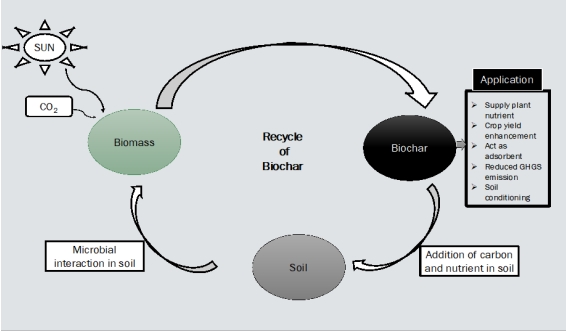
Climate change is one of the most serious environmental issues and immediate worldwide action is essential to safeguard the earth for future generations. This study examines the use of regenerative biochar in conjunction with machine learning to assess the potential of carbon in soil for climate smart agriculture. Biochar is cost effective, practical and environmentally benign and it may be used to efficiently sequester carbon dioxide, methane and nitrous oxide, all of which are significant Green House Gases. It is reasonably stable form of carbon, produced by pyrolizing biomass at both high and moderate temperatures. Biochar has been found to increase agricultural productivity, enhance nutrient and water efficiency and help the environment, in addition to assisting in carbon sequestration, gives a more productive choice for sustainable agriculture. It includes a vast range of applications, including construction materials like concrete and asphalt, innovative carbon-based composites, bioplastics, and even medical applications. The use of new artificial intelligence and machine learning technology contributed substantially to understanding climate change challenges without wasting time or money. This paper extensively covers all the regenerative biochar strategies for carbon sequestration and role of emerging technology in measuring and modelling soil organic carbon in agricultural lands.

Article Article ID: 2334

Soil Nutrient Assessment Using Ion-Selective Electrode-Based Nutrient Analyzer for Precision Agriculture

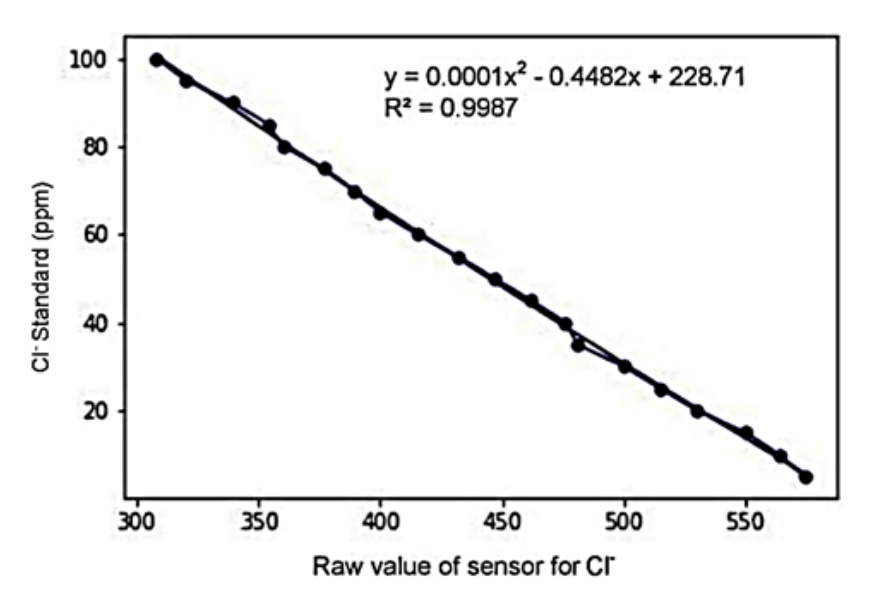
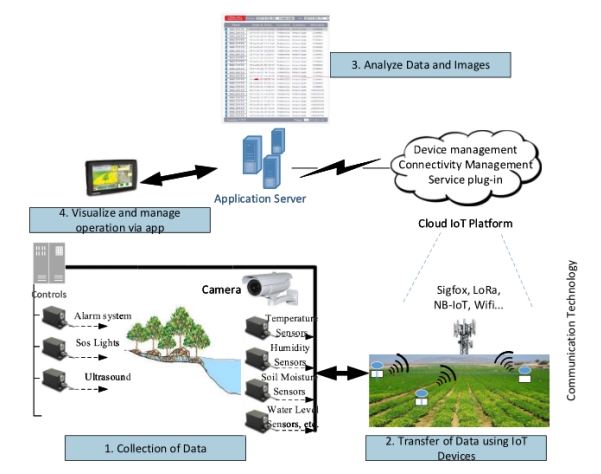
Rapid and accurate soil nutrient assessment is critical for precision agriculture. This study presents a portable and intelligent soil nutrient analyzer based on ion-selective electrodes (ISE) for rapid, on-site estimation of potassium, nitrate, and chloride. Unlike image-based or machine learning approaches that rely on indirect inference, the proposed system directly measures ion activity using electrochemical sensing, ensuring higher reliability under field conditions. The device integrates sensing, signal conditioning, self-calibration using polynomial regression, and wireless data transmission for real-time soil health assessment. A total of 546 soil samples collected from diverse agricultural locations in Dhanbad district, India, were used for validation, with measurements compared against standard laboratory methods including flame photometry and UV-Vis (ultraviolet-visible) spectrophotometry. The developed system achieved high correlation coefficients of 0.994 (potassium), 0.933 (nitrate), and 0.946 (chloride). Statistical evaluation using RMSE (root mean square error), measurement uncertainty, and hypothesis testing confirms the robustness of the calibration model. The study highlights the advantages of direct sensing over image-based prediction methods, particularly in terms of accuracy, environmental robustness, and practical deployment. Limitations related to sensor drift, soil heterogeneity, and field conditions are also discussed. The proposed system provides a scalable and cost-effective solution for precision agriculture and real-time soil monitoring.