Carbon Circularity(cc)

Carbon Circularity

Latest Issue
Volume 1, Issue 1
December 2025
Access: Full Open access

Carbon Circularity is a peer-reviewed, open access journal dedicated to advancing the science, technology, and policy of circular carbon systems for a sustainable future. The journal provides an interdisciplinary platform for research that addresses the reduction, reuse, recycling, and removal of carbon across industrial, environmental, and socio-economic domains.

  • E-ISSN: 2755-6220
  • Frequency: Quarterly
  • Language: English
  • E-mail: cc@ukscip.com

Submit Manuscript

Latest Published Articles

Articles Article ID: 1646

Biochar vs. Hydrochar in Cementitious Materials: A Comparative Review of Properties, Performance, and Circular-Economy Trade-offs

The environmental burden of cement production, responsible for nearly 7% of global CO₂ emissions, has intensified the search for low-carbon, resource-efficient alternatives in the construction sector. Biochar, a carbon-rich byproduct derived from the thermochemical conversion of agricultural and urban biomass, has emerged as a multifunctional additive in both cementitious and non-cementitious systems. Its high porosity, alkaline pH, and stable carbon content enable improvements in hydration, mechanical strength, thermal insulation, and durability, while simultaneously offering long-term carbon sequestration. This review critically evaluates the morphological, physicochemical, and functional characteristics of biochar and its effects on cement-based materials, drawing from over 127 published studies. It also highlights the potential of hydrochar, produced through hydrothermal carbonization, as a complementary material in low-carbon construction systems, although research in this area remains limited. Key parameters such as feedstock type, pyrolysis conditions, particle size, and dosage are identified as major factors influencing performance. Beyond technical performance, the use of biochar aligns with circular economy principles by valorizing organic waste streams, reducing reliance on virgin cement and aggregate resources, and enabling industrial symbiosis. Emerging applications in thermal and acoustic panels, multifunctional coatings, and lightweight composites further reinforce its versatility. However, challenges remain regarding workability, performance variability, scalability, and the lack of standardized production and application protocols. Future directions include the standardization of biochar characteristics, large-scale durability validation, integration with life cycle assessment (LCA), development of technical guidelines, and cost–benefit analyses. Overall, biochar and hydrochar represent viable strategies to decarbonize the construction sector and promote sustainable material flows in alignment with global climate and resource-efficiency goals.

Articles Article ID: 1861

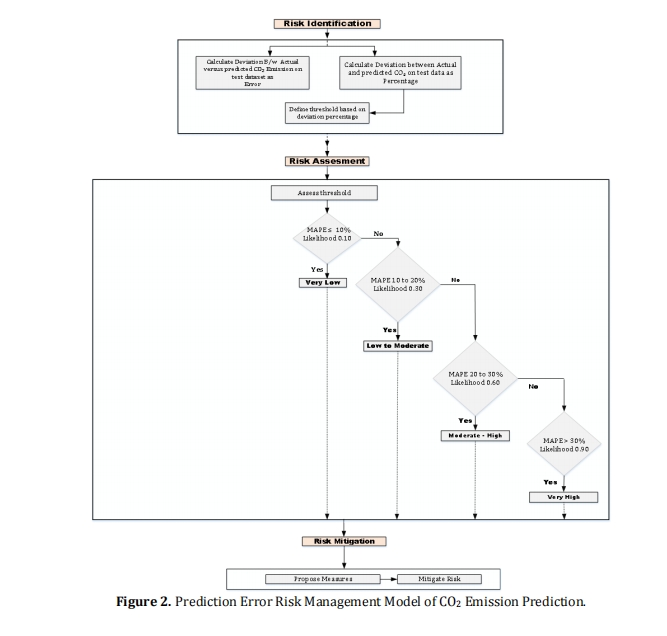
Household-Level Carbon Footprint Forecasting in Nigeria: A Machine Learning Approach with Prediction Error Risk Assessment for Net-Zero Emissions

The study develops a data-driven framework for predicting household CO2 emissions within a developing economic setting using Talba Estate in Minna, Niger State, Nigeria, as a case study. Hourly data were collected from 10 households for the whole of 2023, encapsulating electricity consumption, income, household size, and climatic parameters. Four machine learning models were benchmarked and evaluated within a prediction-uncertainty risk assessment framework, which quantifies the likelihood and impact of model-based prediction errors rather than policy or environmental risks. The models were trained on a 70/30 train-test split and evaluated within a novel prediction-error risk assessment framework that quantifies model uncertainty. The XGBoost achieved the highest in predictive accuracy among the four, with minimum error rates: MAPE = 0.0073, RMSE = 0.1463, and MAE = 0.0340, an R2 of 0.9999, almost a perfect fit. The robustness of the model was also tested by prediction-error risk scoring, with values averaging around zero and stability values at about 0.100 across households. The key innovation is the integration of machine learning forecasting with a structured prediction-error risk assessment framework, applied to high-resolution household data in a resource-constrained setting, a combination rarely addressed in existing literature. The results point toward a promising outlook for hybridizing an advanced machine-learning toolkit with prediction-uncertainty risk quantification toward accurate carbon forecasting in resource constraint context. The findings offer actionable insights for policymakers supporting Sustainable Development Goal 13 and Nigeria’s net-zero emissions targets, advancing scalable carbon monitoring frameworks for developing regions.

Review Article ID: 2046

Hydrothermal Carbonization of Sewage Sludge: A Pathway toward Sustainable Energy Transition and Regional Development

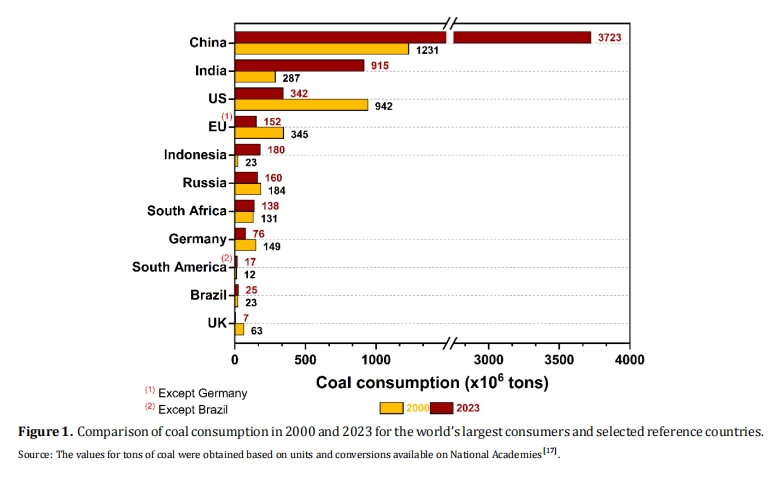
The transition toward low-carbon energy systems requires technologies capable of converting residual biomass into value-added energy carriers. In this context, hydrothermal carbonization (HTC) of sewage sludge (SS) has emerged as a promising pathway for producing solid biofuels while addressing persistent challenges in waste management and sanitation. This study evaluates the technological basis, environmental implications, and regional development potential of SS-HTC within renewable energy and decarbonization strategies. HTC enables the direct processing of wet sewage sludge, avoiding energy-intensive drying steps and generating a carbon-rich hydrochar with reduced moisture content and improved fuel properties compared to the raw material. In addition to the solid fraction, the process produces a nutrient-rich liquid stream that can be further valorized, supporting circular resource management and integrated waste-to-energy systems. Although the estimated global production potential of SS-derived hydrochar (approximately 45 million dry tons) is insufficient to replace fossil coal on a large scale, its targeted use in selected industrial sectors can partially substitute mineral coal, contributing to greenhouse gas mitigation and incremental decarbonization. Beyond its technological advantages, SS-HTC offers opportunities for regional development, particularly in areas with expanding wastewater treatment infrastructure. Integrating HTC into sanitation systems enables localized biofuel production, reduces dependence on imported coal, and supports industrial diversification. The State of Paraná, Brazil, with a population of 11.5 million and sanitation coverage of approximately 81%, exemplifies a favorable context in which SS-HTC can enhance regional competitiveness while advancing environmental sustainability and socio-economic development within the broader low-carbon transition.

View All Issues