
Urban Agriculture and Circular Food Systems

Latest Issue
Volume 1, Issue 1
December 2025
Access: Full Open access

Urban Agriculture and Circular Food Systems is an international, peer-reviewed, open access journal dedicated to advancing knowledge and fostering innovation in the intersecting fields of urban agriculture, sustainable food systems, and circular economy principles. The journal provides a high-impact platform for interdisciplinary research that addresses the challenges and opportunities of feeding growing urban populations while promoting environmental resilience, resource efficiency, and socio-economic equity.

  • E-ISSN: 2978-4417
  • Frequency: Quarterly
  • Language: English
  • E-mail: uacfs@ukscip.com

Submit Manuscript

Latest Published Articles

Articles Article ID: 2300

Effects of Agroecological-Based Techniques on Pest, Weed, and Disease Management in Orange-Fleshed Sweet Potato (OFSP)

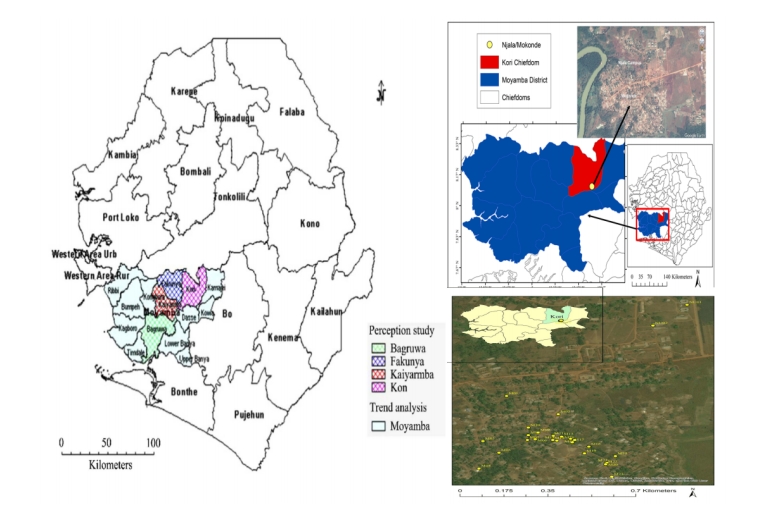
Orange-fleshed sweet potato (OFSP) is a key biofortified crop for improving food and nutritional security in Sub-Saharan Africa, including Sierra Leone, however, its production is hindered by insect pests, diseases, and weeds. A field experiment was conducted in 2024 at Njala University, Sierra Leone, using a 3 × 4 factorial arrangement in a randomized complete block design (RCBD) with three replications to evaluate agroecological management techniques. Data were collected on vegetative growth, pest population and damage, diseases incidence and severity, weed density and yield, and analyzed using RStudio software. The results showed significant (p < 0.05) varietal and treatment effects on all measured parameters. Organic 1 significantly reduced aphid, tortoise beetle, and whitefly population (3.33–6.0 insect plant−1 at 12 weeks after planting) compared to control (13.67–13.78 insects’ plant−1), and a lowered disease severity score was observed which ranged from 1.0–1.2 at 12 weeks after planting compared to control (4.6–4.8). Organic 1 also produces the highest tuber yield (6.2 t ha−1), outperforming the inorganic treatment (3.1 t ha−1) and control (1.5 t ha−1). In contrast, the inorganic treatment achieved the greatest weed suppression (4.5–4.9 plants m2) compared with the control (28.6–30.1 plants m2). Among varieties, Kaphulira recorded superior vegetative growth and yield, while Chipika exhibited relatively lower pest infestation. Integrating organic-based agroecological pest management, especially the combination of poultry manure and neem extract, provides an ecologically sustainable, productive alternative to sole reliance on synthetic inputs and enhanced OFSP productivity.

View All Issues