Climate Policy and Green Economy Journal

Latest Issue
Volume 1, Issue 1
November 2025
Access: Full Open access

Climate Policy and Green Economy Journal is an international, peer-reviewed, open access journal that publishes cutting-edge research on climate governance, sustainable development, and the transition toward green and resilient economies. The journal serves as a platform for interdisciplinary dialogue among researchers, policymakers, economists, and practitioners, focusing on the design, implementation, and evaluation of climate policies that drive low-carbon development, environmental equity, and economic innovation.

E-ISSN: 2978-4433

Frequency: Semi-annual

Language: English

Submit Manuscript

Latest Published Articles

Articles Article ID: 1850

Trapped in Tradition or Trailblazing Change? Unveiling the Dual Nature of Path Dependence in Manufacturing Pollution Control

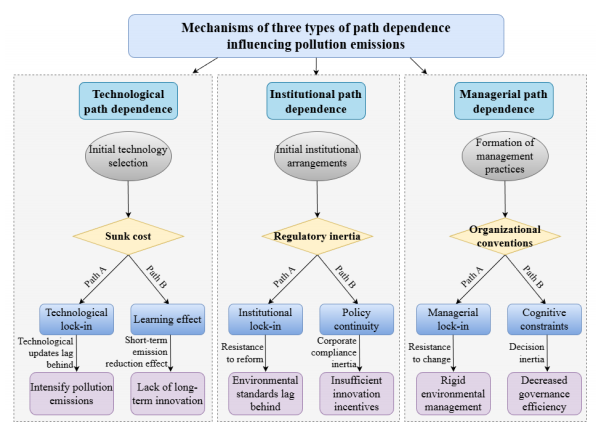
This study employs panel data from 1884 listed manufacturing companies in China (2009–2021) to investigate the environmental effects of path dependence on atmospheric pollution emissions. Using dictionary-based textual analysis of annual reports, we measure three dimensions of path dependence—technological, institutional, and managerial—and examine their non-linear relationships with sulfur dioxide emissions through fixed-effects models. Our findings reveal consistent U-shaped patterns across all dependence types: moderate levels initially reduce emissions (the “honey phase”) while excessive reliance leads to increased pollution (the “arsenic phase”). The analysis demonstrates that technological path dependence operates through sunk costs and learning effects, institutional dependence reflects regulatory inertia, and managerial dependence stems from organizational routines. Robustness tests using alternative pollution measures and instrumental variable approaches confirm these relationships. The study identifies significant heterogeneity in these effects. Non-state-owned enterprises exhibit stronger path dependence impacts due to greater flexibility, while high-maturity firms show amplified U-curves reflecting their accumulated experience. Conversely, capital-intensive enterprises display attenuated effects, suggesting diminishing returns to scale in pollution control. These findings highlight the dual nature of path dependence as both a stability mechanism and potential barrier to innovation. The policy implication is that manufacturing pollution control strategies should account for both dependence levels and firm-specific characteristics, maintaining path dependence within optimal ranges to harness stabilization benefits without impeding technological transitions. This research contributes to environmental governance literature by extending path dependence theory to pollution control and offering a multidimensional analytical framework for sustainable manufacturing transformation.

Articles Article ID: 2251

Macroeconomic Determinants of Environmental Degradation in India: An Empirical Investigation
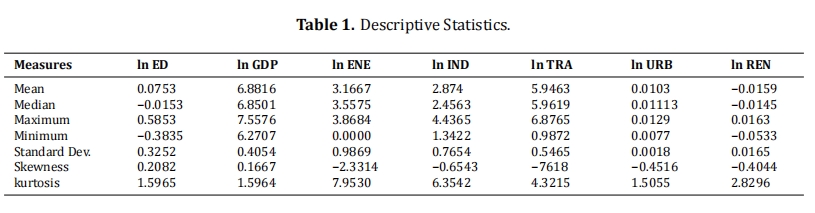
Understanding the macroeconomic drivers of environmental degradation is essential for formulating effective sustainability strategies in emerging economies. This study examines the long-run and short-run relationships between environmental degradation and key macroeconomic factors in India, including economic growth, energy consumption, industrialization, trade openness, urbanization, and renewable energy use over the period 1990–2023. Using annual time-series data and applying the Autoregressive Distributed Lag (ARDL) bounds testing approach with an error-correction framework, the analysis confirms the existence of a stable long-run equilibrium relationship among the variables. The results indicate that economic growth and conventional energy consumption exacerbate environmental degradation in the long run, reflecting persistent scale effects and fossil fuel dependence, while trade openness and renewable energy adoption mitigate environmental pressures through technological diffusion and cleaner energy transitions. Urbanization emerges as a significant structural driver of environmental stress, particularly in the long run, highlighting the role of unplanned urban expansion and rising energy demand. The short-run dynamics reveal meaningful adjustment processes, suggesting that environmental outcomes respond gradually to macroeconomic and policy shocks. Overall, the findings imply that achieving environmental sustainability in India requires accelerating the energy transition, promoting low-carbon industrial development, strengthening sustainable urban governance, and systematically integrating environmental objectives into national growth and trade policies to decouple economic development from environmental degradation.

View All Issues