
Research Article
The Carbon Market Paradox: When Emissions Do Not Determine Trading Actions
 Download

This work is licensed under a Creative Commons Attribution-NonCommercial 4.0 International License.
Copyright
The authors shall retain the copyright of their work but allow the Publisher to publish, copy, distribute, and convey the work.
License
Clean Energy Technologies (CET) publishes accepted manuscripts under Creative Commons Attribution 4.0 International (CC BY 4.0). Authors who submit their papers for publication by Clean Energy Technologies (CET) agree to have the CC BY 4.0 license applied to their work, and that anyone is allowed to reuse the article or part of it free of charge for any purpose, including commercial use. As long as the author and original source is properly cited, anyone may copy, redistribute, reuse and transform the content.
Authors
-
Eka Sudarmaji
 Faculty of Economics and Business, Pancasila University, Jakarta 12630, Indonesia
-
M. Rubiul Yatim
Faculty of Economics and Business, Pancasila University, Jakarta 12630, Indonesia
-
Herlan
Faculty of Economics and Business, Pancasila University, Jakarta 12630, Indonesia
- Arya Jati Kusuma Al-ansori Faculty of Economics and Business, Pancasila University, Jakarta 12630, Indonesia
Received: 7 July 2025; Revised: 25 September 2025; Accepted: 8 October 2025; Published: 14 November 2025
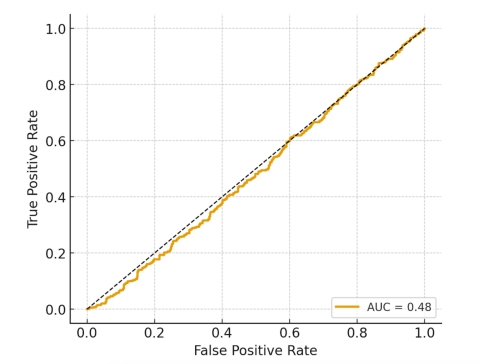
This study examined how carbon pricing and compliance costs affect corporate trading behaviour in carbon markets. It addressed a gap in understanding how market-oriented climate policies shape corporate conduct at the micro level. The study used a two-stage quantitative methodology and analysed 5,000 firm-level records from four sectors (cement, energy, manufacturing, steel) and multiple fuel types. Multiple linear regression identified determinants of carbon prices and compliance costs. Logistic regression assessed whether these factors could predict firms’ trading decisions—whether to purchase or sell allowances. Sensitivity and scenario analyses tested model robustness under theoretical conditions: high emissions, policy tightening, demand shock, and price escalation. Results showed very weak links between operational variables and market outcomes. The carbon price regression had an R2 of 0.0019, and the compliance cost regression had an R2 of 0.0007, indicating that firm-level factors explain less than 0.2% of price variation. This is not a statistical failure—it’s the key finding and the novel contribution of this study: treating near-zero explanatory power as substantive evidence that carbon pricing and trading are driven mainly by external policy frameworks, regulatory uncertainty, and strategic anticipation—not current emissions or compliance costs. The logistic regression’s accuracy was 0.50 and ROC-AUC 0.48, consistent with random classification, further supporting the conclusion. The results show that effective carbon markets need more than price signals. Clear regulatory rules, stable allowance mechanisms, and supportive institutional infrastructure are crucial for aligning firm incentives with real emission-reduction objectives.
Keywords:
Carbon Trading Behaviour Carbon Pricing Determinants Firm-Level Emission Strategies Policy Uncertainty Strategic Compliance DecisionsReferences
- Xia, X.; Li, J.; Wei, W.; et al. Emission reduction levels of manufacturers under carbon trading policies. Energy Econ. 2025, 141, 108111. DOI: https://doi.org/10.1016/j.eneco.2024.108111
- Kukah, A.S.K.; Jin, X.; Osei-Kyei, R.; et al. Systematic review of modelling techniques in carbon trading research in construction. J. Facil. Manag. 2024, 23, 886–912. DOI: https://doi.org/10.1108/JFM-03-2024-0027
- Zhang, Y.-C.; Liu, J.-B.; Wang, S.-Y. The impact of carbon trading policy on embodied carbon emission in China’s construction industry: Evidence from a quasi-natural experiment. J. Clean. Prod. 2025, 522, 146354.
- Liu, H.; Bo, H. How carbon trading in the power sector affects carbon emission efficiency: An empirical study based on Chinese provincial panel data. J. Urban Manag. 2025, 15, 556–567. DOI: https://doi.org/10.1016/j.jum.2025.08.004
- Dixit, A.K.; Pindyck, R.S. Investment Under Uncertainty; Princeton University Press: Princeton, NJ, USA, 1994.
- Sudarmaji, E.; Achsani, N.A.; Arkeman, Y.; et al. Alternative PSS Business Models of ESCO: Towards an Innovative New Model. Indones. J. Bus. Entrep. 2021, 7, 296–306.
- Xi, B.; Jia, W. Research on the impact of carbon trading on enterprises’ green technology innovation. Energy Policy 2025, 197, 114436.
- Wang, X.; Wang, J.; Wang, K.; et al. How does the carbon trading market promote green technology innovation? Econ. Innov. New Technol. 2025, 1–20. DOI: https://doi.org/10.1080/10438599.2025.2551760
- Zhang, Z.; Gao, Y.; Ai, Q.; et al. Multi-Timescale Energy Management of Multi-Energy Virtual Power Plant Considering Carbon Trading Mechanism and V2G Interaction. In Proceedings of the IEEE Industry Applications Society Annual Meeting, Taipei, Taiwan, 15–20 June 2025. DOI: https://doi.org/10.1109/IAS62731.2025.11061421
- Jindal, A.; Puri, S.; Shrimali, G. Designing a prospective carbon trading market in India: Key properties, enabling features and linkages. Appl. Energy 2025, 386, 125595.
- Guo, X.; Wang, L.; Ren, D. Optimal scheduling model for virtual power plant combining carbon trading and green certificate trading. Energy 2025, 318, 134750.
- Sudarmaji, E.; Achsani, N.A.; Arkeman, Y.; et al. Can energy intensity impede the CO2 emissions in Indonesia? LMDI-Decomposition Index and ARDL: Comparison between Indonesia and ASEAN countries. Int. J. Energy Econ. Policy 2021, 11, 308–318.
- Zhang, S.; Zheng, X.-X.; Jia, F.; et al. Pricing strategy and blockchain technology investment under hybrid carbon trading schemes: A biform game analysis. Int. J. Prod. Res. 2025, 63, 5336–5357.
- Jiang, M.; Che, J.; Li, S.; et al. Incorporating key features from structured and unstructured data for enhanced carbon trading price forecasting with interpretability analysis. Appl. Energy 2025, 382, 125301.
- Jiang, M.; Yu, X.; Xu, J.; et al. Exploring the emission spillover effects in production networks under carbon trading market: Insights into complementary and competitive industries. Environ. Impact Assess. Rev. 2025, 110, 107720.
- Setyawan, S.; Juanda, A.; Inata, L.C. Do Carbon Emission Reporting and Carbon Trading Policies Improve Corporate Business Sustainability? Account. Anal. J. 2025, 14, 12–20.
- Dat, N.T.; Anh, T.T.M.; Hong, N.T.H. The Impact of Climate Policy on Vietnamese Firms’ Environmental Reporting: Evidence from Corporate Carbon Trading. J. Environ. Assess. Policy Manag. 2025, 27, 1–39.
- Feng, Y.; Lei, Y. Carbon trading price and carbon performance of high energy-intensive enterprises. Manag. Decis. Econ. 2025, 46, 489–501.
- Takona, J.P. Research design: qualitative, quantitative, and mixed methods approaches/sixth edition. Qual. Quant. 2024, 58, 1011–1013.
- Saunders, M.; Lewis, P.; Thornhill, A. Research Methods for Business Students; Pearson: Harlow, UK, 2023.
- Zhang, D.; Karplus, V.J.; Cassisa, C.; et al. Emissions trading in China: Progress and prospects. Energy Policy 2014, 75, 9–16. DOI: https://doi.org/10.1016/j.enpol.2014.01.022
- Newell, R.G.; Pizer, W.A.; Raimi, D. Carbon Markets 15 Years after Kyoto: Lessons Learned, New Challenges. J. Econ. Perspect. 2013, 27, 123–146.
- Saltelli, A.; Ratto, M.; Andres, T.; et al. Global Sensitivity Analysis: The Primer; John Wiley & Sons: Chichester, UK, 2008.
- Hintermann, B.; Peterson, S.; Rickels, W. Price and Market Behavior in Phase II of the EU ETS: A Review of the Literature. Rev. Environ. Econ. Policy 2016, 10, 108–128.
- Bayer, P.; Aklin, M. The European Union Emissions Trading System reduced CO2 emissions despite low prices. Proc. Natl. Acad. Sci. 2020, 117, 8804–8812.
- Cui, S.; Wang, D.; Yin, Y.; et al. Carbon trading price prediction based on a two-stage heterogeneous ensemble method. Ann. Oper. Res. 2022, 345, 953–977. DOI: https://doi.org/10.1007/s10479-022-04821-1
- Martin, R.; Muûls, M.; Wagner, U.J. The Impact of the EU ETS on Regulated Firms: What Is the Evidence after Nine Years? SSRN Electron. J. 2014. DOI: https://doi.org/10.2139/ssrn.2344376
- Knopf, B.; Chen, Y.-H.H.; Cian, E.D.; et al. Beyond 2020—Strategies and Costs for Transforming the European Energy System. Clim. Change Econ. 2013, 4, 1340001.
- OECD. Pricing Greenhouse Gas Emissions 2024: Gearing Up to Bring Emissions Down; OECD Publishing: Paris, France, 2024.
- Kalantzis, F.; Khalid, S.; Solovyeva, A.; et al. Firms’ Response to Climate Regulations: Empirical Investigations Based on the European Emissions Trading System; International Monetary Fund: Washington, DC, USA, 2024.
- Colmer, J.; Martin, R.; Muûls, M.; et al. Does Pricing Carbon Mitigate Climate Change? Firm-Level Evidence from the European Union Emissions Trading System. Rev. Econ. Stud. 2024, 92, 1625–1660.
- Chen, Y.; Liu, J.; Guo, F. Does the carbon emission trading scheme foster the development of enterprises across various industries? An empirical study based on microdata from China. Carbon Manag. 2023, 14, 2259864.