
Review
Advances in Biologics for Rhinology: Evidence and Prospects in Chronic Rhinosinusitis with Nasal Polyps (CRSwNP) and Allergic Rhinitis
 Download

This work is licensed under a Creative Commons Attribution 4.0 International License.
Authors
- Yuehao Lu School of Clinical Medicine, Shandong Second Medical University, Weifang 261042, China
- Duanshali Liu School of Clinical Medicine, Shandong Second Medical University, Weifang 261042, China
- Yilun Zou School of Clinical Medicine, Shandong Second Medical University, Weifang 261042, China
- Junlong Ma School of Clinical Medicine, Shandong Second Medical University, Weifang 261042, China
- Bilan Xiong School of Clinical Medicine, Shandong Second Medical University, Weifang 261042, China
-
Shujun Sun
 Department of Otorhinolaryngology, Affiliated Hospital of Shandong Second Medical University, Weifang 261031, China
Received: 12 January 2026; Revised: 25 February 2026; Accepted: 6 March 2026; Published: 19 March 2026
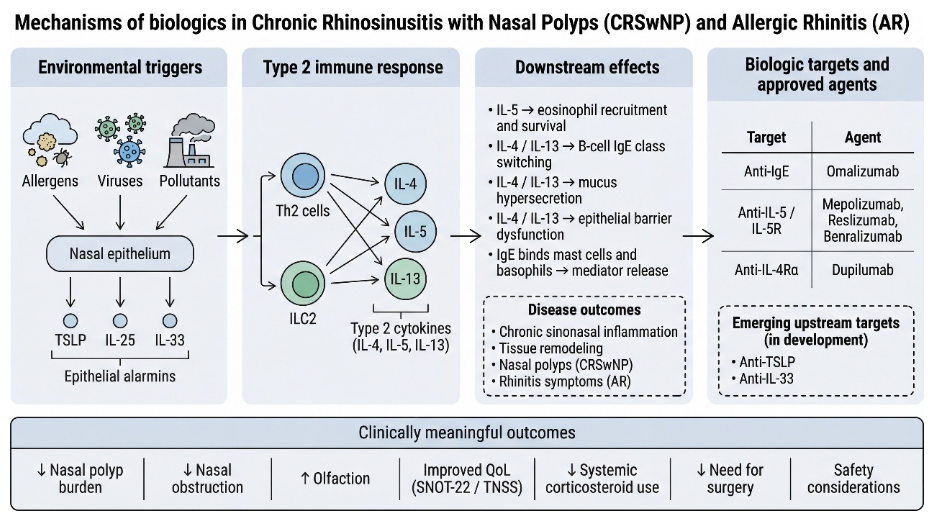
Chronic rhinosinusitis with nasal polyps (CRSwNP) and allergic rhinitis (AR) are common upper-airway inflammatory disorders that often coexist, significantly decrease quality of life, and recur even when treated with intranasal or systemic therapy or surgery. Growing mechanistic insights, such as the role of type 2 inflammation driven by epithelial “alarmins” (TSLP, IL-25, IL-33) and downstream cytokines (IL-4/IL-13, IL-5), together with IgE-mediated effector pathways, have led to the accelerated clinical use of targeted biologics. Here, we summarize the shared immunopathogenesis of CRSwNP and AR, highlight treatable endotypes and practical biomarkers (e.g., blood eosinophils, total IgE, FeNO, and disease-specific symptom and quality-of-life scores), and map these features to therapeutic targets. We summarize evidence for approved agents, including anti-IgE omalizumab; anti-IL-5/IL-5R therapies mepolizumab, reslizumab, and benralizumab; and anti-IL-4R therapy dupilumab, focusing on clinically significant outcomes such as nasal polyp burden, nasal obstruction, olfaction, SNOT-22/TNSS improvement, reduction in systemic corticosteroid use, surgery rates, safety, and limitations. Given that many patients have multimorbidity with asthma or atopic dermatitis, we also outline how unified airway management can guide multidisciplinary decision-making and the use of shared endpoints. Practical considerations such as initiation criteria, response assessment, treatment switching, and economic or access barriers are summarized to inform real-world implementation and future research.
Keywords:
Chronic Rhinosinusitis with Nasal Polyps Allergic Rhinitis Biologics Monoclonal Antibodies Immune Mechanisms Precision MedicineReferences
- Grimm, D.; Hwang, P.H.; Lin, Y.T. The link between allergic rhinitis and chronic rhinosinusitis. Curr. Opin. Otolaryngol. Head Neck Surg. 2023, 31, 3–10. DOI: https://doi.org/10.1097/MOO.0000000000000865
- Cheon, J.; Kim, B.; Lee, J.; et al. Functions and clinical applications of extracellular vesicles in Th2 cell mediated airway inflammatory diseases: A review. Int. J. Mol. Sci. 2024, 25, 9455. DOI: https://doi.org/10.3390/ijms25179455
- Kariyawasam, H.H.; James, L.K. B cells and upper airway disease: allergic rhinitis and chronic rhinosinusitis with nasal polyps evaluated. Expert Rev. Clin. Immunol. 2021, 17, 445–459. DOI: https://doi.org/10.1080/1744666X.2021.1905527
- Peters, A.T.; Tan, B.K.; Stevens, W.W.; et al. Consultation for chronic rhinosinusitis with nasal polyps and asthma: Clinical presentation, diagnostic workup, and treatment options. J. Allergy Clin. Immunol.: Pract. 2024, 12, 2898–2905. DOI: https://doi.org/10.1016/j.jaip.2024.07.019
- Castillo, J.A.; Plaza, V.; Rodrigo, G.; et al. Chronic rhinosinusitis with nasal polyps and allergic rhinitis as different multimorbid treatable traits in asthma. J. Allergy Clin. Immunol. Glob. 2023, 2, 100134. DOI: https://doi.org/10.1016/j.jacig.2023.100134
- Jung, C.G.; Buchheit, K.M.; Bochenek, G.; et al. Upper airway comorbidities of asthma. J. Allergy Clin. Immunol. 2024, 154, 1343–1354. DOI: https://doi.org/10.1016/j.jaci.2024.10.007
- Bachert, C.; Brusselle, G.; Castillo Vizuete, J.A.; et al. Consensus from European experts on severe eosinophilic asthma and chronic rhinosinusitis with nasal polyps: Results from the OverSEA Delphi study. J. Allergy Clin. Immunol. Glob. 2025, 4, 100529. DOI: https://doi.org/10.1016/j.jacig.2025.100529
- Ciprandi, G. Budesonide aqueous nasal spray: An updated review in managing chronic rhinosinusitis with nasal polyps. Panminerva Med. 2024, 66, 317–323.
- Licari, A.; Castagnoli, R.; Marseglia, A.; et al. Dupilumab to treat type 2 inflammatory diseases in children and adolescents. Paediatr. Drugs 2020, 22, 295–310.
- Geng, B.; Dilley, M.; Anterasian, C. Biologic therapies for allergic rhinitis and nasal polyposis. Curr. Allergy Asthma Rep. 2021, 21, 36. DOI: https://doi.org/10.1007/s11882-021-01013-y
- Alska, E.; Łaszczych, D.; Napiórkowska Baran, K.; et al. Advances in biologic therapies for allergic diseases: Current trends, emerging agents, and future perspectives. J. Clin. Med. 2025, 14, 1079. DOI: https://doi.org/10.3390/jcm14041079
- Nettis, E.; Brussino, L.; Patella, V.; et al. Effectiveness and safety of dupilumab in patients with chronic rhinosinusitis with nasal polyps and associated comorbidities: A multicentric prospective study in real life. Clin. Mol. Allergy 2022, 20, 6.
- Long, S.; Wang, H.; Li, W.; et al. Advancements and future directions in chronic rhinosinusitis: Understanding inflammatory mechanisms (2000–2023). Eur. Arch. Otorhinolaryngol. 2025, 282, 2899–2909.
- Boiko, N.V.; Lodochkina, O.E.; Kit, M.M.; et al. Impact of reslizumab on the course of chronic rhinosinusitis in patients with eosinophilic asthma. Vestn. Otorinolaringol. 2021, 86, 43–48. DOI: https://doi.org/10.17116/otorino20218602143
- Gevaert, P.; Mullol, J.; Saenz, R.; et al. Omalizumab improves sinonasal outcomes in patients with chronic rhinosinusitis with nasal polyps regardless of allergic status. Ann. Allergy Asthma Immunol. 2024, 132, 355–362.
- Zhou, Y.; Liu, Z.; Liu, Y. The potential roles and mechanisms of chitinase 3 like 1 in the pathogenesis of type 2 biased airway diseases. Clin. Immunol. 2023, 257, 109856. DOI: https://doi.org/10.1016/j.clim.2023.109856
- Cergan, R.; Berghi, O.; Dumitru, M.; et al. Interleukin 8 molecular interplay in allergic rhinitis and chronic rhinosinusitis with nasal polyps: A scoping review. Life (Basel) 2025, 15, 469. DOI: https://doi.org/10.3390/life15030469
- Saheb Sharif Askari, F.; Hafezi, S.; Hachim, I.; et al. Anti IL 4Rα aptamer reduces IL 4 signalling and formation of nasal polyps. ERJ Open Res. 2025, 11, 3.
- Klimek, L.; Becker, S.; Haxel, B.; et al. Different immunological types of CRSwNP in the context of the new European EAACI nomenclature. HNO 2025, 74, 174–182.
- Gevaert, P.; Han, J.K.; Smith, S.G.; et al. The roles of eosinophils and interleukin 5 in the pathophysiology of chronic rhinosinusitis with nasal polyps. Int. Forum Allergy Rhinol. 2020, 12, 1413–1423. DOI: https://doi.org/10.1002/alr.22994
- Bai, J.; Tan, B.K. B lineage cells and IgE in allergic rhinitis and chronic rhinosinusitis with nasal polyps and the role of omalizumab treatment. Am. J. Rhinol. Allergy 2023, 37, 182–192. DOI: https://doi.org/10.1177/19458924221147770
- Peters, A.T.; Han, J.K.; Heffler, E.; et al. Thymic stromal lymphopoietin as a therapeutic target in patients with chronic rhinosinusitis and nasal polyps. Clin. Exp. Immunol. 2025, 219, uxaf041. DOI: https://doi.org/10.1093/cei/uxaf041
- Liu, Y.; Fu, L.; Liu, Z. The role and clinical relevance of osteopontin in allergic airway diseases. J. Clin. Med. 2023, 12, 2433. DOI: https://doi.org/10.3390/jcm12062433
- Ghezzi, M.; Pozzi, E.; Abbattista, L.; et al. Barrier impairment and type 2 inflammation in allergic diseases: The pediatric perspective. Children (Basel) 2021, 8, 1165. DOI: https://doi.org/10.3390/children8121165
- Nocera, A.L.; Mueller, S.K.; Workman, A.D.; et al. Cystatin SN is a potent upstream initiator of epithelial derived type 2 inflammation in chronic rhinosinusitis. J. Allergy Clin. Immunol. 2022, 150, 872–881. DOI: https://doi.org/10.1016/j.jaci.2022.04.034
- Chang, L.; Wang, Z.; Li, S.; et al. Type 2 inflammation suppression by T-regulatory cells attenuates the eosinophil recruitment in mucosa of chronic sinusitis. Clin. Sci. 2020, 134, 123–138. DOI: https://doi.org/10.1042/CS20190388
- Lei, C.; Jiang, J.; Zhang, Y.; et al. Role and function of regulatory T cells in chronic rhinosinusitis with nasal polyposis. J. Immunol. Res. 2022, 2022, 1144563. DOI: https://doi.org/10.1155/2022/1144563
- Chegini, Z.; Didehdar, M.; Khoshbayan, A.; et al. The role of Staphylococcus aureus enterotoxin B in chronic rhinosinusitis with nasal polyposis. Cell Commun. Signal. 2022, 20, 29.
- Jura Szoltys, E.; Niemiec Górska, A.; Glück, J.; et al. EEvaluation of Rhinological Symptoms and Quality of Life in Patients with Allergic or Eosinophilic Severe Uncontrolled Asthma Treated with Anti-IgE or Anti-IL5 Therapy: A Real-Live Study. Int. Arch. Allergy Immunol. 2025, 186, 1033–1043. DOI: https://doi.org/10.1159/000544039
- Roland, L.T.; Levy, J.M. Knowledge gaps and research needs for biologic therapy in rhinology practice. Otolaryngol. Clin. North Am. 2021, 54, 709–716. DOI: https://doi.org/10.1016/j.otc.2021.04.002
- Liu, X.; Charn, T.C.; Wang, D.Y. Mepolizumab in chronic rhinosinusitis with nasal polyposis. Immunotherapy 2023, 15, 1105–1116. DOI: https://doi.org/10.2217/imt-2023-0026
- Förster Ruhrmann, U.; Stergioudi, D.; Szczepek, A.J.; et al. A real life comparison of pulmonary and nasal outcomes in patients with severe asthma and nasal polyposis treated with T2 biologics. World Allergy Organ. J. 2023, 16, 100746. DOI: https://doi.org/10.1016/j.waojou.2023.100746
- Carney, A.S.; Smith, P.K. Current understanding of the role of eosinophils in chronic rhinosinusitis with nasal polyps and implications for treatment with mepolizumab and benralizumab. Am. J. Rhinol. Allergy 2023, 37, 175–181. DOI: https://doi.org/10.1177/19458924221149270
- Chen, J.; Zhang, C.; Zhang, Q.; et al. Targeting IL 4/IL 13 signaling pathways in chronic rhinosinusitis with nasal polyps: from mechanisms to therapies. Clin. Rev. Allergy Immunol. 2025, 68, 87. DOI: https://doi.org/10.1007/s12016-025-09097-4
- Ogulur, I.; Mitamura, Y.; Yazici, D.; et al. Type 2 immunity in allergic diseases. Cell. Mol. Immunol. 2025, 22, 211–242. DOI: https://doi.org/10.1038/s41423-025-01261-2
- Park, J.; Jang, J.Y.; Kim, J.H.; et al. SLC27A2 marks lipid peroxidation in nasal epithelial cells driven by type 2 inflammation in chronic rhinosinusitis with nasal polyps. Exp. Mol. Med. 2025, 57, 856–871. DOI: https://doi.org/10.1038/s12276-025-01440-1
- Han, X.; Krempski, J.W.; Nadeau, K. Advances and novel developments in mechanisms of allergic inflammation. Allergy 2020, 75, 3100–3111. DOI: https://doi.org/10.1111/all.14632
- Gao, Y.D.; Wang, Z.J.; Ogulur, I.; et al. The evolution, immunopathogenesis and biomarkers of type 2 inflammation in common allergic disorders. Allergy 2025, 80, 1848–1877. DOI: https://doi.org/10.1111/all.16620
- Gevaert, P.; Omachi, T.A.; Corren, J.; et al. Efficacy and safety of omalizumab in nasal polyposis: Two randomized phase 3 trials. J. Allergy Clin. Immunol. 2020, 146, 595–605. DOI: https://doi.org/10.1016/j.jaci.2020.05.032
- Gevaert, P.; Saenz, R.; Corren, J.; et al. Long-term efficacy and safety of omalizumab for nasal polyposis in an open-label extension study. J. Allergy Clin. Immunol. 2022, 149, 957–965. DOI: https://doi.org/10.1016/j.jaci.2021.07.045
- Demir, M.; Tunakan Dalgic, C.; Mete Gokmen, E.N.; et al. The effectiveness of biological agents on chronic rhinosinusitis with nasal polyposis in patients with comorbid asthma: A multicenter real-life study from Türkiye. Medicina (Kaunas) 2024, 60, 448. DOI: https://doi.org/10.3390/medicina60030448
- Kariyawasam, H.H.; James, L.K. Chronic rhinosinusitis with nasal polyps: Targeting IgE with anti-IgE omalizumab therapy. Drug Des. Dev. Ther. 2020, 14, 5483–5494. DOI: https://doi.org/10.2147/DDDT.S226575
- Yu, J.; Yan, B.; Shen, S.; et al. IgE directly affects eosinophil migration in chronic rhinosinusitis with nasal polyps through CCR3 and predicts the efficacy of omalizumab. J. Allergy Clin. Immunol. 2024, 153, 447–460. DOI: https://doi.org/10.1016/j.jaci.2023.09.041
- Meltzer, E.O.; Mullol, J.; Ko, J.; et al. Omalizumab improves sleep and health status for patients with chronic rhinosinusitis with nasal polyps: An analysis of randomized clinical trials. Int. Forum Allergy Rhinol. 2024, 14, 1163–1172. DOI: https://doi.org/10.1002/alr.23322
- Vogt, F.; Sahota, J.; Bidder, T.; et al. Chronic rhinosinusitis with and without nasal polyps and asthma: Omalizumab improves residual anxiety but not depression. Clin. Transl. Allergy 2021, 11, e12002. DOI: https://doi.org/10.1002/clt2.12002
- Yong, M.; Kirubalingam, K.; Desrosiers, M.Y.; et al. Cost-effectiveness analysis of biologics for the treatment of chronic rhinosinusitis with nasal polyps in Canada. Allergy Asthma Clin. Immunol. 2023, 19, 90. DOI: https://doi.org/10.1186/s13223-023-00823-1
- De Prado Gomez, L.; Khan, A.H.; Peters, A.T.; et al. Efficacy and safety of dupilumab versus omalizumab in chronic rhinosinusitis with nasal polyps and asthma: EVEREST trial design. Am. J. Rhinol. Allergy 2022, 36, 788–795. DOI: https://doi.org/10.1177/19458924221112211
- Jackson, D.J.; Wechsler, M.E.; Brusselle, G.; et al. Targeting the IL-5 pathway in eosinophilic asthma: A comparison of anti-IL-5 versus anti-IL-5 receptor agents. Allergy 2024, 79, 2943–2952. DOI: https://doi.org/10.1111/all.16346
- Olivieri, B.; Tinazzi, E.; Caminati, M.; et al. Biologics for the treatment of allergic conditions: Eosinophil disorders. Immunol. Allergy Clin. North Am. 2020, 40, 649–665. DOI: https://doi.org/10.1016/j.iac.2020.07.001
- Wang, Q.; Sun, Q.; Chen, Q.; et al. Efficacy and safety of anti-interleukin-5 therapies in chronic rhinosinusitis with nasal polyps: a systematic review and meta-analysis of randomized controlled trials. Int. Arch. Allergy Immunol. 2022, 183, 732–743. DOI: https://doi.org/10.1159/000521859
- Guo, C.L.; Wang, C.S.; Liu, Z. Clinical and biological markers in disease and biologics to treat chronic rhinosinusitis. Curr. Opin. Allergy Clin. Immunol. 2022, 22, 16–23. DOI: https://doi.org/10.1097/ACI.0000000000000799
- Maza-Solano, J.; Calvo-Henríquez, C.; Alobid, I.; et al. Nasal symptoms in asthmatic patients under treatment with anti-IL-5 monoclonal antibodies: A real-life cohort study. J. Clin. Med. 2022, 11, 7056. DOI: https://doi.org/10.3390/jcm11237056
- Lombardi, C.; Comberiati, P.; Ridolo, E.; et al. Anti-IL-5 pathway agents in eosinophilic-associated disorders across the lifespan. Drugs 2024, 84, 661–684. DOI: https://doi.org/10.1007/s40265-024-02037-0
- Yang, C.; Guo, L.; Wang, Y.; et al. The advance on pathophysiological mechanisms of type 2 chronic rhinosinusitis with nasal polyposis. Front. Allergy 2025, 6, 1599797. DOI: https://doi.org/10.3389/falgy.2025.1599797
- Kagoshima, H.; Hori, R.; Kojima, T.; et al. Successful treatment of eosinophilic chronic rhinosinusitis and eosinophilic otitis media using the anti-IL-5 receptor monoclonal antibody benralizumab: A case report. Respir. Med. Case Rep. 2020, 30, 101135. DOI: https://doi.org/10.1016/j.rmcr.2020.101135
- Pelaia, C.; Busceti, M.T.; Crimi, C.; et al. Real-life effects of benralizumab on exacerbation number and lung hyperinflation in atopic patients with severe eosinophilic asthma. Biomed. Pharmacother. 2020, 129, 110444. DOI: https://doi.org/10.1016/j.biopha.2020.110444
- Giossi, R.; Pani, A.; Schroeder, J.; et al. Exploring the risk of infection events in patients with asthma receiving anti-IL-5 monoclonal antibodies: A rapid systematic review and meta-analysis. Heliyon 2024, 10, e23725. DOI: https://doi.org/10.1016/j.heliyon.2023.e23725
- Zou, S.P.; Yang, H.Y.; Ouyang, M.; et al. Post-marketing safety of anti-IL-5 monoclonal antibodies: An analysis of the FDA adverse event reporting system (FAERS). Expert Opin. Drug Saf. 2024, 23, 353–362. DOI: https://doi.org/10.1080/14740338.2023.2251382
- Jackson, D.J.; Korn, S.; Mathur, S.K.; et al. Safety of eosinophil-depleting therapy for severe, eosinophilic asthma: Focus on benralizumab. Drug Saf. 2020, 43, 409–425. DOI: https://doi.org/10.1007/s40264-020-00926-3
- Kariyawasam, H.H. Chronic rhinosinusitis with nasal polyps: mechanistic insights from targeting IL-4 and IL-13 via IL-4Rα inhibition with dupilumab. Expert Rev. Clin. Immunol. 2020, 16, 1115–1125. DOI: https://doi.org/10.1080/1744666X.2021.1847083
- Pelaia, C.; Heffler, E.; Crimi, C.; et al. Interleukins 4 and 13 in asthma: Key pathophysiologic cytokines and druggable molecular targets. Front. Pharmacol. 2022, 13, 851940. DOI: https://doi.org/10.3389/fphar.2022.851940
- Kariyawasam, H.H.; James, L.K.; Gane, S.B. Dupilumab: Clinical efficacy of blocking IL-4/IL-13 signalling in chronic rhinosinusitis with nasal polyps. Drug Des. Dev. Ther. 2020, 14, 1757–1769. DOI: https://doi.org/10.2147/DDDT.S243053
- Hoy, S.M. Dupilumab: A review in chronic rhinosinusitis with nasal polyps. Drugs 2020, 80, 711–717. DOI: https://doi.org/10.1007/s40265-020-01298-9
- Gal, A.; Gravier-Dumonceau, R.; Penicaud, M.; et al. Efficacy of dupilumab in real-life settings: A STROBE study. Eur. Arch. Otorhinolaryngol. 2024, 281, 4781–4788. DOI: https://doi.org/10.1007/s00405-024-08553-9
- Lombardo, N.; D’Ecclesia, A.; Chiarella, E.; et al. Real-world evaluation of dupilumab in the long-term management of eosinophilic chronic rhinosinusitis with nasal polyps: A focus on IL-4 and IL-13 receptor blockade. Medicina (Kaunas) 2024, 60, 1996. DOI: https://doi.org/10.3390/medicina60121996
- Yeh, C.F.; Lan, M.Y.; Lin, C.C.; et al. Dual blockade of IL-4 and IL-13 with dupilumab ameliorates sensorineural olfactory dysfunction in mice with eosinophilic sinonasal inflammation. Rhinology 2025, 63, 32–42.
- Fieux, M.; Carsuzaa, F.; Bellanger, Y.; et al. Dupilumab prevents nasal epithelial function alteration by IL-4 in vitro: Evidence for its efficacy. Int. Forum Allergy Rhinol. 2024, 14, 1337–1349. DOI: https://doi.org/10.1002/alr.23343
- Bachert, C.; Laidlaw, T.M.; Cho, S.H.; et al. Effect of dupilumab on type 2 biomarkers in chronic rhinosinusitis with nasal polyps: SINUS-52 study results. Ann. Otol. Rhinol. Laryngol. 2023, 132, 1649–1661. DOI: https://doi.org/10.1177/00034894231176334
- Peters, A.T.; Wagenmann, M.; Bernstein, J.A.; et al. Dupilumab efficacy in patients with chronic rhinosinusitis with nasal polyps with and without allergic rhinitis. Allergy Asthma Proc. 2023, 44, 265–274. DOI: https://doi.org/10.2500/aap.2023.44.230015
- Cheng, F.; Wang, Y.; Gao, Y.; et al. Current understanding of epithelial-derived alarmins in chronic rhinosinusitis with nasal polyps. Clin. Rev. Allergy Immunol. 2025, 68, 59. DOI: https://doi.org/10.1007/s12016-025-09073-y
- Priessnitz, J.; Jung, J.; Han, J.K.; et al. Evaluating the efficacy and safety of tezepelumab in the treatment of chronic rhinosinusitis with nasal polyps. Immunotherapy 2025, 17, 903–912. DOI: https://doi.org/10.1080/1750743X.2025.2567844
- Danto, S.I.; Tsamandouras, N.; Reddy, P.; et al. Safety, tolerability, pharmacokinetics, and pharmacodynamics of PF-06817024 in healthy participants and patients with chronic rhinosinusitis with nasal polyps or atopic dermatitis: A phase 1 randomized double-blind placebo-controlled study. J. Clin. Pharmacol. 2024, 64, 529–543. DOI: https://doi.org/10.1002/jcph.2360
- Liao, G.; Nakayama, T.; Zhu, B.; et al. Multi-scaled transcriptomics of chronically inflamed nasal epithelium reveals immune-epithelial dynamics and tissue remodeling in nasal polyp formation. Immunity 2025, 58, 2593–2608. DOI: https://doi.org/10.1016/j.immuni.2025.08.009
- Tsabouri, S.; Ntritsos, G.; Koskeridis, F.; et al. Omalizumab for the treatment of allergic rhinitis: A systematic review and meta-analysis. Rhinology 2021, 59, 501–510. DOI: https://doi.org/10.4193/Rhin21.159
- Cavaliere, C.; Begvarfaj, E.; Incorvaia, C.; et al. Long-term omalizumab efficacy in allergic rhinitis. Immunol. Lett. 2020, 227, 81–87. DOI: https://doi.org/10.1016/j.imlet.2020.08.002
- Goto, T.; Miwa, T.; Hashimoto, K.; et al. Evaluating the efficacy of omalizumab in severe cedar seasonal allergic rhinitis in Japan. Cureus 2024, 16, e63714. DOI: https://doi.org/10.7759/cureus.63714
- Başer, E.; Degirmenci, P.B.; Arslan, I.B.; et al. Effect of omalizumab on nasal symptoms in asthma and perennial allergic rhinitis. J. Coll. Physicians Surg. Pak. 2020, 30, 1170–1174. DOI: https://doi.org/10.29271/jcpsp.2020.11.1170
- Bayar Muluk, N.; Cingi, C. Biologics in allergic rhinitis. Eur. Rev. Med. Pharmacol. Sci. 2023, 27, 43–52. DOI: https://doi.org/10.26355/eurrev_202310_34069
- De Filippo, M.; Votto, M.; Caminiti, L.; et al. Omalizumab and allergen immunotherapy for respiratory allergies: A mini-review from the Allergen-Immunotherapy Committee of the Italian Society of Pediatric Allergy and Immunology (SIAIP). Allergol. Immunopathol. 2022, 50, 47–52. DOI: https://doi.org/10.15586/aei.v50i6.495
- Zhang, Y.; Xi, L.; Gao, Y.; et al. Omalizumab is effective in the preseasonal treatment of seasonal allergic rhinitis. Clin. Transl. Allergy 2022, 12, e12094. DOI: https://doi.org/10.1002/clt2.12094
- Li, M.; Li, P.; Sun, Y.; et al. Diagnostic value of image enhancement endoscopy in sinonasal malignancy. Zhonghua Er Bi Yan Hou Tou Jing Wai Ke Za Zhi 2025, 60, 420–426. DOI: https://doi.org/10.3760/cma.j.cn115330-20240612-00346 (in Chinese)
- Zhao, Z.; Deng, Y.; Xiang, L.; et al. The ratio of total IgE level at week 16 to baseline significantly correlated with the clinical response to omalizumab in moderate-to-severe allergic rhinitis patients. Int. Immunopharmacol. 2023, 122, 110623. DOI: https://doi.org/10.1016/j.intimp.2023.110623
- Hirano, K.; Suzaki, I.; Okuzawa, N.; et al. Omalizumab reduces allergic rhinitis symptoms due to Japanese cedar pollen by improving eosinophilic inflammation. Rhinology 2025, 63, 116–117. DOI: https://doi.org/10.4193/Rhin24.105
- Lv, R.; Shan, J.; Sun, A.; et al. Research progress of anti-IgE treatment for allergic rhinitis. Am. J. Otolaryngol. 2025, 46, 104646. DOI: https://doi.org/10.1016/j.amjoto.2025.104646
- Yamani, I.; Bu Saeed, K.; Alsulami, A.; et al. Efficacy of biologic therapies in the management of allergic rhinitis: A systematic review. Cureus 2024, 16, e71408. DOI: https://doi.org/10.7759/cureus.71408
- Busse, W.W.; Maspero, J.F.; Lu, Y.; et al. Efficacy of dupilumab on clinical outcomes in patients with asthma and perennial allergic rhinitis. Ann. Allergy Asthma Immunol. 2020, 125, 565–576. DOI: https://doi.org/10.1016/j.anai.2020.05.026
- Brooks, G.D. Updated evaluation of dupilumab in the treatment of asthma: patient selection and reported outcomes. Ther. Clin. Risk Manag. 2020, 16, 181–187. DOI: https://doi.org/10.2147/TCRM.S192392
- Wipperman, M.F.; Gayvert, K.M.; Atanasio, A.; et al. Differential modulation of allergic rhinitis nasal transcriptome by dupilumab and allergy immunotherapy. Allergy 2024, 79, 894–907. DOI: https://doi.org/10.1111/all.16001
- Tian, T.; Li, Y.; Yuan, G.; et al. Efficacy and safety of dupilumab in patients with moderate-to-severe atopic dermatitis and comorbid allergic rhinitis. Front. Med. 2025, 12, 1556769. DOI: https://doi.org/10.3389/fmed.2025.1556769
- Huber, P.; Gröger, M.; Stihl, C.; et al. Diagnostics of allergic rhinitis under dupilumab therapy. Eur. Arch. Otorhinolaryngol. 2024, 281, 4183–4190. DOI: https://doi.org/10.1007/s00405-024-08700-2
- Cheng, X.; Zhou, Y.; Hao, Y.; et al. Recent studies and prospects of biologics in allergic rhinitis treatment. Int. J. Mol. Sci. 2025, 26, 4509. DOI: https://doi.org/10.3390/ijms26104509
- Thibaut de Ménonville, C.; Barakat, L.; Laborier, F.; et al. Efficacy of biologics for severe asthma on allergic comorbidities. Rev. Mal. Respir. 2024, 41, 669–679. DOI: https://doi.org/10.1016/j.rmr.2024.08.004
- Corren, J.; Saini, S.S.; Gagnon, R.; et al. Short-term subcutaneous allergy immunotherapy and dupilumab are well tolerated in allergic rhinitis: A randomized trial. J. Asthma Allergy 2021, 14, 1045–1063. DOI: https://doi.org/10.2147/JAA.S318892
- Zhang, Y.; Lan, F.; Zhang, L. Update on pathomechanisms and treatments in allergic rhinitis. Allergy 2022, 77, 3309–3319. DOI: https://doi.org/10.1111/all.15454
- Adelowo, O.O.; Olisa, O.; Asekhame, O.T.; et al. Biotherapies in medical practice: A review and the Nigerian experience. West Afr. J. Med. 2021, 38, 486–493.
- Shen, S.; Yan, B.; Wang, M.; et al. Stapokibart for severe uncontrolled chronic rhinosinusitis with nasal polyps: The CROWNS-2 randomized clinical trial. JAMA 2025, 334, 962–972. DOI: https://doi.org/10.1001/jama.2025.12515
- Tajiri, T.; Suzuki, M.; Nishiyama, H.; et al. Efficacy of dupilumab for severe chronic rhinosinusitis with nasal polyps and asthma: A prospective study. Ann. Allergy Asthma Immunol. 2024, 133, 550–558. DOI: https://doi.org/10.1016/j.anai.2024.07.001
- Bachert, C.; Khan, A.H.; Lee, S.E.; et al. Prevalence of type 2 inflammatory signatures and efficacy of dupilumab in patients with chronic rhinosinusitis with nasal polyps from two phase 3 clinical trials: SINUS-24 and SINUS-52. Int. Forum Allergy Rhinol. 2024, 14, 668–678. DOI: https://doi.org/10.1002/alr.23249
- Tănase, M.I.; Tanase, M.; Cosgarea, M.; et al. Biologic treatments for chronic rhinosinusitis with nasal polyps: a comparative review of efficiency and risks. Cureus 2025, 17, e77804. DOI: https://doi.org/10.7759/cureus.77804
- Kratchmarov, R.; Dharia, T.; Buchheit, K. Clinical efficacy and mechanisms of biologics for chronic rhinosinusitis with nasal polyps. J. Allergy Clin. Immunol. 2025, 155, 1401–1410. DOI: https://doi.org/10.1016/j.jaci.2025.03.011
- Frankenberger, H.; Wiebringhaus, R.; Paul, B.; et al. The use of biologics in patients suffering from chronic rhinosinusitis with nasal polyps: A 4-year real-life observation. Eur. Arch. Otorhinolaryngol. 2024, 281, 5773–5782. DOI: https://doi.org/10.1007/s00405-024-08790-y
- Chupp, G.; Alobid, I.; Lugogo, N.L.; et al. Mepolizumab reduces systemic corticosteroid use in chronic rhinosinusitis with nasal polyps. J. Allergy Clin. Immunol. Pract. 2023, 11, 3504–3512.e2. DOI: https://doi.org/10.1016/j.jaip.2023.08.015
- Yang, S.K.; Cho, S.H.; Kim, D.W. Interpretation of clinical efficacy of biologics in chronic rhinosinusitis with nasal polyps via understanding the local and systemic pathomechanisms. Allergy Asthma Immunol. Res. 2022, 14, 465–478. DOI: https://doi.org/10.4168/aair.2022.14.5.465
- Aldajani, A.; Alroqi, A.; Alromaih, S.; et al. Adverse events of biological therapy in chronic rhinosinusitis with nasal polyps: A systematic review. Am. J. Otolaryngol. 2022, 43, 103615. DOI: https://doi.org/10.1016/j.amjoto.2022.103615
- Cai, S.; Xu, S.; Zhao, Y.; et al. Efficacy and safety of biologics for chronic rhinosinusitis with nasal polyps: A meta-analysis of real-world evidence. Allergy 2025, 80, 1256–1270. DOI: https://doi.org/10.1111/all.16499
- Sim, L.; Md Shukri, N.; Yaacob, N.M.; et al. Efficacy and safety of dupilumab in chronic rhinosinusitis with nasal polyps: A systematic review and meta-analysis. Expert Rev. Clin. Pharmacol. 2025, 18, 211–224. DOI: https://doi.org/10.1080/17512433.2025.2468970
- Han, J.K.; Bachert, C.; Fokkens, W.; et al. Mepolizumab for chronic rhinosinusitis with nasal polyps (SYNAPSE): A randomised, double-blind, placebo-controlled, phase 3 trial. Lancet Respir. Med. 2021, 9, 1141–1153. DOI: https://doi.org/10.1016/S2213-2600(21)00097-7
- Cai, S.; Xu, S.; Lou, H.; et al. Comparison of different biologics for treating chronic rhinosinusitis with nasal polyps: A network analysis. J. Allergy Clin. Immunol. Pract. 2022, 10, 1876–1886.e7. DOI: https://doi.org/10.1016/j.jaip.2022.02.034
- Chen, H.; Wang, L.; Zhang, J.; et al. Long-term efficacy and safety of different biologics in treatment of chronic rhinosinusitis with nasal polyps: A network meta-analysis. Braz. J. Otorhinolaryngol. 2025, 91, 101633. DOI: https://doi.org/10.1016/j.bjorl.2025.101633
- De Corso, E.; Montuori, C.; Pipolo, C.; et al. Two-year turning point with dupilumab in chronic rhinosinusitis with nasal polyps: Control, remission, and tapering dosage. Allergy 2025, DOI: https://doi.org/10.1111/all.70032
- Kiricsi, A.; Bella, Z.; Kraxner, H.; et al. Real-life effectiveness of dupilumab in chronic rhinosinusitis with nasal polyps: Results from eight Hungarian centres with 12-month follow-up. Rhinology 2024, 62, 410–420. DOI: https://doi.org/10.4193/Rhin23.278
- Galletti, C.; Barbieri, M.A.; Ciodaro, F.; et al. Effectiveness and safety profile of dupilumab in chronic rhinosinusitis with nasal polyps: Real-life data in tertiary care. Pharmaceuticals 2023, 16, 630. DOI: https://doi.org/10.3390/ph16040630
- Lin, Y.; Wang, W.; Zhu, Z.; et al. Adverse events for monoclonal antibodies in patients with allergic rhinitis: A systematic review and meta-analysis of randomized clinical trials. J. Clin. Med. 2023, 12, 2848. DOI: https://doi.org/10.3390/jcm12082848
- Habenbacher, M.; Moser, U.; Hadl, O.; et al. Monoclonal antibody switching in biologic treatment of chronic rhinosinusitis with nasal polyps. J. Clin. Med. 2024, 13, 6883. DOI: https://doi.org/10.3390/jcm13226883
- Brkic, F.F.; Liu, D.T.; Klimbacher, R.; et al. Efficacy and safety of switching between biologics in chronic rhinosinusitis with nasal polyps or N-ERD. Rhinology 2023, 61, 320–327. DOI: https://doi.org/10.4193/Rhin22.408
- Crisci, C.D.; Ardusso, L.R.F. A precision medicine approach to rhinitis evaluation and management. Curr. Treat. Options Allergy 2020, 7, 93–109. DOI: https://doi.org/10.1007/s40521-020-00243-1
- Breiteneder, H.; Peng, Y.Q.; Agache, I.; et al. Biomarkers for diagnosis and prediction of therapy responses in allergic diseases and asthma. Allergy 2020, 75, 3039–3068. DOI: https://doi.org/10.1111/all.14582
- Okano, M.; Yamada, M.; Oka, A. Personalized medicine in chronic rhinosinusitis: Treatable traits using biologics for unmet needs. Allergy Asthma Immunol. Res. 2025, 17, 8–21. DOI: https://doi.org/10.4168/aair.2025.17.1.8
- Maniu, A.A.; Perde-Schrepler, M.I.; Tatomir, C.B.; et al. Latest advances in chronic rhinosinusitis with nasal polyps endotyping and biomarkers, and their significance for daily practice. Rom. J. Morphol. Embryol. 2020, 61, 309–320. DOI: https://doi.org/10.47162/RJME.61.2.01
- Li, J.; Mao, N.; Aodeng, S.; et al. Development and validation of an integrated deep learning model to assist eosinophilic chronic rhinosinusitis diagnosis: A multicenter study. Int. Forum Allergy Rhinol. 2025, 15, 1070–1081. DOI: https://doi.org/10.1002/alr.23595
- Wang, K.; Ren, Y.; Ma, L.; et al. Explainable artificial intelligence predicts inflammatory and spatial heterogeneity from nasal polyp histology. J. Allergy Clin. Immunol. 2025, 156, 1573–1587. DOI: https://doi.org/10.1016/j.jaci.2025.08.016
- Passali, D.; Bellussi, L.M.; Damiani, V.; et al. Chronic rhinosinusitis with nasal polyposis: The role of personalized and integrated medicine. Acta Biomed. 2020, 91, 11–18. DOI: https://doi.org/10.23750/abm.v91i1-S.9243
- Macchi, A.; Giorli, A.; Cantone, E.; et al. Sense of smell in chronic rhinosinusitis: A multicentric study on 811 patients. Front. Allergy 2023, 4, 1083964. DOI: https://doi.org/10.3389/falgy.2023.1083964
- Papapostolou, N.; Makris, M. Allergic asthma in the era of personalized medicine. J. Pers. Med. 2022, 12, 1162. DOI: https://doi.org/10.3390/jpm12071162
- Kim, C.K.; Callaway, Z.; Pawankar, R. Eosinophil granule proteins as a biomarker in managing asthma and allergies. Asia Pac. Allergy 2023, 13, 66–71. DOI: https://doi.org/10.5415/apallergy.0000000000000104
- Fokkens, W.; van der Lans, R.; Reitsma, S. Dupilumab for the treatment of chronic rhinosinusitis with nasal polyposis. Expert Opin. Biol. Ther. 2021, 21, 575–585. DOI: https://doi.org/10.1080/14712598.2021.1901881
- Takahashi, H.; Matsuyama, T.; Kawabata-Iwakawa, R.; et al. Comprehensive profiling of the heterogeneity of molecular endotypic traits in chronic rhinosinusitis. Hum. Immunol. 2025, 86, 111267. DOI: https://doi.org/10.1016/j.humimm.2025.111267
- Loperfido, A.; Cavaliere, C.; Fionda, B.; et al. The emerging role of microRNAs in nasal inflammatory diseases and tumors: From bench to bedside. Genes 2025, 16, 295. DOI: https://doi.org/10.3390/genes16030295
- Lai, S.; Kang, W.; Chen, Y.; et al. An End-to-End CRSwNP Prediction with Multichannel ResNet on Computed Tomography. Int. J. Biomed. Imaging 2024, 2024, 4960630. DOI: https://doi.org/10.1155/2024/4960630
- Mishra, T.; Sasanka, K.K.; Sudha Ty, S.; et al. Emerging novel biomarkers in allergic rhinitis: A narrative review. Cureus 2025, 17, e84705. DOI: https://doi.org/10.7759/cureus.84705
- Narasimhan, G.; Deshmukh, P.T.; Gaurkar, S.S.; et al. A comprehensive review exploring allergic rhinitis with nasal polyps: Mechanisms, management, and emerging therapies. Cureus 2024, 16, e59191. DOI: https://doi.org/10.7759/cureus.59191
- Bachert, C.; Zhang, N.; Cavaliere, C.; et al. Biologics for chronic rhinosinusitis with nasal polyps. J. Allergy Clin. Immunol. 2020, 145, 725–739. DOI: https://doi.org/10.1016/j.jaci.2020.01.020
- Jin, Z.; Yan, B.; Zhang, L.; et al. Biological therapy in chronic rhinosinusitis with nasal polyps. Expert Rev. Clin. Immunol. 2025, 21, 473–492. DOI: https://doi.org/10.1080/1744666X.2025.2459929
- Bachert, C.; Desrosiers, M.Y.; Hellings, P.W.; et al. The role of biologics in chronic rhinosinusitis with nasal polyps. J. Allergy Clin. Immunol. Pract. 2021, 9, 1099–1106. DOI: https://doi.org/10.1016/j.jaip.2020.11.017
- Dorling, M.; Sarafan, M.; Voizard, B.; et al. Switching biologics in chronic rhinosinusitis with nasal polyps: A multicenter Canadian experience. Int. Forum Allergy Rhinol. 2025, 15, 166–173. DOI: https://doi.org/10.1002/alr.23466
- Peters, A.; Zhao, X.; Near, A.M.; et al. Real-world outcomes following biologic initiation in US patients with chronic rhinosinusitis with nasal polyps. Adv. Ther. 2025, 42, 1783–1799. DOI: https://doi.org/10.1007/s12325-025-03120-y
- Borish, L.; Cohen, N.A.; Chupp, G.; et al. Evaluating enrollment and outcome criteria in trials of biologics for chronic rhinosinusitis with nasal polyps. Ann. Allergy Asthma Immunol. 2022, 129, 160–168. DOI: https://doi.org/10.1016/j.anai.2022.04.004
- Luk, H.G.; Janz, T.A.; Siddiqui, F.N.; et al. Considerations for the use of biologics in chronic rhinosinusitis with nasal polyps. Ear Nose Throat J. 2025. DOI: https://doi.org/10.1177/01455613251363018
- Xian, M.; Yan, B.; Song, X.; et al. Chinese position paper on biologic therapy for chronic rhinosinusitis with nasal polyps. Allergy 2025, 80, 1208–1225. DOI: https://doi.org/10.1111/all.16519
- Guo, C.L.; Liu, F.F.; Wang, D.Y.; et al. Type 2 Biomarkers for the Indication and Response to Biologics in CRSwNP. Curr. Allergy Asthma Rep. 2023, 23, 703–713. DOI: https://doi.org/10.1007/s11882-023-01114-w
- Alharbi, T.; Alsubaie, N.; Alroqi, A. An overview of switching biological therapies for chronic rhinosinusitis with nasal polyposis. Eur. Arch. Otorhinolaryngol. 2025, 282, 6057–6068. DOI: https://doi.org/10.1007/s00405-025-09559-7
- Blaiss, M.S. Chronic rhinosinusitis with nasal polyps management in the age of biologics. Allergy Asthma Proc. 2020, 41, 413–419. DOI: https://doi.org/10.2500/aap.2020.41.200069
- Favier, V.; Daveau, C.; Carsuzaa, F.; et al. Study protocol: The biologics in severe chronic rhinosinusitis with nasal polyps survey. BMJ Open 2024, 14, e083112. DOI: https://doi.org/10.1136/bmjopen-2023-083112
- Seidel, D.U.; Busenius, J.; Below, M.; et al. Prescriptions of biologics in patients with chronic rhinosinusitis with nasal polyps in Germany (2019–2023). Eur. Arch. Otorhinolaryngol. 2025, 282, 5711–5720. DOI: https://doi.org/10.1007/s00405-025-09742-w
- Roland, L.T.; Regenberg, A.; Luong, A.U.; et al. Biologics for chronic rhinosinusitis with nasal polyps: Economics and ethics. Int. Forum Allergy Rhinol. 2021, 11, 1524–1528. DOI: https://doi.org/10.1002/alr.22864
- Xian, M.; Wang, C.; Zhang, L. Regional disparities in cost-effectiveness of biologics for CRSwNP warrant tailored treatment strategies. Rhinology 2025, DOI: https://doi.org/10.4193/Rhin25.291
- Eschenbacher, W.; Straesser, M.; Knoeddler, A.; et al. Biologics for the treatment of allergic rhinitis, chronic rhinosinusitis, and nasal polyposis. Immunol. Allergy Clin. North Am. 2020, 40, 539–547. DOI: https://doi.org/10.1016/j.iac.2020.06.001
- van der Lans, R.J.L.; Hopkins, C.; Senior, B.A.; et al. Biologicals and endoscopic sinus surgery for severe uncontrolled chronic rhinosinusitis with nasal polyps: An economic perspective. J. Allergy Clin. Immunol. Pract. 2022, 10, 1454–1461. DOI: https://doi.org/10.1016/j.jaip.2022.02.017
- Chapurin, N.; Khan, S.; Gutierrez, J.; et al. Economics of medical and surgical management of chronic rhinosinusitis with nasal polyps: A contemporary review. Am. J. Rhinol. Allergy 2023, 37, 227–231. DOI: https://doi.org/10.1177/19458924221147501
- Eriksen, P.R.G.; Jakobsen, K.K.; Aanæs, K.; et al. The potential role of biological treatment of chronic rhinosinusitis with nasal polyps: A nationwide cohort study. Rhinology 2021, 59, 374–379. DOI: https://doi.org/10.4193/Rhin20.480
- Liu, L.; Zhang, S.; Zhao, Z. Expert Recommendations on Graded Prevention of Allergic Rhinitis. Zhonghua Yu Fang Yi Xue Za Zhi 2025, 59, 766–779. DOI: https://doi.org/10.3760/cma.j.cn112150-20250307-00183
- Schneider, A.L.; Schleimer, R.P.; Tan, B.K. Targetable pathogenic mechanisms in nasal polyposis. Int. Forum Allergy Rhinol. 2021, 11, 1220–1234. DOI: https://doi.org/10.1002/alr.22787
- Sarnoch, S.O.; Pepić, A.; Schmitz, L.; et al. The value of biomarkers in the therapy of chronic rhinosinusitis with nasal polyps with biologicals: A long-term follow-up of dupilumab therapy. Eur. Arch. Otorhinolaryngol. 2024, 281, 4789–4805. DOI: https://doi.org/10.1007/s00405-024-08574-4
- Weissman, B.; Shen, K.; Flanagan, O.L.; et al. Comparing medical and surgical management of chronic rhinosinusitis: A systematic review of dupilumab and endoscopic sinus surgery. Cureus 2025, 17, e79742. DOI: https://doi.org/10.7759/cureus.79742
- Wang, M.; Li, Y.; Li, J.; et al. New insights into the endotypes of chronic rhinosinusitis in the biologic era. J. Allergy Clin. Immunol. 2025, 156, 51–60. DOI: https://doi.org/10.1016/j.jaci.2025.02.015
- Chufistova, A.V.; Shabaldina, E.V.; Bedareva, A.V.; et al. Features of inflammatory endotypes and phenotypes in chronic rhinosinusitis. Vestn. Otorinolaringol. 2024, 89, 60–67. DOI: https://doi.org/10.17116/otorino20248904160