
Multidisciplinary Approaches from Bench to Bedside
Submission Deadline: 20 August 2026
Chief Guest Editor:
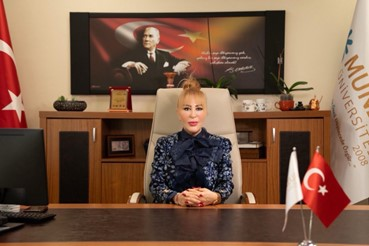 Prof. Dr. Ülkü ÖZBEY
Munzur University, Türkiye
Special Issue Information:
Dear Colleagues,
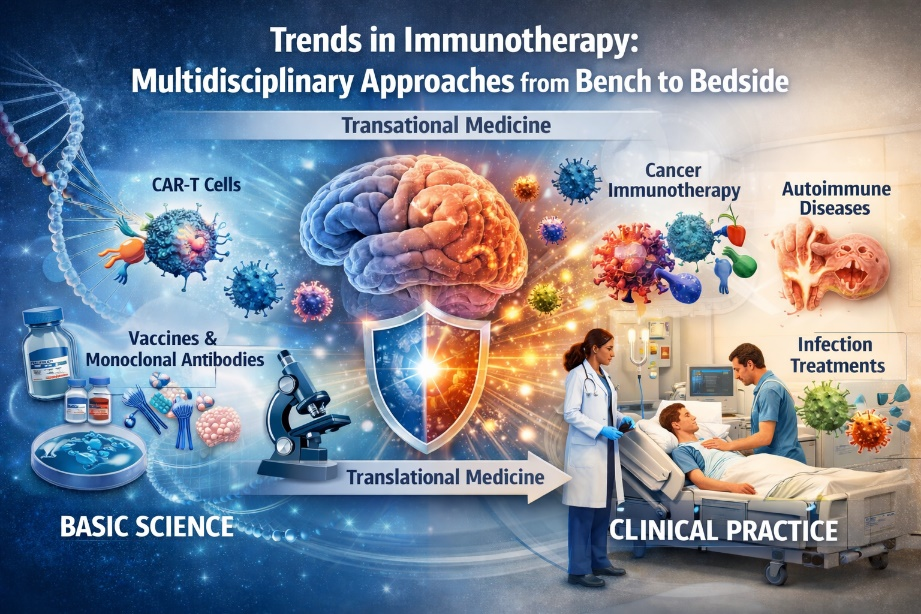
Immunotherapy has become one of the fastest-growing fields in medical science in recent years and one that is most strongly reflected in clinical practice. The central role of the immune system in the prevention, diagnosis, and treatment of diseases has enabled the development of innovative therapeutic strategies across a wide spectrum, ranging from cancer and infectious diseases to autoimmune, neurological, and cardiovascular disorders. In this context, immunotherapy stands out not as a discipline confined to a single specialty, but as a multidisciplinary approach that spans all areas of medicine.
This special issue aims to address current trends in immunotherapy from a comprehensive perspective, extending from basic scientific research to clinical applications. The understanding of immune mechanisms at molecular and cellular levels is being translated into clinical practice through translational research, thereby paving the way for personalized and precision medicine approaches. In particular, cancer immunotherapies (such as immune checkpoint inhibitors and CAR-T cell therapies), vaccine development studies, biological agents, and monoclonal antibodies constitute the core components of this transformation.
Within the scope of this special issue, emerging research areas such as autoimmune diseases, chronic inflammation, microbiota–immune system interactions, neuroimmunology, and psychoneuroimmunology will also be included. In this regard, the issue aims to foster collaboration among researchers from different disciplines and to enhance scientific knowledge production.
Within the scope of this special issue, emerging research areas such as autoimmune diseases, chronic inflammation, microbiota–immune system interactions, neuroimmunology, and psychoneuroimmunology will also be included. In this regard, the issue aims to foster collaboration among researchers from different disciplines and to enhance scientific knowledge production.
Guest Editor(s)
Prof. Dr. Ülkü ÖZBEY
Keywords:
- Immunotherapy
- Immune system
- Immune response
- Multidisciplinary approach
- Translational medicine
- Clinical applications
- Basic sciences
- Clinical research
- Personalized medicine
- Precision medicine
- Cancer immunotherapy
- CAR-T cell therapy
- Immune checkpoint inhibitors
- Tumor microenvironment
- Autoimmune diseases
- Rheumatoid arthritis
- Systemic lupus erythematosus
- Vaccine development
- Infectious diseases
- Antigen-antibody interaction
- Cytokines
- Inflammation
- Chronic inflammation
- Microbiota
- Gut-immune axis
- Neuroimmunology
- Neuroinflammation
- Biological agents
- Monoclonal antibodies
- Drug development
- Pharmacological treatments
- Psychoneuroimmunology
- Immune-stress interaction
- Allergy and immunology
- Dermatological immune disorders