Volume 1 Number 1 (2026) Neurolinguistic Communication Intervention(nci)

Neurolinguistic Communication Intervention

Volume 1 Issue 1 (2026)

Articles Article ID: 2269

Communicating Diagnostic Uncertainty to Family Members of Older Patients with Suspected Depression in Online Medical Consultations

Late-life depression has become a growing concern worldwide. Diagnostic uncertainty pervades in online medical consultations, where family members of older adults with suspected depression seek confirmation of the diagnosis. However, how doctors communicate diagnostic uncertainty to family members has not been studied in these online medical consultations. The study thus aimed to unpack doctors’ discursive strategies of communicating diagnostic uncertainty to family members of older adults with suspected depression during online medical consultations. Data were collected from a health consultation website and analyzed using mediated discourse analysis. The findings demonstrated that doctors adopted four implicit strategies to communicate diagnostic uncertainty to family members, including using tentative language, providing diagnostic possibilities, offering candidate diagnoses contingent upon specific conditions, and attributing patients’ symptoms to potential mental health issues without assigning a definitive diagnostic label. These discursive strategies could be incorporated in training programs for doctors to improve their skills of communicating diagnostic uncertainty to patients and family members.

Articles Article ID: 2270

Intervention Strategies for Enhancing Metaphor Comprehension in Chinese Children with High-Functioning Autism: A Case Study

This study investigated the effectiveness of a training method that combined Thinking Maps and picture prompts in enhancing metaphor comprehension among four high-functioning Chinese children with autism aged 6–8 years, using a single-baseline, multi-phase experimental design. The findings revealed significant improvements in metaphor comprehension among participants who initially faced challenges with this skill. Specifically, the use of picture prompts, coupled with guiding questions, facilitated the activation of both visual and verbal semantic features. Thinking Maps, on the one hand, enhanced the children’s focus and processing of semantic features, and on the other, strengthened executive functions such as cognitive flexibility and inhibitory control. Although a slight decline in performance was observed during the follow-up period, the participants maintained an improved level of metaphor comprehension, further validating the efficacy of the intervention. These findings contribute to understanding the potential for improving language acquisition and social communication skills in children with autism, while also addressing core symptoms and promoting their overall mental health.

Articles Article ID: 2271

Characterizing Language Network Connectivity Changes in Autism Spectrum Disorder Using Graph Theory and Machine Learning: A Multisite Functional Magnetic Resonance Imaging Study

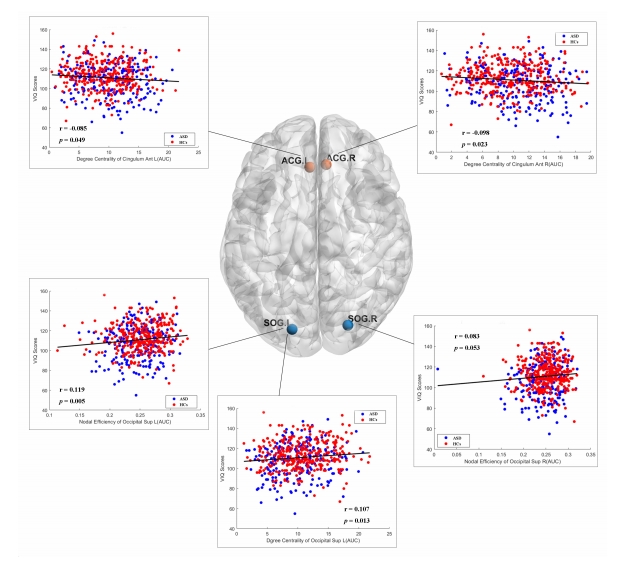
Autism spectrum disorder (ASD) is associated with atypical language-related functional connectivity (FC), though network-level substrates of verbal ability across large multisite cohorts require further characterization. In this study, resting-state fMRI data from 219 individuals with ASD and 322 healthy controls with valid verbal IQ (VIQ) scores were obtained from 12 sites in the ABIDE database. ROI-based FC and whole-brain network metrics were computed and correlated with VIQ. Three feature sets—raw connectivity and topology, group-difference metrics, and metrics combined with VIQ—were evaluated using SVM and manifold learning. ASD participants showed widespread FC alterations with overall increases and selective decreases in specific networks. At the global level, ASD patients exhibited a significantly lower AUC specifically for the normalized clustering coefficient γ (p < 0.05), while other metrics showed no significant group differences. Nodal analyses revealed increased degree centrality and efficiency in subcortical and frontal regions and reductions in limbic and temporal areas (all p < 0.05). Anterior cingulate centrality correlated negatively with VIQ, while occipital metrics correlated positively. The classification reached a peak AUC of 0.7514, which is competitive for large-scale multisite analysis and demonstrates the relevance of VIQ-related features in a proof-of-principle context. These results provide a proof-of-principle for the relevance of VIQ-related network features. These findings suggest that aberrant FC linked to verbal ability reflects key aspects of ASD pathophysiology, emphasizing the importance of integrating behavioral scales into neuroimaging research.

Articles Article ID: 2272

Mandarin-speaking monolingual autistic children can learn and retain foreign language words: A longitudinal study

Bilingualism has long been linked with enhanced cognitive benefits, but parents of autistic children are often advised to use one language. One reason might be that there is limited evidence on the foreign language learning abilities of autistic children. This study investigated English word learning among monolingual Mandarin-speaking autistic and typically-developing (TD) children using a longitudinal design. Participants were taught 48 English object names in a classroom-like setting over eight weekly sessions. Before starting the program, participants completed a pre-test to calculate the percentage of target words they could identify and translate from English to Chinese. To measure their short-term learning outcomes, they completed an immediate learning test at the end of each session and a delayed test at the beginning of the session the week after. Long-term retention was measured using final tests at one- and five- weeks after the learning program ended. Although autistic children showed slower weekly gains in word recognition, they achieved comparable long-term retention to TD peers, with no significant group differences in final test performance. Critically, the learning outcomes for autistic children were strongly and pervasively correlated with their amount of prior L2 exposure, whereas this relationship was largely absent in TD children. These findings demonstrate that autistic children can effectively learn and retain L2 words, challenging recommendations for monolingualism. Future studies should explore more complex linguistic domains, such as grammar and pragmatics, to further understand foreign language acquisition among autistic individuals.

Articles Article ID: 2273

Retiring Linguistics for a Unified Language Science

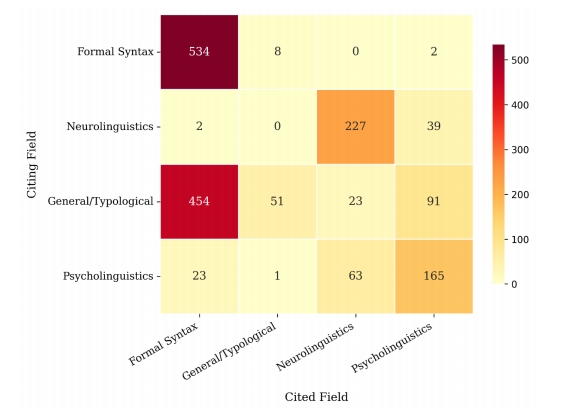
Language research has never been richer—spanning formal theory, documentation, neuroscience, psychology, education and AI—yet it remains partitioned by disciplinary silos, methodological habits and WEIRD sampling biases. We argue that progress on core problems—how language is learned, processed, varies, breaks down and can be engineered—requires “retiring linguistics” as an isolated discipline and consolidating expertise within an integrated Language Science. This does not dilute rigor; it redeploys it, coupling formal models with quantitative evidence, community-engaged methods and clinical and technological applications. We highlight cross-silo advances (e.g., neurosemantic mapping, speech neuroprosthetics, computational sociolinguistics) as proof of concept, and identify structural obstacles—departmental incentives, fragmented training, terminological gaps—that impede coordination. We propose actionable reforms: transdisciplinary institutes and appointments, evaluation criteria that reward collaboration, curricula that braid theory, computation and field methods, funding and venues for cross-field work, and ethical frameworks centred on partnership and benefit-sharing with language communities. Unifying around problems rather than departments can deliver more generalizable science and greater societal benefit—from equitable language technologies and education to improved clinical outcomes—by aligning explanations across levels from neurons to social networks.