Neurolinguistic Communication Intervention

Latest Issue
Volume 1, Issue 1
March 2026
Access: Full Open access

Neurolinguistic Communication Intervention (NCI) is an international, peer-reviewed quarterly journal that serves as a premier scholarly platform for cutting-edge research at the intersection of neuroscience, linguistics, clinical practice, and emerging technologies. Published in March, June, September, and December, NCI provides a rigorous interdisciplinary forum for research bridging foundational science with clinical application across the lifespan, with particular emphasis on pediatric and geriatric populations.

E-ISSN: 2979-0832

Frequency: Quarterly

Language: English

Submit Manuscript

Latest Published Articles

Articles Article ID: 2324

Network Signatures of Verbal Ability in Autism: A Multisite fMRI Study Using Graph Theory and Machine Learning

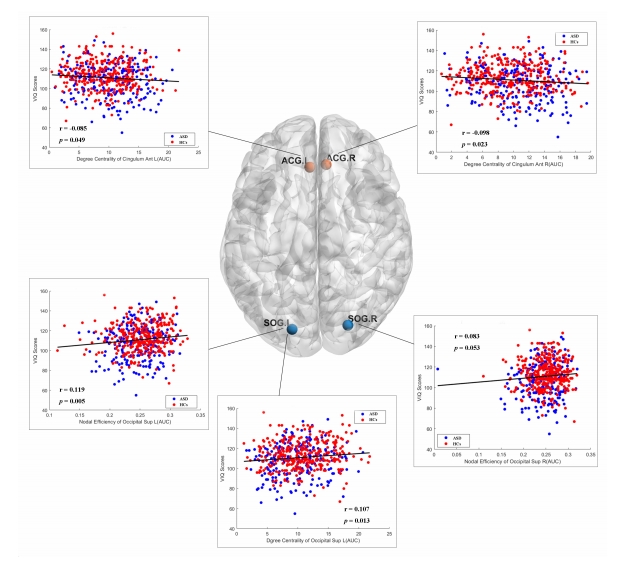
Autism spectrum disorder (ASD) is associated with atypical functional connectivity (FC), but its relationship with verbal ability remains unclear. In this study, resting-state functional magnetic resonance imaging (rs-fMRI) data from 219 individuals with ASD and 322 healthy controls (HCs) with valid verbal intelligence quotient (VIQ) scores were obtained from 12 sites in the Autism Brain Imaging Data Exchange (ABIDE) database. Region of interest (ROI)-based FC and whole-brain network metrics were computed and correlated with VIQ. Three feature sets—raw connectivity and topology, group-difference metrics, and group-difference metrics combined with VIQ—were evaluated using support vector machine (SVM) and manifold learning. ASD showed widespread FC alterations with overall increases and localized decreases in specific networks. At the global level, ASD patients exhibited a significantly lower area under the receiver operating characteristic curve (AUC) specifically for the normalized clustering coefficient γ compared with HCs. Nodal analyses revealed increased degree centrality and efficiency in subcortical and frontal regions, but decreased values in limbic and temporal regions in ASD. Centrality of the anterior cingulate cortex showed a negative correlation with VIQ, while nodal efficiency and degree centrality in occipital regions showed positive correlations. Classification using the raw feature set achieved the best overall performance under the Principal Component Analysis-Uniform Manifold Approximation and Projection-Support Vector Machine (PCA-UMAP-SVM) pipeline, whereas group-difference features augmented with VIQ yielded the highest AUC among the standard SVM models. These results suggest that VIQ-anchored network features may help explain variability in verbal ability and brain organization in ASD.

View All Issues