Environmental and Human Health(ehh)

Environmental and Human Health

Latest Issue
Volume 1, Issue 1
December 2025
Access: Full Open access


Environmental and Human Health (EHH) is a peer-reviewed, open-access journal. Its primary aim is to explore the relationship between the environment and human health. As a leading journal for interdisciplinary research, it reports on the consequences of evolving hazardous environmental factors on the health of individuals and communities. In supporting the United Nations Sustainable Development Goals (SDGs), the journal also seeks to inform policy development to build a healthier world.

E-ISSN: 2978-5057

Frequency: Semi-annual

Language: English

Submit Manuscript

Latest Published Articles

Articles Article ID: 1794

Radiometric Mapping and Evaluation of Radiation Health Risk Parameters in Imo North Senatorial District, Nigeria

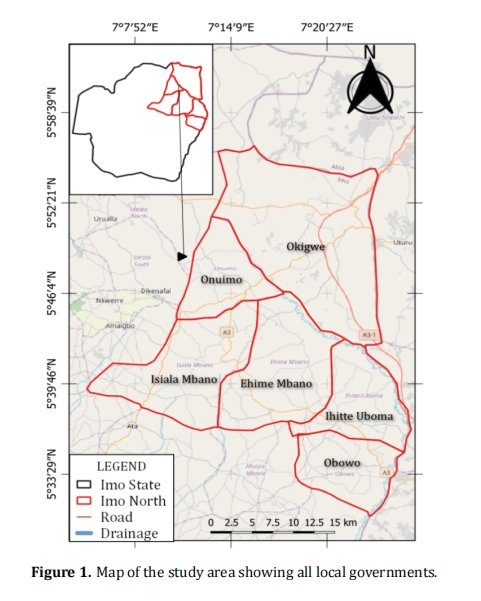
A Radiometric mapping and analysis of Radiation Health Risk Parameters of Imo North Senatorial District, Nigeria (situated between 7°4′48″ E and 7°25′48″ E, and 5°30′36″ N and 5°56′24″ N) was carried out through the use of two well Calibrated nuclear radiation meters, Radalert 100 and Digilert 200 and a GPS device, to measure the background Ionizing radiation exposure rate. Golden Software Surfer 20.1.195 and QGIS 3.16.8 were used for plotting radiation contour maps and radiometric map respectively. The average radiation exposure rates from thirty communities in the six local government areas of the district was 0.0128 ± 0.0006 mRh1. The average absorbed dose rate was 110.86 ± 4.77 nGyh1. The average annual effective dose equivalent (AEDE) result was 0.1136 ± 0.006 mSvy1. The excess life time cancer risk (ELCR) average values was (0.476 ± 0.02) × 103. The average radiation exposure rates was below the UNSCEAR 2008 world average of 0.013 mRh1 while the average of AEDE in this study are within the recommended safety values of 1.00 mSvy1 for the public as stipulated by the ICRP. The average absorbed dose and ELCR surpassed the world average of 84 nGyh1 and 0.29 × 10³ respectively. The values recorded for absorbed dose rate and ELCR may not result in an acute health impact on residents of Imo North Senatorial District, but continuous exposure may likely result in stochastic radiation effects.

Review Article ID: 2067

Climate Change, Zoonoses, and Vaccine Equity: A One Health Framework

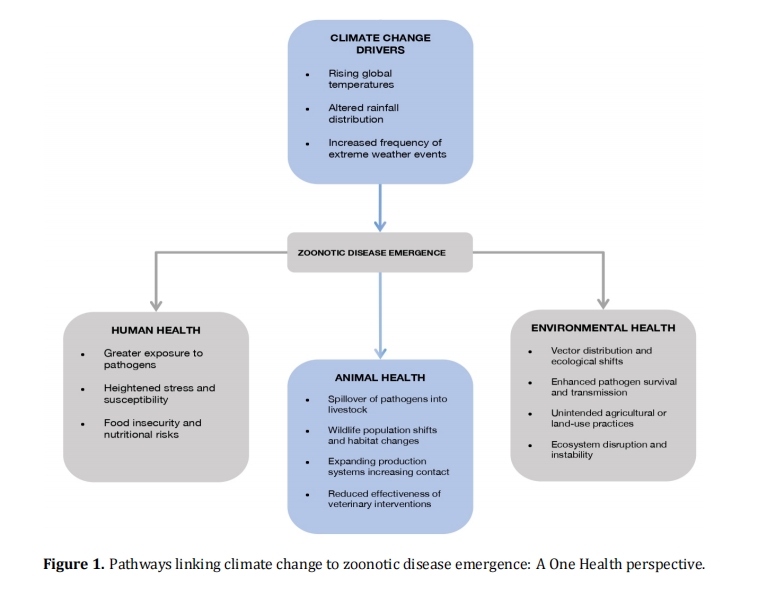
Climate change is increasingly recognized as a driver of zoonotic disease emergence, reshaping ecological interactions and amplifying risks to human and animal health. Rising temperatures, altered precipitation patterns, and extreme weather events accelerate vector breeding cycles, disrupt habitats, and intensify human-animal contact, thereby expanding opportunities for pathogen spillover. This review aims to synthesize evidence on climate‑linked zoonotic threats and examine how vaccine equity and policy integration within a One Health framework can strengthen global preparedness. A narrative literature review was conducted using PubMed, Scopus, Web of Science, and Google Scholar, covering publications from 2005 to 2025. Keywords included climate change, zoonotic diseases, One Health, surveillance, vaccine equity, and health disparities. Evidence highlights climate‑sensitive diseases such as malaria, Rift Valley fever, and leptospirosis as major global health challenges. Surveillance systems, including the Global Outbreak Alert and Response Network, the Global Early Warning System, the International Pathogen Surveillance Network, and the Global Influenza Surveillance and Response System, provide critical early warning capacity but remain unevenly implemented in low‑ and middle‑income countries. Vaccine equity challenges persist among displaced populations, rural communities, and marginalized groups, with barriers linked to infrastructure, misinformation, and systemic inequities. Embedding climate resilience, equity, and community participation into One Health strategies is essential for mitigating zoonotic threats. Strengthened interdisciplinary collaboration, digital innovation, and policy harmonization will be pivotal in advancing surveillance, prevention, and vaccine equity, thereby enhancing global preparedness against future climate‑driven zoonotic disease risks.

View All Issues