
Review
Artificial Intelligence and Paternalism: Redefining Liberalism in the Age of Digitization
 Download
Authors
-
Muhtadi Al-Abyadh
 Centre for Policy Research (CPR), University Sains Malaysia (USM), Bayan Lepas 11900, Malaysia
Iraqi Reform Office, Ministry of Justice, Baghdad 10001, Iraq -
Lorine Kalista Noor
Business and Management, Faculty of Business, Management and Information Technology, Universiti Muhammadiyah Malaysia, Padang Besar 02100, Malaysia
Faculty of Economics, Business and Politics, Universitas Muhammadiyah Kalimantan Timur, Samarinda 75124, Indonesia
Received: 8 August 2025; Revised: 16 September 2025; Accepted: 2 October 2025; Published: 14 November 2025
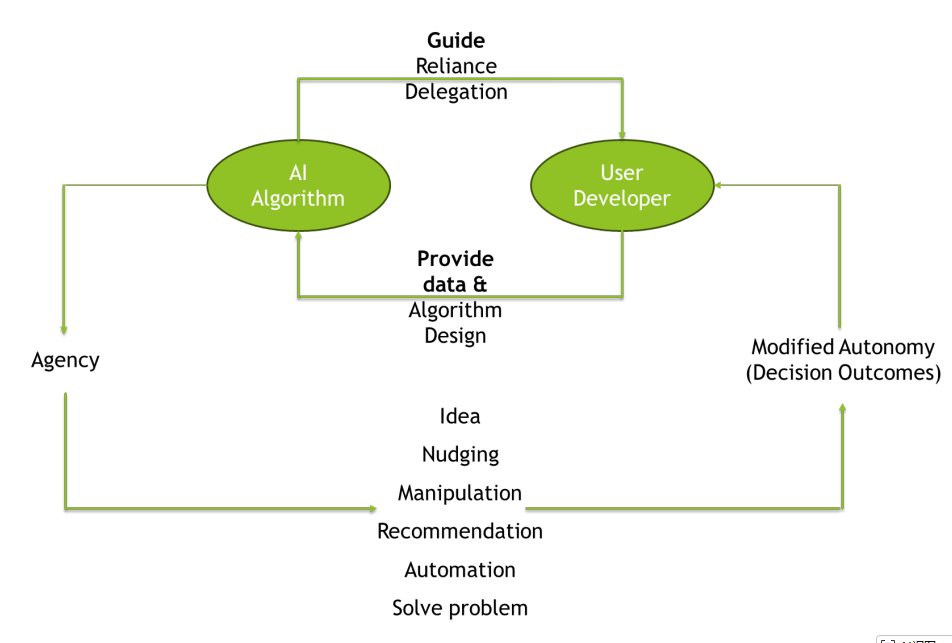
This article explores the evolving role of artificial intelligence (AI) as a paternalistic force and its implications for liberal autonomy in the digital age. It reframes AI not merely as a tool or threat, but as a socio-technical agent whose influence emerges through behavioral guidance, manipulation, and decision-making structures. Drawing on philosophical, sociological, and technological perspectives, the paper introduces the concept of liberating paternalism to describe how AI systems subtly reshape human autonomy through voluntary interaction. It identifies four key mechanisms of influence: nudging, manipulation, agency delegation, and ambient governance. Rather than opposing liberal values outright, AI paternalism emerges through widespread reliance on algorithmic systems that structure everyday decisions. This development may signal a potential shift in how autonomy is exercised within liberal societies, raising questions about whether algorithmic governance is gradually reshaping classical liberal assumptions about individual decision-making. Positioned at the intersection of political philosophy and technology ethics, the paper challenges binary framings of freedom and control. It argues that AI-driven paternalism is not imposed but co-constructed, shaped by the user’s needs for well-being, survival, and cognitive ease. In doing so, it highlights the urgency of developing new frameworks that address the ethical, behavioral, and structural dimensions of autonomy in algorithmic societies.
Keywords:
Artificial Intelligence Human Autonomy Paternalism Liberalism AI Paternalism Decision-MakingReferences
- Beck, B. Paternalism and Liberty/Autonomy as Dialectically Related Concepts. Z. Ethik Moralphil. 2023, 6, 223–237. DOI: https://doi.org/10.1007/s42048-023-00156-z
- Vaassen, B. AI, Opacity, and Personal Autonomy. Philos. Technol. 2022, 35, 88. DOI: https://doi.org/10.1007/s13347-022-00577-5
- Ghosh, P.; Liedo, B.; Riek, L.D. The Problem of Ableist Paternalism in Assistive Robotics. In Proceedings of the HRI 2024 Workshop on Assistive Applications, Accessibility, and Disability Ethics (A3DE), Boulder, CO, USA, 15 March 2024.
- Kühler, M. Exploring the phenomenon and ethical issues of AI paternalism in health apps. Bioethics 2022, 36, 194–200.
- Lorenzini, G.; Arbelaez Ossa, L.; Shaw, D.M.; et al. Artificial intelligence and the doctor–patient relationship expanding the paradigm of shared decision making. Bioethics 2023, 37, 424–429.
- Rochi, M. Technology paternalism and smart products: Review, synthesis, and research agenda. Technol. Forecast. Soc. Change 2023, 192, 122557. DOI: https://doi.org/10.1016/j.techfore.2023.122557
- Sunstein, C.R. Behavioral Biases, Choice Engines, and Paternalistic AI. SSRN Electron. J. 2023, 1–17. Available online: https://www.ssrn.com/abstract=4539053
- Quigley, M. Libertarian paternalism, nudging, and public policy. In The Routledge Handbook of the Philosophy of Paternalism; Routledge: New York, NY, USA, 2018; pp. 223–235.
- Keller, P.; Drake, A. Exclusivity and paternalism in the public governance of explainable AI. Comput. Law Secur. Rev. 2021, 40, 105490.
- Grill, K.; Hanna, J. The Routledge Handbook of the Philosophy of Paternalism; Routledge: New York, NY, USA, 2018.
- Khadilkar, P.; Jagtap, S. Can Design Be Non-paternalistic? Conceptualizing Paternalism in the Design Profession. She Ji J. Des. Econ. Innov. 2021, 7, 589–610.
- Grill, K. Paternalism. In Encyclopedia of Applied Ethics; Elsevier: Amsterdam, The Netherlands, 2012; pp. 359–369.
- Dworkin, G. Paternalism. Monist 1972, 56, 64–84.
- Kant, I. Groundwork of the Metaphysics of Morals; Cambridge University Press: Cambridge, UK, 1785.
- Formosa, P. Robot Autonomy vs. Human Autonomy: Social Robots, Artificial Intelligence (AI), and the Nature of Autonomy. Minds Mach. 2021, 31, 595–616. DOI: https://doi.org/10.1007/s11023-021-09579-2
- Mill, J.S. On Liberty; Macmillan Education UK: London, UK, 1859.
- Berlin, I. Two Concepts of Liberty. In Reading Political Philosophy; Routledge: London, UK, 2014; pp. 231–237.
- Rawls, J. A theory of justice. In Applied Ethics; Routledge: London, UK, 2017; pp. 21–29.
- Floridi, L.; Cowls, J. A Unified Framework of Five Principles for AI in Society. In Machine Learning and the City; Wiley: Hoboken, NJ, USA, 2022; pp. 535–545. DOI: https://doi.org/10.1002/9781119815075.ch45
- Thaler, R.; Sunstein, C. Nudge: Improving Decisions about Health, Wealth and Happiness; Yale University Press: London, UK, 2008; p. 89.
- Coeckelbergh, M. Artificial Intelligence, Responsibility Attribution, and a Relational Justification of Explainability. Sci. Eng. Ethics 2020, 26, 2051–2068.
- Luther, J. Discovery in an age of artificial intelligence. Learn. Publ. 2016, 29, 75–76.
- Huang, L.F. Artificial intelligence. In Proceedings of the 2nd International Conference on Computer and Automation Engineering (ICCAE 2010), Singapore, 26–28 February 2010; pp. 610–684.
- Sharifmousavi, M.; Kayvanfar, V.; Baldacci, R. Distributed Artificial Intelligence Application in Agri-food Supply Chains 4.0. Procedia Comput. Sci. 2024, 232, 211–220. DOI: https://doi.org/10.1016/j.procs.2024.01.021
- Ellingrud, K.; Sanghvi, S.; Dandona, G.S.; et al. Generative AI and the Future of Work in America; McKinsey Global Institute: New York, NY, USA, 2023.
- Sunstein, C.R. Choosing Not to Choose: Understanding the Value of Choice; Oxford University Press: Oxford, UK, 2015.
- Klincewicz, M. Artificial intelligence as a means to moral enhancement. Stud. Logic Gramm. Rhetor. 2016, 48, 171–187.
- Calvo, R.A.; Peters, D.; Vold, K.; et al. Supporting Human Autonomy in AI Systems: A Framework for Ethical Enquiry. In Ethics of Digital Well-Being; Springer: Cham, Switzerland, 2020.
- Laitinen, A.; Sahlgren, O. AI Systems and Respect for Human Autonomy. Front. Artif. Intell. 2021, 4, 1–14.
- Hausman, D.M.; Welch, B. Debate: To Nudge or Not to Nudge. J. Polit. Philos. 2010, 18, 123–136.
- Susser, D.; Roessler, B.; Nissenbaum, H. Online manipulation: Hidden influences in a digital world. Geo. L. Tech. Rev. 2019, 4, 1–45.
- Krpan, D.; Urbaník, M. From libertarian paternalism to liberalism: Behavioural science and policy in an age of new technology. Behav. Public Policy 2024, 8, 300–326.
- Danaher, J. The Threat of Algocracy: Reality, Resistance and Accommodation. Philos. Technol. 2016, 29, 245–268.
- Hassan, S.A. How AI Can Be Used to Manipulate People. Available online: https://www.psychologytoday.com/us/blog/freedom-of-mind/202304/how-ai-can-be-used-to-manipulate-people (accessed on 5 May 2025).
- Foster, G.M. Bishop Cheshire and Black Participation in the Episcopal Church: The Limitations of Religious Paternalism. North Carol. Off. Arch. Hist. 1977, 54, 49–65. Available online: http://www.jstor.org/stable/23529902
- Abercrombie, N.; Hill, S.; Turner, B.S. The Penguin Dictionary of Sociology; Penguin Group: New York, NY, USA, 2001.
- Lawes, K. Paternalism and Politics. In Crewe: Railway Town, Company and People 1840–1914; Routledge: London, UK, 2017; pp. 186–208.
- MacGregor, S. From paternalism to partnership. BMJ 1998, 317, 221.
- Charette, S.L.; Garcia, M.B.; Reuben, D.B. Goal-Oriented Care. In Psychology and Geriatrics; Elsevier: Amsterdam, The Netherlands, 2015; pp. 1–19.
- Esteva, A.; Robicquet, A.; Ramsundar, B.; et al. A guide to deep learning in healthcare. Nat. Med. 2019, 25, 24–29.
- Sunstein, C.R. Brave New World? Human Welfare and Paternalistic AI. Theor. Inq. Law 2024, 1–30. Available online: https://papers.ssrn.com/sol3/papers.cfm?abstract_id=4908836
- Božić, V.; Poola, I. Chat GPT and education. Education 2023, 1, 1–8.
- Sharma, S.; Yadav, R. Chat GPT-A Technological Remedy or Challenge for Education System. Glob. J. Enterp. Inf. Syst. 2022, 14, 46–51.
- Zhu, J.J.; Jiang, J.; Yang, M.; et al. ChatGPT and Environmental Research. Environ. Sci. Technol. 2023, 57, 17667–17670. DOI: https://doi.org/10.1021/acs.est.3c01818
- Yu, H. Reflection on whether Chat GPT should be banned by academia from the perspective of education and teaching. Front. Psychol. 2023, 14, 1181712. Available online: https://www.frontiersin.org/articles/10.3389/fpsyg.2023.1181712/full
- New, B. Paternalism and Public Policy. Econ. Philos. 1999, 15, 63–83.
- Chin, J.J. Doctor-patient relationship: From medical paternalism to enhanced autonomy. Singap. Med. J. 2002, 43, 152–155.
- Burrows, P. Analyzing legal paternalism. Int. Rev. Law Econ. 1995, 15, 489–508.
- Arneson, R.J. Joel Feinberg and The Justification of Hard Paternalism. Leg. Theory 2005, 11, 259–284.
- Takala, T. Right to Know and Right Not to Know. In Encyclopedia of Applied Ethics; Elsevier: Amsterdam, The Netherlands, 2012; pp. 829–835.
- Clarke, S. A definition of paternalism. Crit. Rev. Int. Soc. Polit. Philos. 2002, 5, 81–91.
- Bostrom, N. Superintelligence: Paths, Dangers, Strategies; Oxford University Press: Oxford, UK, 2014; pp. 1–7.
- Sheng, A.; Wang, F. Falling in love with machine: Emotive potentials between human and robots in science fiction and reality. Neohelicon 2022, 49, 563–577.
- Rochi, M. Essays on Technology Paternalism: Paternalistic Effects of Smart Technologies on User Behavior. PhD Thesis, Otto-Friedrich-Universität Bamberg, Bamberg, Germany, 2024. Available online: https://fis.uni-bamberg.de/handle/uniba/98474
- Al-Abaydh, M.; Bustami, M.R. Paternalism and Liberalism: A Comparative Analysis of Political Modernity in Western and Non-Western Societies. Comp. Sociol. 2025, 24, 351–383.
- Hill-Yardin, E.L.; Hutchinson, M.R.; Laycock, R.; et al. A Chat(GPT) about the future of scientific publishing. Brain Behav. Immun. 2023, 110, 152–154.
- Fossa, F. Artificial moral agents: Moral mentors or sensible tools? Ethics Inf. Technol. 2018, 20, 115–126.
- Strickland, E. IBM Watson, heal thyself: How IBM overpromised and underdelivered on AI health care. IEEE Spectr. 2019, 56, 24–31.
- Hung, L.; Liu, C.; Woldum, E.; et al. The benefits of and barriers to using a social robot PARO in care settings: A scoping review. BMC Geriatr. 2019, 19, 232.
- Sunstein, C.R. Choice engines and paternalistic AI. Humanit. Soc. Sci. Commun. 2024, 11, 888. DOI: http://dx.doi.org/10.1057/s41599-024-03428-0
- Fu, R.; Huang, Y.; Singh, P.V. AI and Algorithmic Bias: Source, Detection, Mitigation and Implications. INFORMS Tut. Oper. Res. 2020, 39–63.
- Goldberg, L.R. Thinking, Fast and Slow, by D. Kahneman. Quant. Financ. 2013, 13, 177–179.
- Banaji, M.R.; Greenwald, A.G. Blindspot: Hidden Biases of Good People; Bantam: New York, NY, USA, 2016.
- Mittelstadt, B.D.; Allo, P.; Taddeo, M.; et al. The ethics of algorithms: Mapping the debate. Big Data Soc. 2016, 3, 2053951716679679.
- Eubanks, V. Automating Inequality: How High-Tech Tools Profile, Police, and Punish the Poor; St. Martin’s Press: New York, NY, USA, 2018.
- Al-Abyadh, M.; Bustami, M.R. The Revival of Paternalism in Shia of Iraq Post-2003: Al-Sistani and the Formation of Democracy. Russ. Law J. 2023, 11, 2654–2668.
- Mackenzie, C.; Stoljar, N. Relational Autonomy: Feminist Perspectives on Autonomy, Agency, and the Social Self; Oxford University Press: Oxford, UK, 2000.
- Friedman, M. Autonomy, Gender, Politics; Oxford University Press: Oxford, UK, 2003.
- Sen, A. Development as Freedom; Oxford University Press: Oxford, UK, 1999.
- Nussbaum, M.C. Creating capabilities: The human development approach and its implementation. Hypatia 2009, 24, 211–215.
- Chen, X.; Ji, Y.; Liu, R.; et al. Mitochondrial dysfunction: roles in skeletal muscle atrophy. J. Transl. Med. 2023, 21, 503. DOI: https://doi.org/10.1186/s12967-023-04369-z
- Fanzani, A.; Conraads, V.M.; Penna, F.; et al. Molecular and cellular mechanisms of skeletal muscle atrophy: An update. J. Cachexia Sarcopenia Muscle 2012, 3, 163–179.
- McGuire, L.P.; Johnson, E.M.; Frick, W.F.; et al. Temperature alone is insufficient to understand hibernation energetics. J. Exp. Biol. 2021, 224, jeb239772. DOI: https://doi.org/10.1242/jeb.239772
- Robbins, C.T.; Lopez-Alfaro, C.; Rode, K.D.; et al. Hibernation and seasonal fasting in bears: The energetic costs and consequences for polar bears. J. Mammal. 2012, 93, 1493–1503.
- Al-Abyadh, M.; Kalista Noor, L.; Fawzi, A. Between Cognitive Augmentation and Atrophy: AI’s Role in Reshaping Human Intelligence. Interciencia 2025, 408, 179–202.
- Parmaksız, P.M.Y. Paternalism, Modernization, and the Gender Regime in Turkey. Aspasia 2016, 10, 40–62.
- Mathew, S.; Taylor, G. Power distance in India: Paternalism, religion and caste: Some issues surrounding the implementation of lean production techniques. Cross Cult. Strateg. Manag. 2019, 26, 2–23.
- Crider, C. Two paths for health AI governance: Paternalism or democracy. Futur. Healthc. J. 2024, 11, 100180.
- Taeihagh, A. Governance of artificial intelligence. Policy Soc. 2021, 40, 137–157.
- Calo, R. Artificial Intelligence Policy: A Primer and Roadmap. SSRN Electron. J. 2017, 1–28.
- Jin, D.; Halvari, H.; Maehle, N.; et al. Self-tracking behaviour in physical activity: A systematic review of drivers and outcomes of fitness tracking. Behav. Inf. Technol. 2022, 41, 242–261.
- Asimakopoulos, S.; Asimakopoulos, G.; Spillers, F. Motivation and User Engagement in Fitness Tracking: Heuristics for Mobile Healthcare Wearables. Informatics 2017, 4, 5.
- Owens, J.; Cribb, A. ‘My Fitbit Thinks I Can Do Better!’ Do Health Promoting Wearable Technologies Support Personal Autonomy? Philos. Technol. 2019, 32, 23–38.
- Acosta-Enriquez, B.G.; Arbulú Ballesteros, M.A.; Huamaní Jordan, O.; et al. Analysis of college students’ attitudes toward the use of ChatGPT in their academic activities: effect of intent to use, verification of information and responsible use. BMC Psychol. 2024, 12, 255. DOI: https://doi.org/10.1186/s40359-024-01764-z
- Butlin, P.; Long, R.; Elmoznino, E.; et al. Consciousness in Artificial Intelligence: Insights from the Science of Consciousness. arXiv Preprint 2023, arXiv:2308.08708.
- Smith, D.H.; Schillaci, G. Why Build a Robot With Artificial Consciousness? How to Begin? A Cross-Disciplinary Dialogue on the Design and Implementation of a Synthetic Model of Consciousness. Front. Psychol. 2021, 12, 530560.
- Anwar, N.A.; Badea, C. Can a Machine Be Conscious? Towards Universal Criteria for Machine Consciousness. arXiv Preprint 2024, arXiv:2404.15369.
- Bojic, L.; Stojković, I.; Jolić Marjanović, Z. Signs of Consciousness in AI: Can GPT-3 Tell How Smart It Really Is? SSRN Electron. J. 2023, 1–37. Available online: https://www.ssrn.com/abstract=4399438