
New Energy Exploitation and Application

Latest Issue
Volume 5, Issue 2
June 2026
Access: Full Open access

New Energy Exploitation and Application is an open access, international English language journal focusing on the latest developments in the field of energy. It aims to provide a communication platform for energy researchers, energy workers, and other people who study and care about energy development worldwide to disseminate, share and discuss the sustainable development of energy.
  • ISSN: 2754-5652
  • Frequency: Quarterly
  • Language: English
  • E-mail: neea@ukscip.com

Submit Manuscript

Latest Published Articles

Review Article ID: 1705

A Critical Review of Trends in Performance Evaluation of Hybrid Solar Dryers: Focus on Energy Efficiency

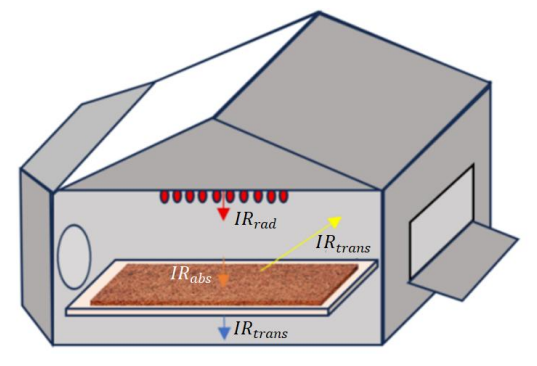
Solar drying of biomass has gained prominence as a pretreatment step for biofuel production. The literature presents a wide diversity of definitions and terminologies for evaluating solar dryer performance, particularly in systems with supplementary energy inputs, limiting consistent comparisons between studies. This review provides a critical analysis of the main energy-based performance indicators, with emphasis on hybrid systems. Collector and drying chamber efficiencies are examined based on thermal and energy concepts, considering different dryer configurations. Standardized formulations are proposed to better represent the underlying processes and clarify the distinctions between PV and PVT-assisted systems. The analysis shows that collector performance in active systems is more consistently represented when based on absorbed solar energy and electrical power consumed by the fan. Accurate assessment of drying performance requires accounting for the heat of moisture desorption, sensible heating of the product, useful solar energy for air heating, fan power and supplementary energy inputs. Instantaneous efficiencies are more informative than cumulative ones, as they enable identification of less efficient drying periods and provide insights for optimizing operating conditions and reducing energy consumption. Continuous monitoring of key process variables including solar radiation intensity, air and product temperatures, and product mass is therefore required. Overall, this review establishes a consistent framework for the assessment of solar dryers, enhancing comparability and supporting more reliable analyses across studies. Future research should focus on the effects of intermittent and variable airflow rates on system performance.

Article Article ID: 2338

Economic Growth and Renewable Energy Policies in India: An Econometric Analysis of the Relationship between Energy and Growth (2004–2024)

This study examines the relationship between renewable energy consumption and economic growth in India over the period 2004–2024 using the Autoregressive Distributed Lag (ARDL) model, incorporating key macroeconomic variables including government expenditure, foreign direct investment, population growth, and inflation. The results reveal a stable long-run equilibrium relationship among the variables, indicating that renewable energy consumption has a negative and statistically significant impact on economic growth in the long run, which may be attributed to adjustment costs associated with the transition toward cleaner energy systems, while government expenditure also shows a negative effect and population growth contributes positively to economic performance; in contrast, foreign direct investment and inflation do not exhibit significant long-run effects. Overall, the findings suggest that the relationship between renewable energy and economic growth in India is complex and shaped by structural and policy-related factors, and from an environmental perspective, the expansion of renewable energy can contribute to reducing carbon dioxide (CO₂) emissions and supporting long-term sustainability despite potential short-term economic trade-offs. In addition, the short-run dynamics indicate temporary adjustments toward equilibrium following shocks in the system, reinforcing the importance of gradual policy implementation and supportive institutional frameworks to enhance the effectiveness of renewable energy policies in promoting sustainable economic development in India. Overall, the study highlights the dual role of renewable energy as both an economic and environmental driver within the broader context of sustainable growth strategies.

Article Article ID: 2345

Sensitivity of Neutron‑Induced Cross Sections to Pre‑Equilibrium Modelling in EMPIRE 3.2.3 Code

Modelling of neutron-induced reaction cross sections is essential for applied nuclear science and nuclear data evaluation. In this study, excitation functions for the reactions 32S(n,p)32P, 35Cl(n,α)32P, and 35Cl(n,p)35S were investigated from threshold energies up to 20 MeV. The calculations were performed using the EMPIRE 3.2.3 nuclear reaction code with different pre-equilibrium model options, namely MSD (Multi-Step Direct), MSC (Multi-Step Compound), PCROSS (Pre-equilibrium cross section), and HMS (Hybrid Monte Carlo Simulation). The theoretical results were compared with available experimental data over a broad energy range up to 20 MeV. The calculated cross sections show good agreement with experimental data near threshold energies, indicating the dominance of the compound nucleus mechanism in this region. However, as the incident neutron energy increases above approximately 5 MeV, noticeable discrepancies emerge among the model predictions, reflecting differences in the treatment of pre-equilibrium processes. In particular, the PCROSS model tends to produce relatively higher cross sections in the energy region between 7 MeV and 12 MeV, where multi-step pre-equilibrium effects become more significant. Overall, the results demonstrate that the choice of pre-equilibrium model has a substantial impact on the predicted cross sections. This study highlights the sensitivity of neutron-induced reaction calculations to reaction-mechanism inputs and provides useful guidance for the appropriate selection of model options within the EMPIRE framework for nuclear data evaluation and related applications.

Article Article ID: 2350

Strategic Roadmap for Hydrogen Mobility in Türkiye: Implementation Phases, Export Potential, and Regional Hub Development

This study develops and quantitatively evaluates a three-phase strategic roadmap for hydrogen mobility deployment in Türkiye between 2025 and 2050, integrating Strengths, Weaknesses, Opportunities and Threats (SWOT) and Political, Economic, Social, Technological, Legal, and Environmental (PESTLE) analyses with multi-criteria corridor assessment, discounted-cash-flow Levelized Cost of Hydrogen (LCOH) modelling, input–output Gross Domestic Products (GDP) multiplier estimation, and Monte-Carlo sensitivity analysis. Primary inputs are drawn from the 2023 Türkiye National Hydrogen Technologies Strategy, Automotive Manufacturers Association, Otomotiv Sanayii Derneği (OSD) automotive statistics, and peer-reviewed techno-economic studies (2021–2025). The pilot phase (2025–2030) targets 10–25 refuelling stations and 500–2,000 fuel-cell electric vehicles (FCEVs); the scale-up phase (2030–2040) reaches 100–250 stations, 50,000–150,000 vehicles, and 0.5–1.5 MMT/yr of hydrogen export; the maturity phase (2040–2050) targets 500–1,000 stations, an FCEV stock of 500,000–1,000,000 units (about 1.6–3.1% of Türkiye’s projected ~32 million 2050 fleet, i.e., a segment-targeted rather than fleet-wide strategy), green-hydrogen production of 1,000–2,500 kt H₂/yr (≈2,700–6,800 t/day), and 2–4 MMT/yr of export capacity. Monte-Carlo analysis (10,000 trials) yields a mean green LCOH of €2.35/kg by 2035 with a 90% confidence interval of €1.85–2.95/kg, driven primarily by electrolyzer Capital Expenditure (CAPEX) and renewable electricity price. Investment of €5.0–8.0 billion through 2035 is estimated to generate €14–22 billion direct GDP contribution and 48,000–96,000 full-time-equivalent jobs, using a 2.8 × International Renewable Energy Agency (IRENA) multiplier. Trans Anatolian Natural Gas Pipeline (TANAP) repurposing offers the lowest delivered cost (€2.70–3.60/kg) to EU off-takers and retains a clear total-cost-of-ownership advantage over battery-electric trucks above 500 km daily range. The 2025–2030 window is decisive for Türkiye’s positioning as a regional hydrogen hub.

View All Issues